
Catalogue Search | MBRL


Are you sure you want to remove the book from the shelf?

{{itemTitle}}
49,239
result(s) for
"RELIGION / Ethnic "
Sort by:

Yoruba Traditions and African American Religious Nationalism
Exploring the Yoruba tradition in the United States, Hucks begins with the story of Nana Oseijeman Adefunmi’s personal search for identity and meaning as a young man in Detroit in the 1930s and 1940s. She traces his development as an artist, religious leader, and founder of several African-influenced religio-cultural projects in Harlem and later in the South. Adefunmi was part of a generation of young migrants attracted to the bohemian lifestyle of New York City and the black nationalist fervor of Harlem. Cofounding Shango Temple in 1959, Yoruba Temple in 1960, and Oyotunji African Village in 1970, Adefunmi and other African Americans in that period renamed themselves “Yorubas” and engaged in the task of transforming Cuban Santería into a new religious expression that satisfied their racial and nationalist leanings and eventually helped to place African Americans on a global religious schema alongside other Yoruba practitioners in Africa and the diaspora.
Alongside the story of Adefunmi, Hucks weaves historical and sociological analyses of the relationship between black cultural nationalism and reinterpretations of the meaning of Africa from within the African American community.
eBook

Inuit Shamanism and Christianity
Using archival material and oral testimony collected during workshops in Nunavut between 1996 and 2008, Frédéric Laugrand and Jarich Oosten provide a nuanced look at Inuit religion, offering a strong counter narrative to the idea that traditional Inuit culture declined post-contact. They show that setting up a dichotomy between a past identified with traditional culture and a present involving Christianity obscures the continuity and dynamics of Inuit society, which has long borrowed and adapted \"outside\" elements. They argue that both Shamanism and Christianity are continually changing in the Arctic and ideas of transformation and transition are necessary to understand both how the ideology of a hunting society shaped Inuit Christian cosmology and how Christianity changed Inuit shamanic traditions.
eBook
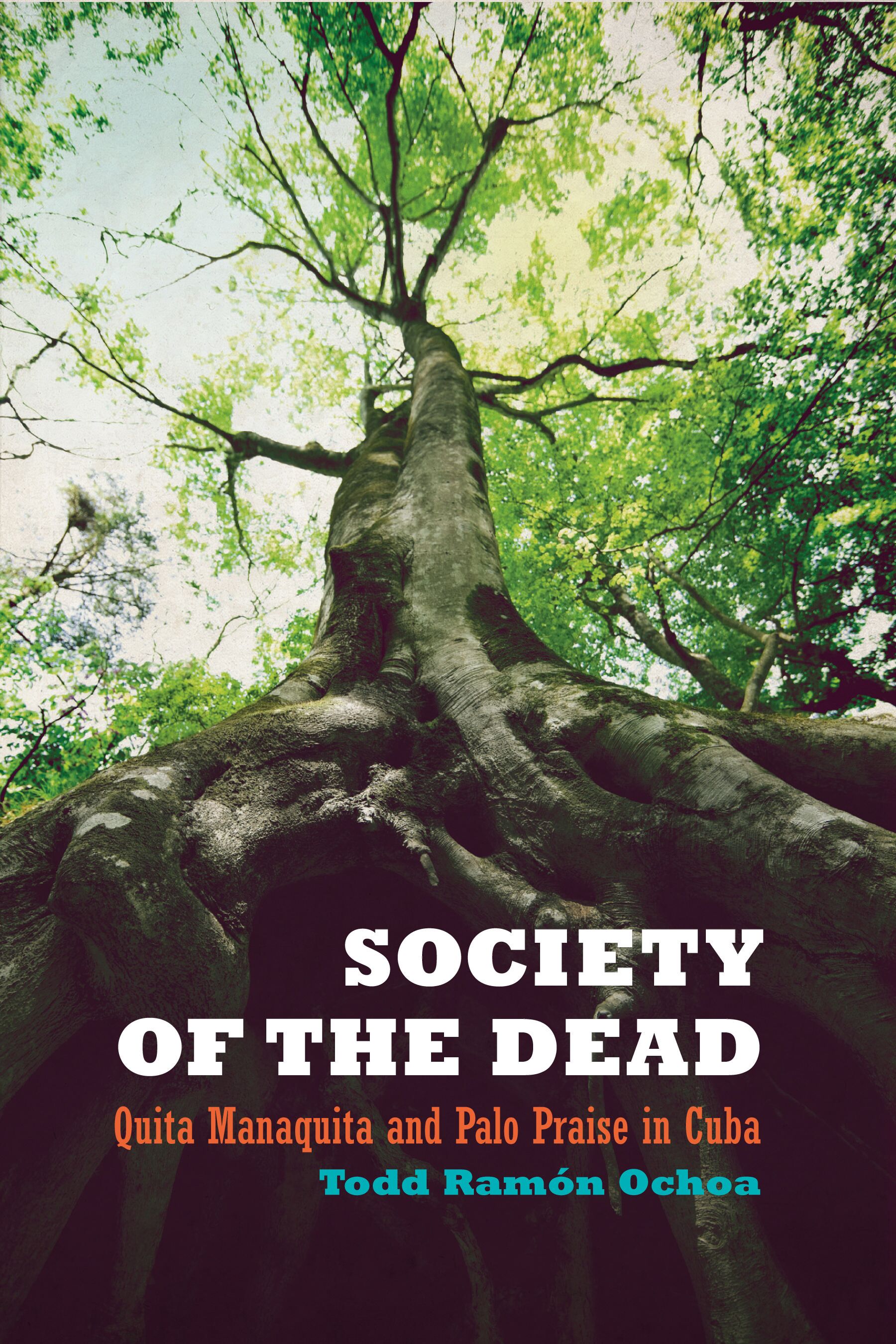
Society of the dead
In a riveting first-person account, Todd Ramón Ochoa explores Palo, a Kongo-inspired \"society of affliction\" that is poorly understood at the margins of Cuban popular religion. Narrated as an encounter with two teachers of Palo, the book unfolds on the outskirts of Havana as it recounts Ochoa's attempts to assimilate Palo praise of the dead. As he comes to terms with a world in which everyday events and materials are composed of the dead, Ochoa discovers in Palo unexpected resources for understanding the relationship between matter and spirit, for rethinking anthropology's rendering of sorcery, and for representing the play of power in Cuban society. The first fully detailed treatment of the world of Palo, Society of the Dead draws upon recent critiques of Western metaphysics as it reveals what this little known practice can tell us about sensation, transformation, and redemption in the Black Atlantic.
eBook

The Fate of Earthly Things
Following their first contact in 1519, accounts of Aztecs identifying Spaniards as gods proliferated. But what exactly did the Aztecs mean by a \"god\" (teotl), and how could human beings become gods or take on godlike properties? This sophisticated, interdisciplinary study analyzes three concepts that are foundational to Aztec religion—teotl (god), teixiptla (localized embodiment of a god), and tlaquimilolli (sacred bundles containing precious objects)—to shed new light on the Aztec understanding of how spiritual beings take on form and agency in the material world. In The Fate of Earthly Things, Molly Bassett draws on ethnographic fieldwork, linguistic analyses, visual culture, and ritual studies to explore what ritual practices such as human sacrifice and the manufacture of deity embodiments (including humans who became gods), material effigies, and sacred bundles meant to the Aztecs. She analyzes the Aztec belief that wearing the flayed skin of a sacrificial victim during a sacred rite could transform a priest into an embodiment of a god or goddess, as well as how figurines and sacred bundles could become localized embodiments of gods. Without arguing for unbroken continuity between the Aztecs and modern speakers of Nahuatl, Bassett also describes contemporary rituals in which indigenous Mexicans who preserve costumbres (traditions) incorporate totiotzin (gods) made from paper into their daily lives. This research allows us to understand a religious imagination that found life in death and believed that deity embodiments became animate through the ritual binding of blood, skin, and bone.
eBook

Mysteries of the Jaguar Shamans of the Northwest Amazon
Mysteries of the Jaguar Shamans of the Northwest Amazontells the life story of Mandu da Silva, the last living jaguar shaman among the Baniwa people in the northwest Amazon. In this original and engaging work, Robin M. Wright, who has known and worked with da Silva for more than thirty years, weaves the story of da Silva's life together with the Baniwas' society, history, mythology, cosmology, and jaguar shaman traditions. The jaguar shamans are key players in what Wright calls \"a nexus of religious power and knowledge\" in which healers, sorcerers, priestly chanters, and dance-leaders exercise complementary functions that link living specialists with the deities and great spirits of the cosmos. By exploring in depth the apprenticeship of the shaman, Wright shows how jaguar shamans acquire the knowledge and power of the deities in several stages of instruction and practice.
This volume is the first mapping of the sacred geography (\"mythscape\") of the Northern Arawak-speaking people of the northwest Amazon, demonstrating direct connections between petroglyphs and other inscriptions and Baniwa sacred narratives as a whole. In eloquent and inviting analytic prose, Wright links biographic and ethnographic elements in elevating anthropological writing to a new standard of theoretically aware storytelling and analytic power.
eBook

Eastern Udmurt Sacred Places, Yesterday and Today
Most Udmurt living in the Bashkortostan Republic and in the Perm’ region of the Russian Federation are followers of a traditional ethnic religion. In their spiritual life, a huge place is occupied by sanctuaries and other places in which their ritual practices take place, such as the worship of deities, spirits and ancestors. We can identify different types of such places in this Udmurt regional group: the sanctuary dedicated to the cult of the clan protector deities, groves dedicated to the god Lud, places dedicated to personal and family cults, sacred places of agrarian sacrifices, territories where funerary and commemorative rituals take place, places dedicated to the propitiation of evil spirits. Depending on their social status, the sanctuaries are regional or general and can be related to a family, clan, village, or multiple villages. In this article, which relies on the authors’ ethnographic fieldwork and published sources, we analyse the present state of the sacred places. We show that the transformation of cultural patterns has led some types of sanctuary to cease functioning, while others have remained as relics and the places of agrarian sacrifices have undergone an active revitalisation.
Journal Article
Spirit Lives in the Mind
Cree spiritual beliefs revolve around the sacred places and rich landscape of the Hudson Bay lowlands. The beautiful narratives in The Spirit Lives in the Mind illuminate the meaning and value of spiritual maturity and power, the parallels between Omushkego morality and Roman Catholic teachings, and the importance of maintaining the traditional stories. Bird also offers explanations of shamanism and demonstrates how Catholicism affected Cree tradition.
eBook
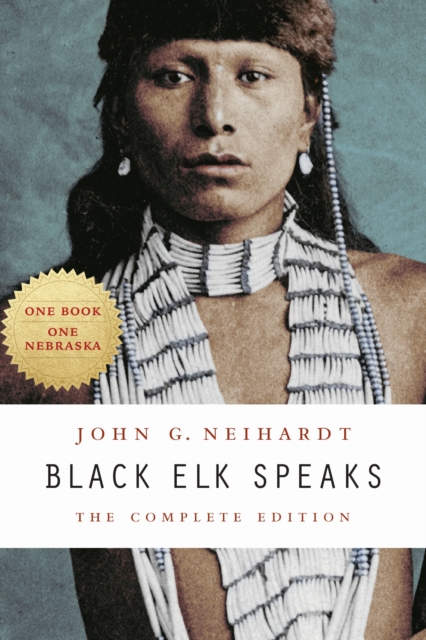
Black Elk speaks
Black Elk Speaks, the story of the Oglala Lakota visionary and healer Nicholas Black Elk (1863-1950) and his people during momentous twilight years of the nineteenth century, offers readers much more than a precious glimpse of a vanished time. Black Elk's searing visions of the unity of humanity and Earth, conveyed by John G. Neihardt, have made this book a classic that crosses multiple genres. Whether appreciated as the poignant tale of a Lakota life, as a history of a Native nation, or as an enduring spiritual testament, Black Elk Speaks is unforgettable. Black Elk met the distinguished poet, writer, and critic John G. Neihardt in 1930 on the Pine Ridge Reservation in South Dakota and asked Neihardt to share his story with the world. Neihardt understood and conveyed Black Elk's experiences in this powerful and inspirational message for all humankind. This complete edition features a new introduction by historian Philip J. Deloria and annotations of Black Elk's story by renowned Lakota scholar Raymond J. DeMallie. Three essays by John G. Neihardt provide background on this landmark work along with pieces by Vine Deloria Jr., Raymond J. DeMallie, Alexis Petri, and Lori Utecht. Maps, original illustrations by Standing Bear, and a set of appendixes rounds out the edition.
eBook
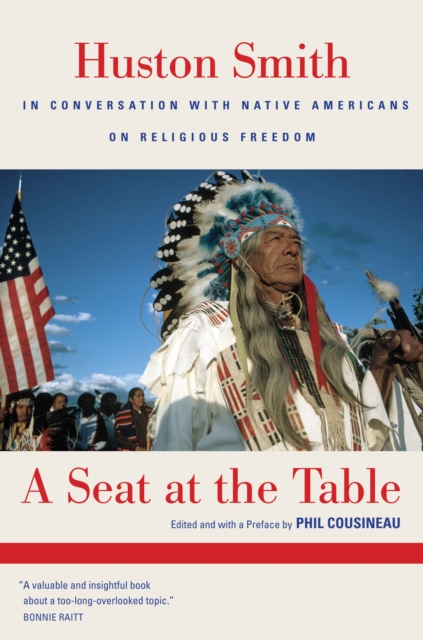
A Seat at the Table
In this collection of illuminating conversations, renowned historian of world religions Huston Smith invites ten influential American Indian spiritual and political leaders to talk about their five-hundred-year struggle for religious freedom. Their intimate, impassioned dialogues yield profound insights into one of the most striking cases of tragic irony in history: the country that prides itself on religious freedom has resolutely denied those same rights to its own indigenous people. With remarkable erudition and curiosity—and respectfully framing his questions in light of the revelation that his discovery of Native American religion helped him round out his views of the world's religions—Smith skillfully helps reveal the depth of the speakers' knowledge and experience. American Indian leaders Vine Deloria, Jr. (Standing Rock Sioux), Winona LaDuke (Anishshinaabeg), Walter Echo-Hawk (Pawnee), Frank Dayish, Jr. (Navajo), Charlotte Black Elk (Oglala Lakota), Douglas George-Kanentiio (Mohawk-Iroquois), Lenny Foster (Dine/Navajo), Tonya Gonnella Frichner (Onondaga), Anthony Guy Lopez (Lakota-Sioux), and Oren Lyons (Onondaga) provide an impressive overview of the critical issues facing the Native American community today. Their ideas about spirituality, politics, relations with the U.S. government, their place in American society, and the continuing vitality of their communities give voice to a population that is all too often ignored in contemporary discourse. The culture they describe is not a relic of the past, nor a historical curiosity, but a living tradition that continues to shape Native American lives.
eBook

We Have a Religion
For Native Americans, religious freedom has been an elusive goal. From nineteenth-century bans on indigenous ceremonial practices to twenty-first-century legal battles over sacred lands, peyote use, and hunting practices, the U.S. government has often acted as if Indian traditions were somehow not truly religious and therefore not eligible for the constitutional protections of the First Amendment. In this book, Tisa Wenger shows that cultural notions about what constitutes \"religion\" are crucial to public debates over religious freedom.In the 1920s, Pueblo Indian leaders in New Mexico and a sympathetic coalition of non-Indian reformers successfully challenged government and missionary attempts to suppress Indian dances by convincing a skeptical public that these ceremonies counted as religion. This struggle for religious freedom forced the Pueblos to employ Euro-American notions of religion, a conceptual shift with complex consequences within Pueblo life. Long after the dance controversy, Wenger demonstrates, dominant concepts of religion and religious freedom have continued to marginalize indigenous traditions within the United States.
eBook