
Catalogue Search | MBRL


Are you sure you want to remove the book from the shelf?

{{itemTitle}}
27,757
result(s) for
"RELIGION / Faith"
Sort by:
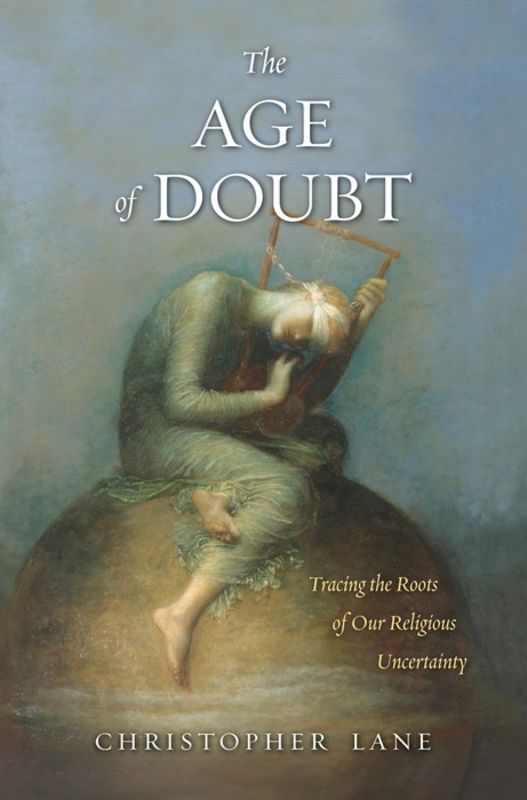
The Age of Doubt
The Victorian era was the first great \"Age of Doubt\" and a critical moment in the history of Western ideas. Leading nineteenth-century intellectuals battled the Church and struggled to absorb radical scientific discoveries that upended everything the Bible had taught them about the world. InThe Age of Doubt, distinguished scholar Christopher Lane tells the fascinating story of a society under strain as virtually all aspects of life changed abruptly.
In deft portraits of scientific, literary, and intellectual icons who challenged the prevailing religious orthodoxy, from Robert Chambers and Anne Brontë to Charles Darwin and Thomas H. Huxley, Lane demonstrates how they and other Victorians succeeded in turning doubt from a religious sin into an ethical necessity.
The dramatic adjustment of Victorian society has echoes today as technology, science, and religion grapple with moral issues that seemed unimaginable even a decade ago. Yet the Victorians' crisis of faith generated a far more searching engagement with religious belief than the \"new atheism\" that has evolved today. More profoundly than any generation before them, the Victorians came to view doubt as inseparable from belief, thought, and debate, as well as a much-needed antidote to fanaticism and unbridled certainty. By contrast, a look at today's extremes-from the biblical literalists behind the Creation Museum to the dogmatic rigidity of Richard Dawkins's atheism-highlights our modern-day inability to embrace doubt.
eBook
The sensual God
In the Old Testament, God wrestles with a man (and loses). In the Talmud, God wriggles his toes to make thunder and takes human form to shave the king of Assyria. In the New Testament, God is made flesh and dwells among humans. For religious thinkers trained in Greek philosophy and its deep distaste for matter, sacred scripture can be distressing. A philosophically respectable God should be untainted by sensuality, yet the God of sacred texts is often embarrassingly sensual.
Setting experts' minds at ease was neither easy nor simple, and often faith and logic were stretched to their limits. Focusing on examples from both Christian and Jewish sources, from the Bible to sources from the Late Middle Ages, Aviad Kleinberg examines the way Christian and Jewish philosophers, exegetes, and theologians attempted to reconcile God's supposed ineffability with numerous biblical and postbiblical accounts of seeing, hearing, smelling, touching, and even tasting the almighty. The conceptual entanglements ensnaring religious thinkers, and the strange, ingenious solutions they used to extricate themselves, tell us something profound about human needs and divine attributes, about faith, hope, and cognitive dissonance.
eBook
Human Identity at the Intersection of Science, Technology and Religion
Humans are unique in their ability to reflect on themselves. Recently a number of scholars have pointed out that human self-conceptions have a history. Ideas of human nature in the West have always been shaped by the interplay of philosophy, theology, science, and technology. The fast pace of developments in the latter two spheres (neuroscience, genetics, artificial intelligence, biomedical engineering) call for fresh reflections on what it means, now, to be human, and for theological and ethical judgments on how we might shape our own destiny in the future. The leading scholars in this book offer fresh contributions to the lively quest for an account of ourselves that does justice to current developments in theology, science, technology, and philosophy.
eBook

Beyond Doubt
Demonstrates definitively that the secularization thesis
is correct, and religion is losing its grip on societies
worldwide In the decades since its introduction,
secularization theory has been subjected to doubt and criticism
from a number of leading scholars, who have variously claimed that
it is wrong, flawed, or incomplete. In Beyond Doubt, Isabella
Kasselstrand, Phil Zuckerman, and Ryan T. Cragun mount a strong
defense for the theory, providing compelling evidence that religion
is indeed declining globally as a result of modernization. Though
defenses of secularization theory have been mounted in the past, we
now have many years' worth of empirical data to illuminate trends,
and can trace changes not just at a given point in time but over a
trajectory. Drawing on extensive survey data from nations around
the world, the book demonstrates that, in spite of its many
detractors, there is robust empirical support for secularization
theory. It also engages with the most prominent criticisms levied
against the theory, showing that data that are said to refute the
narrative of religious decline are easily explainable and in
keeping with the broader tendency toward secularization. Beyond
simply defending secularization theory, the authors endeavor to
formalize it, offering clear definitions of relevant terms and
creating propositions that can be repeatedly and accurately tested.
Beyond Doubt offers the strongest argument to date for the
existence of a global secularization trend, and will be a vital
resource for students and scholars alike who study religion and
secularism.
eBook

Touch the Wounds
In this masterfully written book, Tomáš Halík calls upon Christians to touch the wounds of the world and to rediscover their own faith by loving and healing their neighbors. One of the most important voices in contemporary Catholicism, Tomáš Halík argues that Christians can discover the clearest vision of God not by turning away from suffering but by confronting it. Halík calls upon us to follow the apostle Thomas's example: to see the pain, suffering, and poverty of our world and to touch those wounds with faith and action. It is those expressions of love and service, Halík reveals, that restore our hope and the courage to live, allowing true holiness to manifest itself. Only face-to-face with a wounded Christ can we lay down our armor and masks, revealing our own wounds and allowing healing to begin. Weaving together deep theological and philosophical reflections with surprising, trenchant, and even humorous commentary on the times in which we live, Halík offers a new prescription for those lost in moments of doubt, abandonment, or suffering. Rather than demanding impossible, flawless faith, we can look through our doubt to see, touch, and confront the wounds in the hearts of our neighbors and—through that wounded humanity, which the Son of God took upon himself—see God.
eBook

Faith leaders’ messaging is essential to enhance HIV prevention among black Americans: results from the 2016 National Survey on HIV in the black community (NSHBC)
Background
To investigate whether religious service attendance and faith leaders’ messages about HIV and same-sex relationships are associated with acceptance of HIV prevention strategies.
Methods
Multivariable Poisson regression assessed whether attending religious services, faith leaders’ messages about HIV and same-sex relationships, and supportiveness of those messages were associated with HIV testing, as well as knowledge of and willingness to use pre-exposure prophylaxis (PrEP) among 868 Black Americans [45% men; M (SD) = 34 (9) years-old] in the 2016 National Survey on HIV in the Black Community, USA.
Results
Participants who reported attending services monthly and/or hearing faith leaders’ messages that were supportive of same-sex relationships had a significantly higher likelihood of willingness to use PrEP (adjusted Rate Ratio[ARR] = 1.76; 95% confidence interval [CI] = 1.09, 2.48) and aRR = 2.19; 95% CI = 1.35, 3.55, respectively), independent of HIV risk. Homophobia was significantly associated with higher likelihood of being aware of PrEP and testing for HIV testing in the past 12 months.
Conclusions
Faith leaders’ messaging can influence Black Americans’ perceptions and uptake of HIV prevention strategies. Faith institutions and faith leaders should be involved in designing and disseminating HIV prevention strategies.
Journal Article
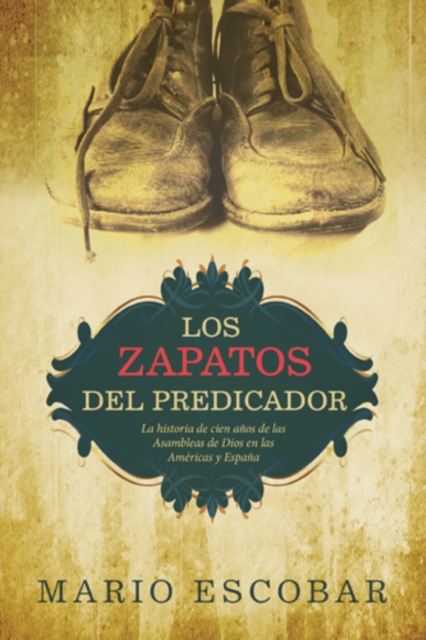
Los zapatos del predicador
¿Cómo resumir la historia de 520 millones de personas? ¿Cómo condensar en un libro 112 años de historia del movimiento pentecostal y carismático? ¿Cómo narrar los 100 años de historia de las Asambleas de Dios en el mundo y los 50 años de historia en España? Déjeme que le cuente una historia: un niño observa unos zapatos desgastados sobre una erosionada plataforma de madera. Al fondo se escuchan algunos himnos; la música del órgano intenta engañar al frío que se cuela por todas partes en la inmensa carpa amarilla. El predicador termina su mensaje y un centenar de personas avanza hacia el frente, mientras las voces de algunas mujeres siguen entonando viejos himnos de perdón y de redención. El niño también se aproxima. Desde su pequeñez observa la gran figura del predicador, que le parece un gigante, pero le llaman la atención los zapatos. Desgastados, pero limpios, esos zapatos tienen muchas cosas que contarle: sueños y frustraciones, milagros y esperanzas que no llegaron a cumplirse. Cuando el niño levanta la vista ya han pasado treinta y cinco años; los gigantes se han convertido en hombres, pero él sigue mirando sus zapatos: ellos le indicarán el camino. How do you summarize the history of 520 million people? How do you condense 112 years of history of the pentecostal and charismatic movements into one book? How do you recount the Assembly of God's 100 years of history in the world and 50 years of history in Spain? By starting with a story: a boy sees a pair of worn-out shoes on an old wooden platform. In the background he can hear a few hymns, and the organ music distracts him from the cold seeping in from all sides of the huge yellow tent. The preacher finishes his message, and a hundred people flock to the front while the voices of a few women keep singing old choruses of pardon and redemption. The small boy walks up front and observes the great figure of the preacher, who seems like a giant to him. But the shoes are what capture his attention. Worn-out but clean, those shoes have stories to tell: dreams and frustrations, miracles and disappointed hopes. When the boy looks up, thirty-five years have gone by; the giants have become men, but he keeps studying their shoes. They will show him the way.
eBook

Reason, Faith, and Revolution
Terry Eagleton's witty and polemicalReason, Faith, and Revolutionis bound to cause a stir among scientists, theologians, people of faith and people of no faith, as well as general readers eager to understand the God Debate. On the one hand, Eagleton demolishes what he calls the \"superstitious\" view of God held by most atheists and agnostics and offers in its place a revolutionary account of the Christian Gospel. On the other hand, he launches a stinging assault on the betrayal of this revolution by institutional Christianity.
There is little joy here, then, either for the anti-God brigade-Richard Dawkins and Christopher Hitchens in particular-nor for many conventional believers. Instead, Eagleton offers his own vibrant account of religion and politics in a book that ranges from the Holy Spirit to the recent history of the Middle East, from Thomas Aquinas to the Twin Towers.
eBook

Living between Science and Belief
Most thoughtful people live in an interregnum between science and religion. Traditional religious answers concerning the beginning, purpose, and end of life are questioned by the natural sciences, with neuroscience conceivably constituting the last frontier where skeptics and believers explore common ground. The question concerns the nature of reflective and creative moments in life. Can these be reduced to the intersect between the nerve cells and molecules of the physical brain? Does this account for the human sense of mystery, or even spirituality? Is there a nexus between the physical and unknown dimensions of existence? The mutation in the history of theism suggest that progressive theology in the West may be set for a further change.
eBook
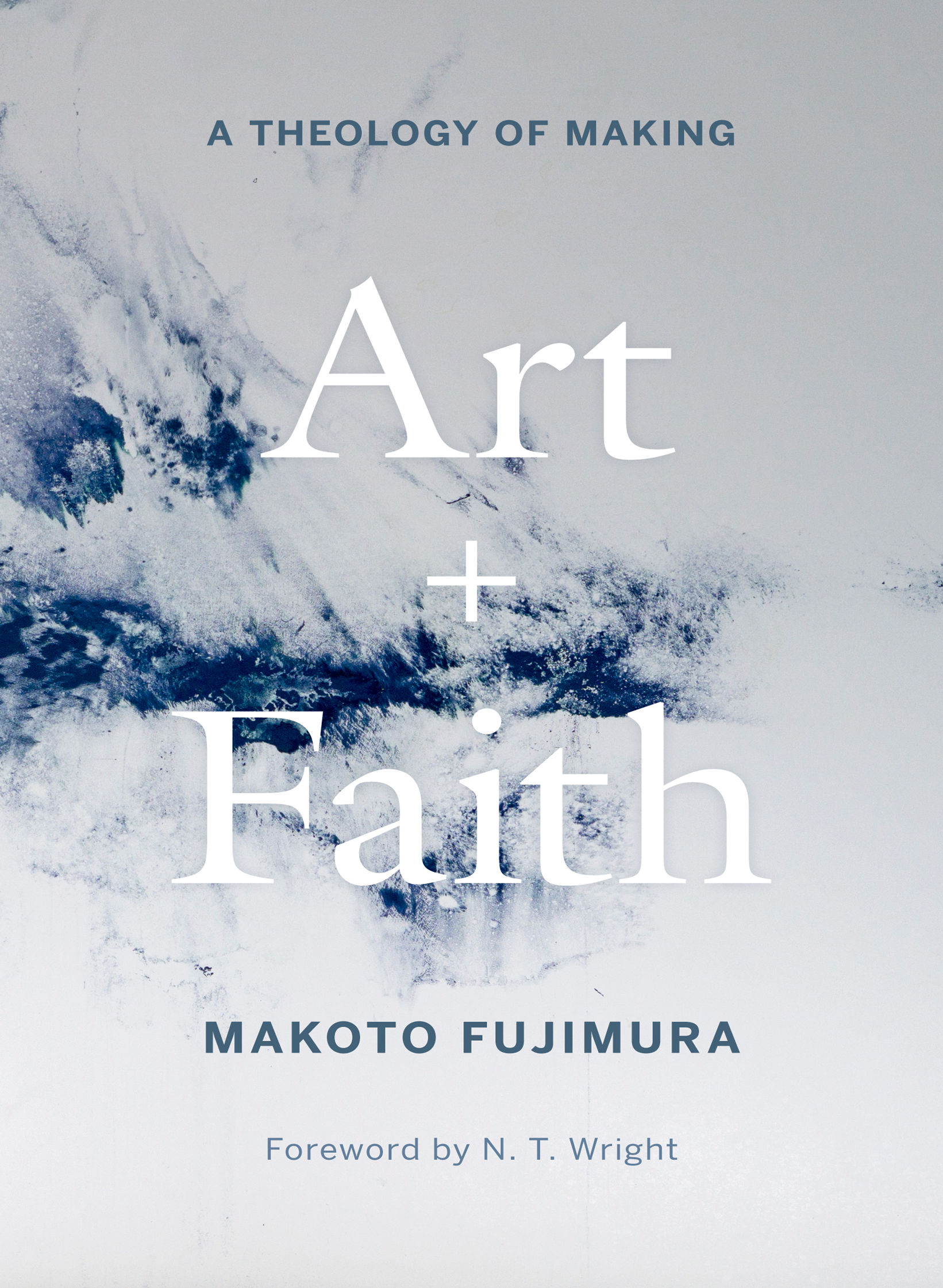
Art and faith : a theology of making
From a world-renowned painter, an exploration of creativity's quintessential-and often overlooked-role in the spiritual life \"Makoto Fujimura is the rare artist whose life has something of the same purifying and galvanizing force of his work. His new book brings those two elements-life and art-even closer together, and is a real tonic for our atomized time.\" -Christian Wiman Conceived over thirty years of painting and creating in his studio, this book is Makoto Fujimura's broad and deep exploration of creativity and the spiritual aspects of \"making.\" What he does in the studio is theological work as much as it is aesthetic work. In between pouring precious, pulverized minerals onto handmade paper to create the prismatic, refractive surfaces of his art, he comes into the quiet space in the studio, in a discipline of awareness, waiting, prayer, and praise. Ranging from the Bible to T. S. Eliot, and from Mark Rothko to Japanese Kintsugi technique, he shows how unless we are making something, we cannot know the depth of God's being and God's grace permeating our lives. This poignant and beautiful book offers the perspective of, in Christian Wiman's words, \"an accidental theologian,\" one who comes to spiritual questions always through the prism of art.
eBook