
Catalogue Search | MBRL


Are you sure you want to remove the book from the shelf?

{{itemTitle}}
60,005
result(s) for
"RELIGION / General."
Sort by:

Foreigners and their food
Foreigners and Their Food explores how Jews, Christians, and Muslims conceptualize \"us\" and \"them\" through rules about the preparation of food by adherents of other religions and the act of eating with such outsiders. David M. Freidenreich analyzes the significance of food to religious formation, elucidating the ways ancient and medieval scholars use food restrictions to think about the \"other.\" Freidenreich illuminates the subtly different ways Jews, Christians, and Muslims perceive themselves, and he demonstrates how these distinctive self-conceptions shape ideas about religious foreigners and communal boundaries. This work, the first to analyze change over time across the legal literatures of Judaism, Christianity, and Islam, makes pathbreaking contributions to the history of interreligious intolerance and to the comparative study of religion.
eBook

People under Power
This volume presents a batch of incisive new essays on the relationship between Roman imperial power and ideology and Christian and Jewish life and thought within the empire. Employing diverse methodologies that include historical criticism, rhetorical criticism, postcolonial criticism, and social historical studies, the contributors offer fresh perspectives on a question that is crucial for our understanding not only of the late Roman Empire, but also of the growth and change of Christianity and Judaism in the imperial period.
eBook

Christianity, Islam, and Orisa-Religion
The Yoruba of southwestern Nigeria are exceptional for the copresence among them of three religious traditions: Islam, Christianity, and the indigenousorisareligion. In this comparative study, at once historical and anthropological, Peel explores the intertwined character of the three religions and the dense imbrication of religion in all aspects of Yoruba history up to the present. For over 400 years, the Yoruba have straddled two geocultural spheres: one reaching north over the Sahara to the world of Islam, the other linking them to the Euro-American world via the Atlantic. These two external spheres were the source of contrasting cultural influences, notably those emanating from the world religions. However, the Yoruba not only imported Islam and Christianity but also exported their ownorisareligion to the New World. Before the voluntary modern diaspora that has brought many Yoruba to Europe and the Americas, tens of thousands were sold as slaves in the New World, bringing with them the worship of theorisa. Peel offers deep insight into important contemporary themes such as religious conversion, new religious movements, relations between world religions, the conditions of religious violence, the transnational flows of contemporary religion, and the interplay between tradition and the demands of an ever-changing present. In the process, he makes a major theoretical contribution to the anthropology of world religions.
eBook

Japan's Modern Prophet
Uchimura Kanzô was one of Japan’s foremost thinkers, whose ideas influenced contemporary novelists, statesmen, reformers, and religious leaders. He lived at a time of increasing modernization and rapid social change. Known as the originator and proponent of a particularly “Japanese” form of Christianity known as mukyôkai, Uchimura struggled with the tensions between his love for the homeland and his love for God. Articulate, prolific, passionate, and profound, he earned a reputation as the most consistent critic of his society and the most knowledgeable Japanese interpreter of Christianity and its Bible. In addition to teaching and giving public lectures, he wrote numerous books and articles -- in both English and Japanese -- edited newspapers and periodicals, and founded several magazines. Through the prism of this exceptional man’s life, John Howes charts, in this tour de force, what it meant to live during the introduction of Christianity to Japan.
eBook

English Benedictine nuns in exile in the seventeenth century
This study of English Benedictine nuns is based upon a wide variety of original manuscripts, including chronicles, death notices, clerical instructions, texts of spiritual guidance, but also the nuns' own collections of notes. It highlights the tensions between the contemplative ideal and the nuns' personal experiences, illustrating the tensions between theory and practice in the ideal of being dead to the world. It shows how Benedictine convents were both cut-off and enclosed yet very much in touch with the religious and political developments at home, but also proposes a different approach to the history of nuns, with a study of emotions and the senses in the cloister, delving into the textual analysis of the nuns' personal and communal documents to explore aspect of a lived spirituality, when the body which so often hindered the spirit, at times enabled spiritual experience.
eBook

Talking about God
A fundamental question for theology is the question how we are to understand the claims that we make about God. The only language we can understand is the language we use to talk about human beings and their environment. How can we use that language to talk about God while respecting the infinite difference between God and humanity?
The traditional answer has been to appeal to the concept of analogy. However, that appeal has been interpreted in widely different ways. This book aims to clarify the question and this answer by an analysis of the concept. It begins with an exploration of the way the concept was evolved by Aristotle out of Greek mathematics as a technique for comparing \"things that were remote\"; followed by a critical examination of three very different classical accounts of the way religious language works: those of Thomas Aquinas, Immanuel Kant and Karl Barth. The book finally investigates the way in which analogy could be applied to answer the question initially posed-how is it possible to use human language to talk about God. This is a question of fundamental significance for the whole of religion and theology, concerning as it does our whole understanding of what we mean when we talk about God.
eBook

Religion Out Loud
For six months in 2004, controversy raged in Hamtramck, Michigan, as residents debated a proposed amendment that would exempt the adhan, or Islamic call to prayer, from the city's anti-noise ordinance. The call to prayer functioned as a flashpoint in disputes about the integration of Muslims into this historically Polish-Catholic community. No one openly contested Muslims' right to worship in their mosques, but many neighbors framed their resistance around what they regarded as the inappropriate public pronouncement of Islamic presence, an announcement that audibly intruded upon their public space.Throughout U.S. history, complaints about religion as noise have proven useful both for restraining religious dissent and for circumscribing religion's boundaries more generally. At the same time, religious individuals and groups rarely have kept quiet. They have insisted on their right to practice religion out loud, implicitly advancing alternative understandings of religion and its place in the modern world.InReligion Out Loud, Isaac Weiner takes such sonic disputes seriously. Weaving the story of religious noise through multiple historical eras and diverse religious communities, he convincingly demonstrates that religious pluralism has never been solely a matter of competing values, truth claims, or moral doctrines, but of differentstylesof public practice, of fundamentally different ways of using body and space - and that these differences ultimately have expressed very different conceptions of religion itself. Weiner's innovative work encourages scholars to pay much greater attention to the publicly contested sensory cultures of American religious life.In theNorth American ReligionsseriesIsaac Weineris Assistant Professor of Religion and Culture in the Department of Comparative Studies at the Ohio State University.
eBook

Churches and Charity in the Immigrant City
In addition to being a religious countryùover ninety percent of Americans believe in God--the United States is also home to more immigrants than ever before.Churches and Charity in the Immigrant Cityfocuses on the intersection of religion and civic engagement among Miami's immigrant and minority groups. The contributors examine the role of religious organizations in developing social relationships and how these relationships affect the broader civic world. Essays, for example, consider the role of leadership in the promotion and creation of \"civic social capital\" in a Haitian Catholic church, transnational ties between Cuban Catholics in Miami and Havana, and several African American congregations that serve as key comparisons of civic engagement among minorities.
This book is important not only for its theoretical contributions to the sociology of religion, but also because it gives us a unique glimpse into immigrants' civic and religious lives in urban America.
eBook

People under Power
At the time when the New Testament texts were written, the ultimate worldly power lay with the Roman Emperor and his delegates. Scholars have given different answers to questions of how the Roman Empire, its propaganda, and its policies affected the life and religious practices of different Jewish and early Christian groups. Several scholars have found, for instance, marks of anti-imperial polemics or other traces of imperial discourse in different New Testament writings. Others point out that many NT writers seem to have ignored the political system as part of the world that is passing away. Meanwhile the official attitude toward religious minorities ranged from indifference and scorn to active persecution. What impact did this have on the self-understanding of these minorities?
People under Power: Early Jewish and Christian Responses to the Roman Empire discusses these themes from fresh and varied perspectives using an array of methodological approaches ranging from interpreting archaeological evidence to postcolonial readings. Source materials include Jewish, Christian, and pagan texts.
The book contains contributions by George Brooke, Birgit van der Lans, Nóra Dávid, Anders Klostergaard Petersen, Martin Meiser, Klaus Scholtissek, Mark Grundeken, Paul Middleton, and Marco Frenschkowski.
eBook
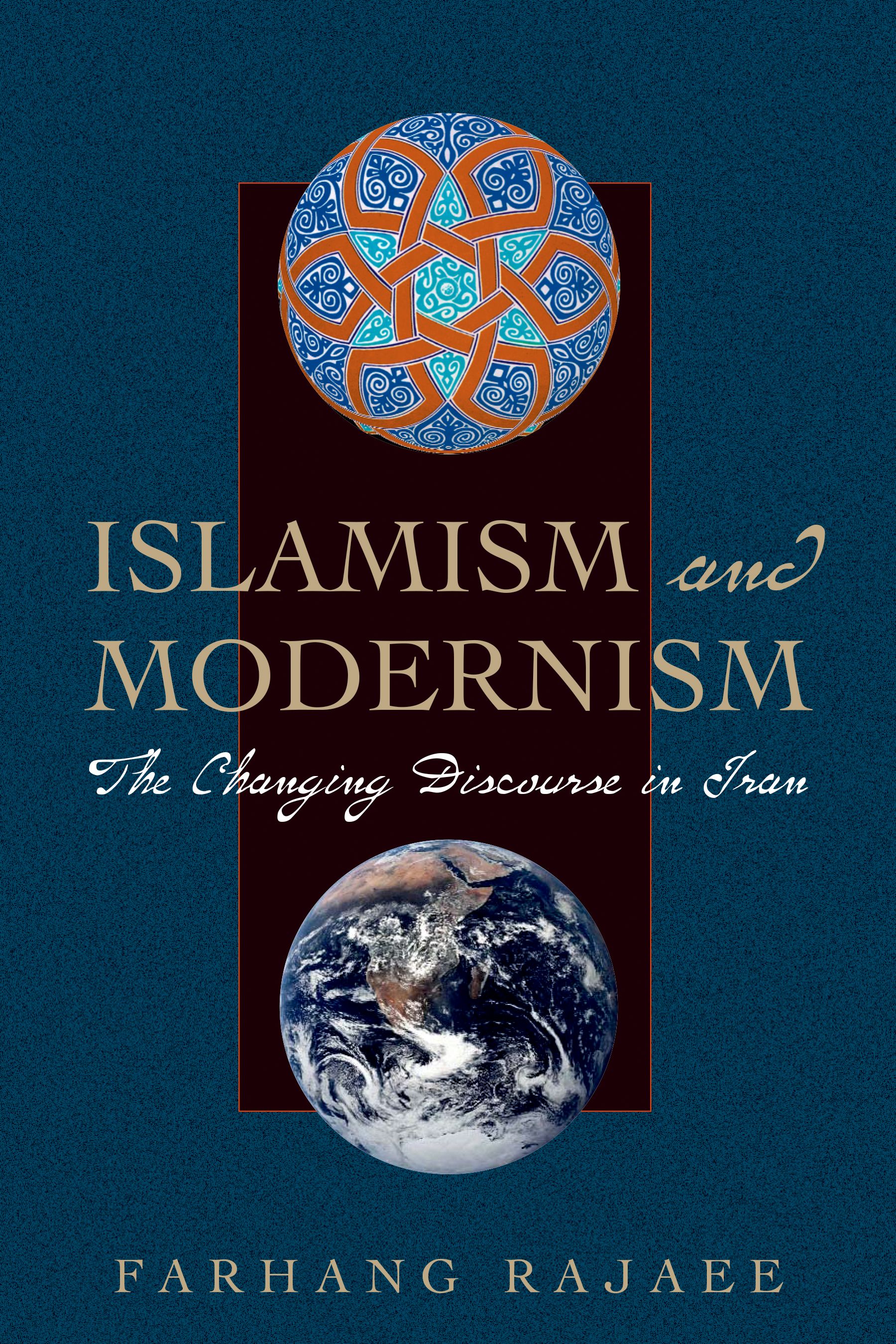
Islamism and Modernism
While many previous books have probed the causes of Iran's Islamic Revolution of 1979, few have focused on the power of religion in shaping a national identity over the decades leading up to it. Islamism and Modernism captures the metamorphosis of the Islamic movement in Iran, from encounters with Great Britain and the United States in the 1920s through twenty-first-century struggles between those seeking to reform Islam's role and those who take a hardline defensive stance. Capturing the views of four generations of Muslim activists, Farhang Rajahee describes how the extremism of the 1960s brought more confidence to concerned Islam-minded Iranians and radicalized the Muslim world while Islamic alternatives to modernity were presented. Subsequent ideologies gave rise to the revolution, which in turn has fed a restructuring of Islam as a faith rather than as an ideology. Presenting thought-provoking discussions of religious thinkers such as Ha'eri, Burujerdi, Bazargan, and Shari'ati, along with contemporaries such as Kadivar, Soroush, and Shabestari, the author sheds rare light on the voices fueling contemporary Islamic thinking in Iran. A comprehensive study of these interwoven aspects of politics, religion, society, and identity, Islamism and Modernism offers crucial new insight into the aftermath of the Iranian Constitutional Revolution fought one hundred years ago—and its ramifications for the newest generation to face the crossroads of modernity and Islamic discourse in modern Iran today.
eBook