
Catalogue Search | MBRL


Are you sure you want to remove the book from the shelf?

{{itemTitle}}
112,321
result(s) for
"RELIGION / Philosophy"
Sort by:


The Star of Redemption
The Star of Redemption is essential reading for anyone interested in understanding religion and philosophy in the twentieth century. Fusing philosophy and theology, the book assigns both Judaism and Christianity distinct but equally important roles in the spiritual structure of the world. Franz Rosenzweig finds in both biblical religions approaches to a comprehension of reality. The major themes and motifs of The Star—the birth, life, death, and the immortality of the soul; Eastern philosophies and Jewish mysticism; the relationship between God, world and humanity over time; and revelation as the real biblical miracle of faith and path to redemption—resonate meaningfully.
eBook

Religion and Enlightenment in Catherinian Russia
This valuable study explores the Russian Enlightenment with reference to the religious Enlightenment of the mid to late eighteenth century. Grounded in close reading of the sermons and devotional writings of Platon (Levshin), Court preacher and Metropolitan of Moscow, the book examines the blending of European ideas into the teachings of Russian Orthodoxy. Highlighting the interplay between Enlightenment thought and Orthodox enlightenment, Elise Wirtschafter addresses key questions of concern to religious Enlighteners across Europe: humanity's relationship to God and creation, the distinction between learning and enlightenment, the role of Christian love in authority relationships, the meaning of free will in a universe governed by Divine Providence, and the unity of church, monarchy, and civil society. Countering scholarship that depicts an Orthodox religious culture under assault from European modernity and Petrine absolutism, Wirtschafter emphasizes the ability of Russia's educated churchmen to assimilate and transform Enlightenment ideas. The intellectual and spiritual vitality of eighteenth-century Orthodoxy helps to explain how Russian policymakers and intellectuals met the challenge of European power while simultaneously coming to terms with the broad cultural appeal of the Enlightenment's universalistic human rights agenda.
Religion and Enlightenment in Catherinian Russia defines the Russian Enlightenment as a response to the allure of European modernity, as an instrument of social control, and as the moral voice of an emergent independent society. Because Russia's enlightened intellectuals focused on the moral perfectibility of the individual human being, rather than social and political change, the originality of the Russian Enlightenment has gone unrecognized. This study corrects images of a superficial Enlightenment and crisis-ridden religious culture, arguing that in order to understand the humanistic sensibility and emphasis on individual dignity that permeate Russian intellectual history, and the history of the educated classes more broadly, it is necessary to bring Orthodox teachings into the discussion of Enlightenment thought. The result is a book that explains the distinctive origins of modern Russian culture while also allowing scholars to situate the Russian Enlightenment in European and global history.
eBook

The Wisdom to Doubt
The Wisdom to Doubtis a major contribution to the contemporary literature on the epistemology of religious belief. Continuing the inquiry begun in his previous book,Prolegomena to a Philosophy of Religion, J. L. Schellenberg here argues that given our limitations and especially our immaturity as a species, there is no reasonable choice but to withhold judgment about the existence of an ultimate salvific reality. Schellenberg defends this conclusion against arguments from religious experience and naturalistic arguments that might seem to make either religious belief or religious disbelief preferable to his skeptical stance. In so doing, he canvasses virtually all of the important recent work on the epistemology of religion. Of particular interest is his call for at least skepticism about theism, the most common religious claim among philosophers.
The Wisdom to Doubtexpands the author's well-known hiddenness argument against theism and situates it within a larger atheistic argument, itself made to serve the purposes of his broader skeptical case. That case need not, on Schellenberg's view, lead to a dead end but rather functions as a gateway to important new insights about intellectual tasks and religious possibilities.
eBook

Giving Beyond the Gift: Apophasis and Overcoming Theomania
This book explores the co-dependency of monotheism and idolatry by examining the thought of several prominent twentieth-century Jewish philosophers Cohen, Buber, Rosenzweig, and Levinas. While all of these thinkers were keenly aware of the pitfalls of scriptural theism, to differing degrees they each succumbed to the temptation to personify transcendence, even as they tried either to circumvent or to restrain it by apophatically purging kataphatic descriptions of the deity. Derrida and Wyschogrod, by contrast, carried the project of denegation one step further, embarking on a path that culminated in the aporetic suspension of belief and the consequent removal of all images from God, a move that seriously compromises the viability of devotional piety. The inquiry into apophasis, transcendence, and immanence in these Jewish thinkers is symptomatic of a larger question. Recent attempts to harness the apophatic tradition to construct a viable postmodern negative theology, a religion without religion, are not radical enough. Not only are these philosophies of transcendence guilty of a turn to theology that defies the phenomenological presupposition of an immanent phenomenality, but they fall short on their own terms, inasmuch as they persist in employing metaphorical language that personalizes transcendence and thereby runs the risk of undermining the irreducible alterity and invisibility attributed to the transcendent other. The logic of apophasis, if permitted to run its course fully, would exceed the need to posit some form of transcendence that is not ultimately a facet of immanence. Apophatic theologies, accordingly, must be supplanted by a more far-reaching apophasis that surpasses the theolatrous impulse lying coiled at the crux of theism, an apophasis of apophasis, based on accepting an absolute nothingness to be distinguished from the nothingness of an absolute that does not signify the unknowable One but rather the manifold that is the pleromatic abyss at being's core. Hence, the much-celebrated metaphor of the gift must give way to the more neutral and less theologically charged notion of an unconditional givenness in which the distinction between giver and given collapses. To think givenness in its most elemental, phenomenological sense is to allow the apparent to appear as given without presuming a causal agency that would turn that given into a gift.
eBook

Religion and Power
There are few more contentious issues than the relation of faith to power or the suggestion that religion is irrational compared with politics and peculiarly prone to violence. The former claim is associated with Juergen Habermas and the latter with Richard Dawkins.
In this book David Martin argues, against Habermas, that religion and politics share a common mythic basis and that it is misleading to contrast the rationality of politics with the irrationality of religion. In contrast to Richard Dawkins (and New Atheists generally), Martin argues that the approach taken is brazenly unscientific and that the proclivity to violence is a shared feature of religion, nationalism and political ideology alike rooted in the demands of power and social solidarity. The book concludes by considering the changing ecology of faith and power at both centre and periphery in monuments, places and spaces.
eBook

The Will to Imagine
The Will to Imaginecompletes J. L. Schellenberg's trilogy in the philosophy of religion, following his acclaimedProlegomena to a Philosophy of ReligionandThe Wisdom to Doubt. This book marks a striking reversal in our understanding of the possibility of religious faith. Where other works treat religious skepticism as a dead end,The Will to Imagineargues that skepticism is the only point from which a proper beginning in religious inquiry-and in religion itself-can be made.
For Schellenberg, our immaturity as a species not only makes justified religious belief impossible but also provides the appropriate context for a type of faith response grounded in imagination rather than belief, directed not to theism but to ultimism, the heart of religion. This new and nonbelieving form of faith, he demonstrates, is quite capable of nourishing an authentic religious life while allowing for inquiry into ways of refining the generic idea that shapes its commitments. A singular feature of Schellenberg's book is his claim, developed in detail, that unsuccessful believers' arguments can successfully be recast as arguments for imaginative faith.
Out of the rational failure of traditional forms of religious belief,The Will to Imaginefashions an unconventional form of religion better fitted, Schellenberg argues, to the human species as it exists today and as we may hope it will evolve.
eBook
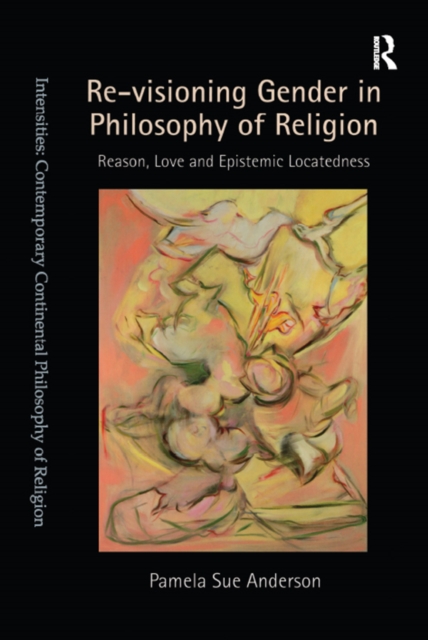
Re-visioning Gender in Philosophy of Religion
A passion for justice and truth motivates the bold challenge of Revisioning Gender in Philosophy of Religion. Unearthing the ways in which the myths of Christian patriarchy have historically inhibited and prohibited women from thinking and writing their own ideas, this book lays fresh ground for re-visioning the epistemic practices of philosophers. Pamela Sue Anderson seeks both to draw out the salient threads in the gendering of philosophy of religion as it has been practiced and to re-vision gender for philosophy today. The arguments put forth by contemporary philosophers of religion concerning human and divine attributes are epistemically located; yet the motivation to recognize this locatedness has to come from a concern for justice. This book presents invaluable new perspectives on the philosopher’s ever-increasing awareness of his or her own locatedness, on the gender (often unwittingly) given to God, the ineffability in both analytic and Continental philosophy, the still critical role of reason in the field, the aims of a feminist philosophy of religion, the roles of beauty and justice, the vision of love and reason, and a gendering which opens philosophy of religion up to diversity.
Contents: Preface; Re-visioning gender and the myths of patriarchy; Gender in philosophy of religion; Gendering theism and feminism; Philosophy on and off ’the Continent’ Gendering love in philosophy of religion; Restoring faith in reason; Feminist philosophy of religion; Gender justice and unselfish attention; Re-visioning love and reason; Epistemic locatedness: diversity and gender; Bibliography; Index.
Dr Pamela Sue Anderson, Reader in Philosophy of Religion at the University of Oxford, UK, is also author of Ricoeur and Kant (1993), A Feminist Philosophy of Religion (1998) and editor of New Topics in Feminist Philosophy of Religion (2010).
eBook

Material Spirit: Religion and Literature Intranscendent
The essays in this collection examine philosophical, religious, and literary or artistic texts using methodologies and insights that have grown out of reflection on literature and art. In them, them phrase \"material spirit\" becomes a point of departure for considering the continuing spectral effects of religious texts and concerns in ways that do not simply call for, or assume, new orrenewed forms of religiosity. The writers in this collection seek to examine religion beyond traditional notions of transcendence: Their topics range from early Christian religious practices to global climate change. Some of the essays explore religious themes or tones in literary texts, for example, works by Wordsworth, Hopkins, Proust, Woolf, and Teresa of Avila. Others approach in a literarycritical mood philosophical or para-philosophical writers such as Bataille, Husserl, Derrida, and Benjamin. Still others treat writers of a more explicitly religious orientation, such as Augustine, Rosenzweig, or Bernard of Clairvaux.
eBook

Comprehensive Commentary on Kant's Religion Within the Bounds of Bare Reason
Palmquist's Commentary provides the first definitive clarification on Kant's Philosophy of Religion in English; it includes the full text of Pluhar's translation, interspersed with explanations, providing both a detailed overview and an original interpretation of Kant's work.
* Offers definitive, sentence-level commentary on Kant's Religion within the Bounds of Bare Reason
* Presents a thoroughly revised version of Pluhar's translation of the full text of Kant's Religion, including detailed notes comparing the translation with the others still in use today
* Identifies most of the several hundred changes Kant made to the second (1794) edition and unearths evidence that many major changes were responses to criticisms of the first edition
* Provides both a detailed overview and original interpretation of Kant's work on the philosophy of religion
* Demonstrates that Kant's arguments in Religion are not only cogent, but have clear and profound practical applications to the way religion is actually practiced in the world today
* Includes a glossary aimed at justifying new translations of key technical terms in Religion, many of which have previously neglected religious and theological implications
eBook