
Catalogue Search | MBRL


Are you sure you want to remove the book from the shelf?

{{itemTitle}}
233
result(s) for
"RELIGION Religious Intolerance, Persecution "
Sort by:

Journey into Europe : Islam, immigration, and identity
An unprecedented, richly detailed, and clear-eyed exploration of Islam in Europe and the place of Islam in European history and civilization.
BOOK
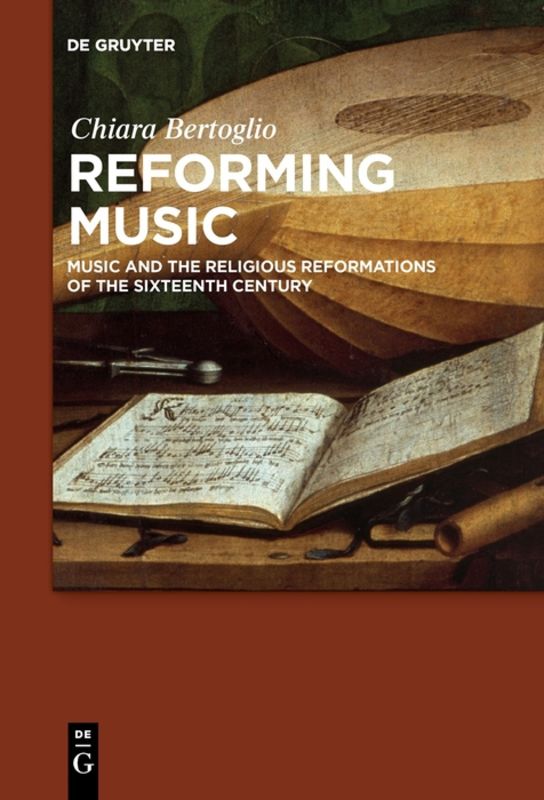
Reforming Music
Five hundred years ago a monk nailed his theses to a church gate in Wittenberg. The sound of Luther's mythical hammer, however, was by no means the only aural manifestation of the religious Reformations.
This book describes the birth of Lutheran Chorales and Calvinist Psalmody; of how music was practised by Catholic nuns, Lutheran schoolchildren, battling Huguenots, missionaries and martyrs, cardinals at Trent and heretics in hiding, at a time when Palestrina, Lasso and Tallis were composing their masterpieces, and forbidden songs were concealed, smuggled and sung in taverns and princely courts alike.
Music expressed faith in the Evangelicals' emerging worships and in the Catholics' ancient rites; through it new beliefs were spread and heresy countered; analysed by humanist theorists, it comforted and consoled miners, housewives and persecuted preachers; it was both the symbol of new, conflicting identities and the only surviving trace of a lost unity of faith.
The music of the Reformations, thus, was music reformed, music reforming and the reform of music: this book shows what the Reformations sounded like, and how music became one of the protagonists in the religious conflicts of the sixteenth century.
eBook

Jewishness and Beyond
Throughout the nineteenth century, Hungary's government steadily
dismantled obstacles that kept its rapidly expanding Jewish
communities from enjoying the full benefits of citizenship. The
state's concerted efforts to \"Magyarize\" Jews promoted Hungarian
language, culture, and sensibilities, but did not officially
require Jews to abandon their faith. Nevertheless, tens of
thousands of Hungarian Jews converted to Christianity during this
era, with conversion rates continuing to rise even as Judaism
gained full legal equality.
Jewishness and Beyond addresses the apparent
contradiction between these two trends. Despite the egalitarian
promises and laws of Hungary's liberal nationalist government, the
administration and traditional elites as a whole maintained a
persistent bias against Jews that spurred particularly high
conversion rates among the community's upper echelons. While
Christians never forgot converted Jews' origins and increasingly
thought of them in racialized terms, they also valued and generally
rewarded conversion and the symbolic gesture of baptism. Conversion
was an uneven and ever-shifting process in which gender and
occupation played key roles, and where the actual percentage of
converts within the total Hungarian Jewish population contrasted
sharply with both Christian and Jewish perceptions of its frequency
and spread.
Jewishness and Beyond , which can be read as an
introduction to the identity dilemmas of Hungarian Jews in the age
of emancipation, reveals the motivations and strategies behind the
conversions of Hungarian Jews, the complex reactions within and
outside of their communities, and converts' own grappling with
conversion's expected and unforeseen outcomes.
eBook

Children and Childhood in World Religions
While children figure prominently in religious traditions, few books have directly explored the complex relationships between children and religion. This is the first book to examine the theme of children in major religions of the world.
Each of six chapters, edited by world-class scholars, focuses on one religious tradition and includes an introduction and a selection of primary texts ranging from legal to liturgical and from the ancient to the contemporary. Through both the scholarly introductions and the primary sources, this comprehensive volume addresses a range of topics, from the sanctity of birth to a child's relationship to evil, showing that issues regarding children are central to understanding world religions and raising significant questions about our own conceptions of children today.
eBook

Hate Speech and Academic Freedom
Completed shortly before Hamas carried out its barbaric October massacre,
Hate Speech and Academic Freedom takes up issues that have consequently gained new urgency in the academy worldwide. It is the first book to ask what impact antisemitism has had on the fundamental principles the academy relies on for its identity—academic freedom, free speech rights, standards for hiring or firing faculty members and administrators, and the ethics of academic conduct and debate. Antisemitic hatred is spreading at a fever pitch. What steps can counter it? What damage to students is done when departments embrace anti-Zionism? Should faculty members face consequences for promoting antisemitism on social media? Should universities make a new push to adopt the IHRA Definition of Antisemitism?
eBook

End of Days Ethics, Tradition, and Power in Israel
End of Days is both a meditation on Jewish morality in the age of Israeli Jewish power, and a
cri du coeur by an Orthodox Israeli Jew, a former combat officer in the IDF, for Israelis to look into the Jewish religious ethical tradition for an alternative to the secular and religious Zionism that sanctifies power, statehood, and sovereignty. Appealing to a wealth of Jewish sources from the Bible to the present, including medieval Jewish ethical literature, rabbinic sources, Jewish law, and contemporary Israeli thought, the book presents an argument against Israel’s occupation of the Palestinians and the suppression of their rights from the perspective of a modern Israeli religious Jew.
eBook

Religion in human evolution : from the Paleolithic to the Axial Age
A New York Times Book Review Editors' Choice
An ABC Australia Best Book on Religion and Ethics of the Year
Distinguished Book Award, Sociology of Religion Section of the American Sociological Association
Religion in Human Evolution is a work of extraordinary ambition—a wide-ranging, nuanced probing of our biological past to discover the kinds of lives that human beings have most often imagined were worth living. It offers what is frequently seen as a forbidden theory of the origin of religion that goes deep into evolution, especially but not exclusively cultural evolution.
\"Of Bellah's brilliance there can be no doubt. The sheer amount this man knows about religion is otherworldly…Bellah stands in the tradition of such stalwarts of the sociological imagination as Emile Durkheim and Max Weber. Only one word is appropriate to characterize this book's subject as well as its substance, and that is 'magisterial.'\"
—Alan Wolfe, New York Times Book Review
\"Religion in Human Evolution is a magnum opus founded on careful research and immersed in the 'reflective judgment' of one of our best thinkers and writers.\"
—Richard L. Wood, Commonweal
eBook

Sustaining Faith Traditions
Over fifty years ago, Will Herberg theorized that future immigrants to the United States would no longer identify themselves through their races or ethnicities, or through the languages and cultures of their home countries. Rather, modern immigrants would base their identities on their religions.
The landscape of U.S. immigration has changed dramatically since Herberg first published his theory. Most of today's immigrants are Asian or Latino, and are thus unable to shed their racial and ethnic identities as rapidly as the Europeans about whom Herberg wrote. And rather than a flexible, labor-based economy hungry for more workers, today's immigrants find themselves in a post-industrial segmented economy that allows little in the way of class mobility.
In this comprehensive anthology contributors draw on ethnography and in-depth interviews to examine the experiences of the new second generation: the children of Asian and Latino immigrants. Covering a diversity of second-generation religious communities including Christians, Hindus, Buddhists, Muslims, and Jews, the contributors highlight the ways in which race, ethnicity, and religion intersect for new Americans. As the new second generation of Latinos and Asian Americans comes of age, they will not only shape American race relations, but also the face of American religion.
eBook
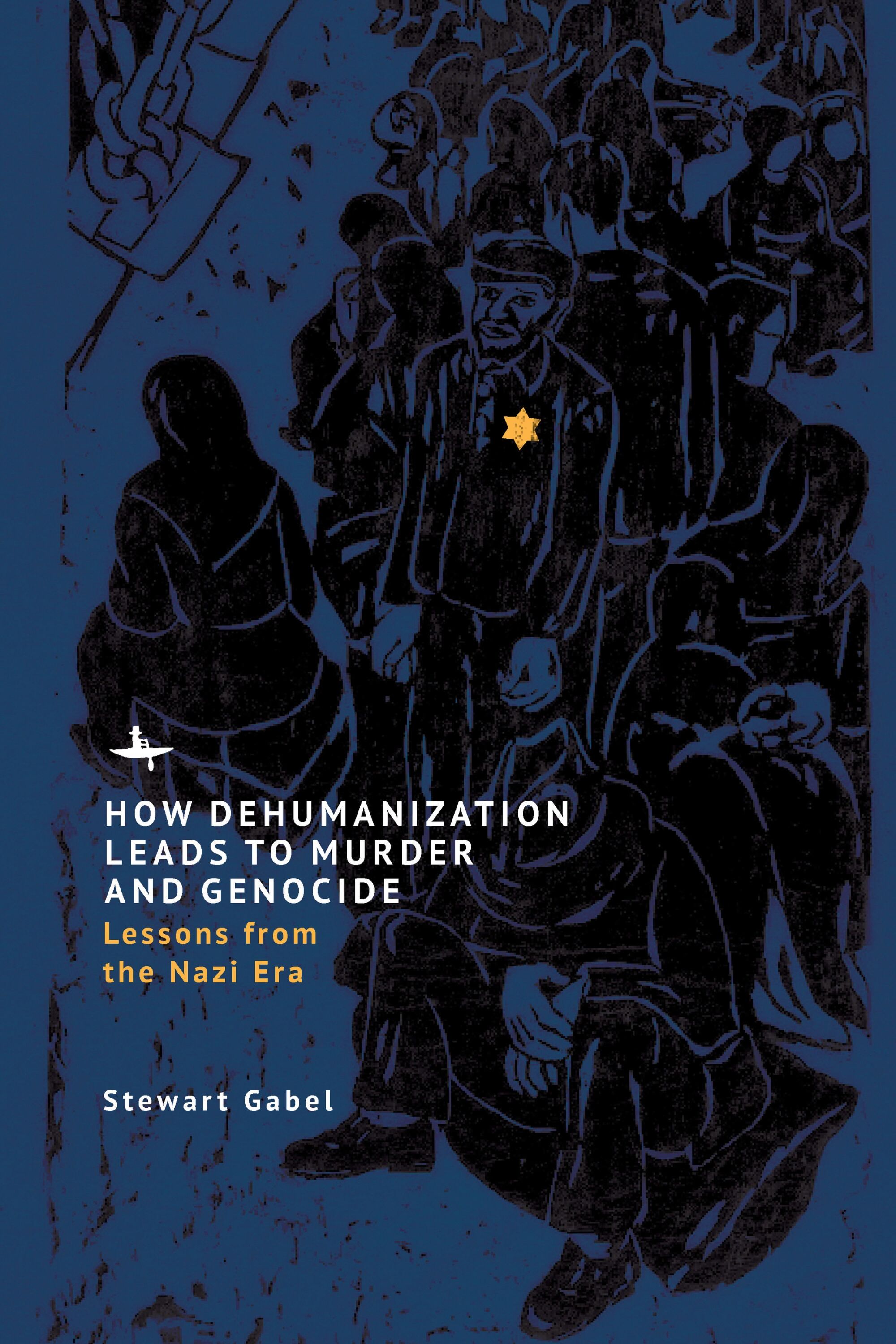
How Dehumanization Leads to Murder and Genocide
This book discusses psychological aspects of dehumanization and of the human tendency to dominate, control and potentially murder those considered less than or “other” by the dominant group. It explores how increasingly severe dehumanization resulted in the genocide of six million Jews in the second World War. Psychological and behavioral strategies Nazi aggressors and ordinary citizens used to mislead themselves during this process are described. Understanding the sequence of events from dehumanization to murder has implications for the apparent tendency of human beings to harm and potentially kill those who appear “different”, or who are made into the “other”. Efforts to prevent genocide should actively challenge dehumanization of weaker populations whenever possible, even when dehumanization appears mild, “insignificant,” or “innocuous.”
eBook
Poisoning the Wells
In twenty-first century America, antisemitism is on the rise, especially on the extreme left, the radical right, and within political Islamism. Expressions of this oldest hatred are also increasingly prevalent in popular culture, where they are spread by politicians, entertainers and celebrities, the media, social justice activists, and religious leaders, as well as in universities, in schools, on the streets, and even, in some instances, by Jews. Once, Jews regarded the United States as
die Goldene Medina –the Golden Land–where they could escape persecution and finally be free. However, this dream has not been realized and major trends are moving in the opposite direction. In
Poisoning the Wells , leading scholars analyze contemporary antisemitism in the United States.
eBook