
Catalogue Search | MBRL


Are you sure you want to remove the book from the shelf?

{{itemTitle}}
115,186
result(s) for
"RELIGIOUS EDUCATION"
Sort by:
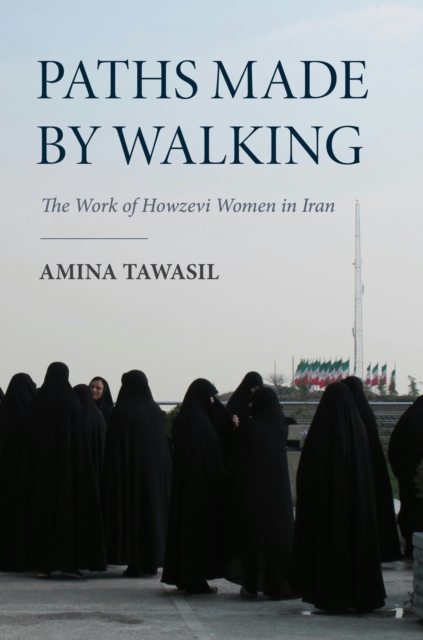
Paths Made by Walking
What can women's scholastic pursuits tell us about what building
an Islamic state looks like for women who are loyal to its project?
And what can an ethnographic study of women who are using Islamic
education to transform their conditions in Iran teach us about our
own humanity?
Paths Made by Walking provides insight into these
questions by examining how Iranian women have participated in
Islamic education since the 1979 revolution. This groundbreaking
ethnography on Iranian howzevi (seminarian) women reveals how
ideologies of womanhood, institutions, and Islamic practices have
played a pivotal role in religiously conservative women's mobility
in the Middle East. Applying over a year of ethnographic fieldwork,
Amina Tawasil analyzes how the Islamic education of seminarian
women has propelled some of them into powerful positions in Iran,
from close ties with the state's supreme leader and chief justice
to membership in the Basij (voluntary military organization). At
the same time, these women often choose to remain \"hidden\" or to
otherwise follow practices that seem inscrutable or illogical from
a framework of politicized resistance. By centering the howzevi
women's senses of self and revealing their complex interpretations
of their beliefs, Tawasil offers a fresh perspective on forms of
feminine identity that do not always mirror supposedly universal
desires for recognition, autonomy, leadership, or authority.
Taking readers into the classrooms, living rooms, and compounds
where howzevi women participate in intellectual discourse,
Paths Made by Walking invites readers to reconsider their
conceptualizations of the women who support the Islamic Republic of
Iran.
eBook


Yeshiva fundamentalism : piety, gender, and resistance in the ultra-Orthodox world
2009 Choice Outstanding Academic Title
The ultra-Orthodox yeshiva, or Jewish seminary, is a space reserved for men, and for a focus on religious ideals. Fundamentalist forms of piety are usually believed to be quite resistant to change. In Yeshiva Fundamentalism , Nurit Stadler uncovers surprising evidence that firmly religious and pious young men of this community are seeking to change their institutions to incorporate several key dimensions of the secular world: a redefinition of masculinity along with a transformation of the family, and participation in civic society through the labor market, the army, and the construction of organizations that aid terror victims. In their private thoughts and sometimes public actions, they are resisting the demands placed on them to reject all aspects of the secular world.
Because women are not allowed in the yeshiva setting, Stadler's research methods had to be creative. She invented a way to simulate yeshiva learning with young yeshiva men by first studying with an informant to learn key religious texts, often having to do with family life, sexuality, or participation in the larger society. This informant then invited students over to discuss these texts with Stadler and himself outside of the yeshiva setting. This strategy enabled Stadler to gain access to aspects of yeshiva life in which a woman is usually unable to participate, and to hear unofficial thoughts and reactions which would have been suppressed had the interviews taken place within the yeshiva.
Yeshiva Fundamentalism provides an intriguing — and at times surprising — glimpse inside the all-male world of the ultra-orthodox yeshivas in Israel, while providing insights relevant to the larger context of transformations of fundamentalism worldwide. While there has been much research into how contemporary feminism has influenced the study of fundamentalist groups worldwide, little work has focused on ultra-Orthodox men's desires to change, as Stadler does here, showing how fundamentalist men are themselves involved in the formulation of new meanings of piety, gender, modernity and relations with the Israeli state.
eBook


Discipline and debate
The Dalai Lama has represented Buddhism as a religion of non-violence, compassion, and world peace, but this does not reflect how monks learn their vocation. This book shows how monasteries use harsh methods to make monks of men, and how this tradition is changing as modernist reformers—like the Dalai Lama—adopt liberal and democratic ideals, such as natural rights and individual autonomy. In the first in-depth account of disciplinary practices at a Tibetan monastery in India, Michael Lempert looks closely at everyday education rites—from debate to reprimand and corporal punishment. His analysis explores how the idioms of violence inscribed in these socialization rites help produce educated, moral persons but in ways that trouble Tibetans who aspire to modernity. Bringing the study of language and social interaction to our understanding of Buddhism for the first time, Lempert shows and why liberal ideals are being acted out by monks in India, offering a provocative alternative view of liberalism as a globalizing discourse.
eBook
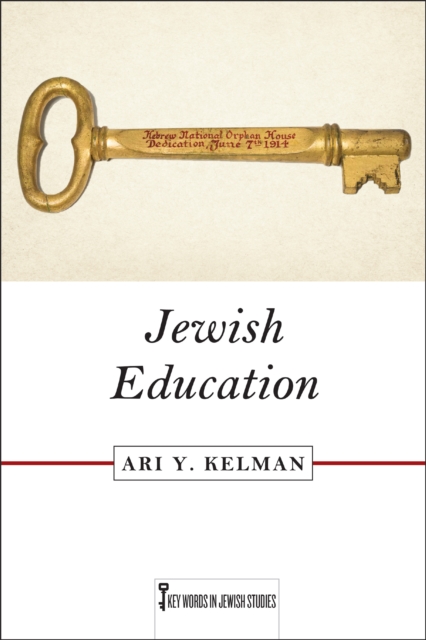
Jewish Education
Most writing about Jewish education has been preoccupied with two questions: What ought to be taught?And what is the best way to teach it?Ari Y Kelman upends these conventional approaches by asking a different question: How do people learn to engage in Jewish life?.
eBook

From behind the curtain
This study investigates how madrasas for girls emerged in India, how they differ from madrasas for boys, and how female students come to interpret Islam through the teachings they receive in these schools.
eBook