
Catalogue Search | MBRL


Are you sure you want to remove the book from the shelf?

{{itemTitle}}
109,161
result(s) for
"RURAL COMMUNITY"
Sort by:

Canada's rural majority : household, environment, and economies, 1870-1940
\"Before the Second World War, Canada was a rural country. Unlike most industrializing countries, Canada's rural population grew throughout the century after 1871--even if it declined as a proportion of the total population. Rural Canadians also differed in their lives from rural populations elsewhere. In a country dominated by a harsh northern climate, a short growing season, long distances, and poor land, they typically relied on three ever-shifting pillars of support: the sale of cash crops, subsistence from the local environment, and wage work off the farm. Canada's Rural Majority is an engaging and accessible history of this distinctive experience, including not only Canada's farmers, but also the hunters, gardeners, fishers, miners, loggers, and cannery workers who lived and worked in rural Canada. Focusing on the household, the environment, and the community, Canada's Rural Majority is a compelling classroom resource and an invaluable overview of this understudied aspect of Canadian history.\"-- Provided by publisher.
Book

Rural America in an Urban Society: Changing Spatial and Social Boundaries
This review outlines several key aspects or the new rural-urban interface and the growing interpenetration of American rural and urban life. The historical coincidence ot spatial and social boundaries in America is changing rapidly. This review highlights (a) the enormous scale of rural-urban interdependence and boundary crossing, shifting, and blurring—along many dimensions of community life—over the past several decades, and (b) the symmetrical rather than asymmetrical influences between urban and rural areas, i.e., on bidirectional relational aspects of spatial categories. These general points are illustrated by identifying 10 common conceptions of rural America that reflect both its social and economic diversity and its changing spatial and social boundaries. Here we emphasize symbolic and social boundaries—the distinctions between urban and rural communities and people and the processes by which boundaries are engaged. Placing behaviors or organizational forms along a rural-urban continuum (or within a metropolitan hierarchy of places) or drawing sharp rural-urban distinctions seems increasingly obsolete or even problematic. We conclude with a call for new research on rural America and greater conceptual and empirical integration of urban and rural scholarship, which remains disconnected and segregated institutionally.
Journal Article


Constructing a New Framework for Rural Development
\"This volume seeks to answer modern questions and concerns regarding peasants, their production techniques, and their links to wider society. In the past, peasants and their seemingly simple production models have been criticized for being unable to fully meet the needs of modern society, especially when it comes to world hunger, food quality, and sustainability. However, often neglected is the myriad of new initiatives that alter the way food is produced and marketed. New 'peasant markets' are created everywhere and new products and services abound. This volume argues that these initiatives represent \"seeds of transition\"; they are the \"sprouts\" out of which new socio-technical modes for organizing production and marketing emerge - \"sprouts\" that, taken together, can be summarized as \"rural development\". This book critically discusses these new practices and the actors engaged in them. In doing so, it deals with several countries in three different continents (Asia, South America and Europe). It proposes new concepts and approaches for a better understanding of the re-emergence of peasants as indispensable part of modern societies.\"
eBook
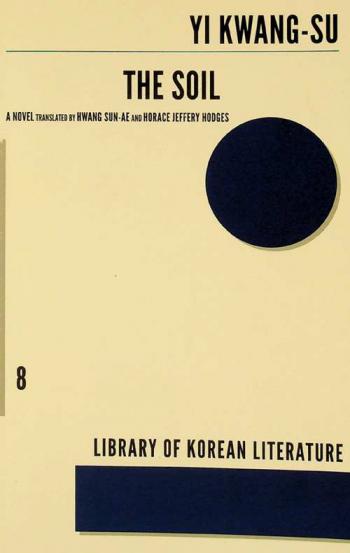
The soil
\"A major, never before translated novel by the author of Mujông / The Heartless -- often called the first modern Korean novel -- The Soil tells the story of an idealist dedicating his life to helping the inhabitants of the rural community in which he was raised. Striving to influence the poor farmers of the time to improve their lots, become self-reliant, and thus indirectly change the reality of colonial life on the Korean peninsula, The Soil was vitally important to the social movements of the time, echoing the effects and reception of such English-language novels as Upton Sinclair's The Jungle\"-- Provided by publisher.
Book

Health facility or home delivery? Factors influencing the choice of delivery place among mothers living in rural communities of Eritrea
Background: In Eritrea, despite high antenatal care (ANC) use,
utilization of health facilities for child birth is still low and with
marked variations between urban and rural areas. Understanding the
reasons behind the poor use of these services in a rural setting is
important to design targeted strategies and address the challenge
contextually. This study aimed to determine factors that influence
women's choice of delivery place in selected rural communities in
Eritrea. Methods: A cross-sectional survey of 309 women aged
15-49 years with a delivery in the last 1-2 years prior to
the survey was conducted in a randomly selected villages of Hadish Adi,
Serea, Genseba, Kelay Bealtat, Dirko, Mai Leham, Kudo Abour, Adi Koho,
and Leayten. Data were collected using an interviewer administered
questionnaire. Chi-square tests were used to explore association
between variables. Using odds ratios with 95% confidence intervals with
p < 0.05 taken as statically significant association, bivariate and
multivariate logistic regression analysis were used to identify factors
that affect the choice of delivery place. Results: Overall, 75.4% of
the respondents delivered their last child at home while 24.6%
delivered in health facility. Women whose husband's had no formal
education were less likely [AOR = 0.02; 95% CI 0.01-0.54] to
deliver in health facility. Women who had joint decision-making with
husbands on delivery place [AOR = 5.42; 95% CI 1.78-16.49] and
women whose husbands choose health facility delivery [AOR = 2.32; 95%
CI 1.24-5.11] were more likely to have health facility delivery.
Respondents who had medium wealth status [AOR = 3.78; 95% CI
1.38-10.37] have access to health facility within 2 km distance
[AOR = 14.67; 95% CI 2.30-93.45] and women with traditional means
of transport [AOR = 9.78; 95% CI 1.23-77.26] were also more
likely to deliver in health facility. Women who read newspaper daily or
infrequently had three [AOR = 3.77; 95% CI 1.12-4.04] and almost
three times [AOR = 2.95; 95% CI 1.01-8.59] higher odds of
delivering in health facility. Similarly, women who have knowledge
about complications during delivery [AOR = 4.39; 95% CI
1.63-11.83], good perception on the quality of care they received
[AOR = 9.52; 95% CI 1.91-47.50], had previous facility delivery
[AOR = 2.69; 95% CI 0.94-7.68], have negative experiences of
delivery outcomes in her community [AOR = 1.31; 95% CI
1.00-4.96], and women who perceive home delivery as life
threatening [AOR = 1.84; 95% CI 1.46-3.38] were more likely to
deliver in health facility. Conclusion: To increase health facility
delivery, raising women's awareness on the benefits of delivering
in health facility, male involvement in the use of maternal health
services, increasing women decision-making power, addressing common
barriers of lack of transport, and compensations for transport expenses
to alleviate the cost of transport are recommended. Efforts to shorten
distance to reach health facility and health education focusing on the
potential threats of delivering at home at the individual and community
level can have substantial contribution to increase health facility
delivery in rural communities of Eritrea.
Journal Article

Wealth creation : a new framework for rural economic and community development
\"A new approach to rural development is emerging. Instead of being about attracting companies that might create jobs over which communities have no control, the emerging paradigm is about connecting the unique underutilized assets of place with market opportunity to grow assets that are owned and controlled by and for the benefit of low-wealth people and places. But asset development is about more than bricks and mortar or narrowly defined financial assets. There are many kinds of assets that communities require to thrive - such as social capital, natural capital, political capital, and intellectual capital. The emerging new approach to rural development is, then about broadening the definition of \"wealth,\" engaging underutilized assets, and a key third element: harnessing the power of the market - rather than relying solely on philanthropy and government. Wealth Creation provides a conceptual guide with practical examples for policymakers, practitioners of economic and community development, community organizers, environmentalists, funders, investors, and corporations seeking a values-based framework for identifying self-interests across sectors that can lead to opportunities to transform existing systems for the collective good\"-- Provided by publisher.
Book

Effect of Residents-as-Teachers in Rural Community-Based Medical Education on the Learning of Medical Students and Residents: A Thematic Analysis
Residents-as-teachers (RaT) is a theoretical framework emphasizing the significance of the similar learning background of teachers and learners. In Japan, community-based medical education (CBME) is a practical approach to teaching family medicine. This study aimed to investigate the impact and challenges of RaT on the learning of medical students and residents in CBME at a rural community hospital in Japan. Over the course of a year, the researchers conducted one-on-one interviews with three residents and ten medical students participating in family medicine training at the hospital. The interviews were recorded and transcribed verbatim. Grounded theory was used in the data analysis to clarify the findings. Three key themes emerged from the research: lack of educational experience with RaT, effectiveness of RaT, and challenges of RaT. Although participants were prejudiced against RaT, they felt its implementation could facilitate the establishment of beneficial relationships between learners and teachers. They were also able to participate in medical teams effectively. The findings suggest that the increased participation of senior doctors in RaT could strengthen its learning effects. RaT in rural CBME should be applied in various contexts, and its effectiveness should be further investigated both qualitatively and quantitatively.
Journal Article


Rural Politics
The rural areas of Britain, Europe and the developed world are undergoing massive changes, with increasing concern about productivity, agricultural methods and environmental policy. Rural Politics examines the issues affecting rural areas, such as water pollution, forestry, and the greening of agricultural policy. It looks in particular at the political parameters to these issues and how concern for the countryside is essentially a part of a wider set of political processes. Rural Politics provides a much needed examination of the evolution and content of policies affecting today's countryside, both in terms of major land uses and economic and social development.
eBook