
Catalogue Search | MBRL


Are you sure you want to remove the book from the shelf?

{{itemTitle}}
404
result(s) for
"Rabelais, François 1490-1553"
Sort by:
Rabelais's Radical Farce
In the first extended investigation of the importance of dramatic farce in Rabelais studies, Bruce Hayes makes an important contribution to the understanding of the theater of farce and its literary possibilities. By tracing the development of farce in late medieval and Renaissance comedic theater in comparison to the evolution of farce in Rabelais's work, Hayes distinguishes Rabelais's use of the device from traditional farce. While traditional farce is primarily conservative in its aims, with an emphasis on maintaining the status quo, Rabelais puts farce to radical new uses, making it subversive in his own work.
Bruce Hayes examines the use of farce in Pantagruel, Gargantua, and the Tiers and Quart livres, showing how Rabelais recast farce in a humanist context, making it a vehicle for attacking the status quo and posing alternatives to contemporary legal, educational, and theological systems.
Rabelais's Radical Farce illustrates the rich possibilities of a genre often considered simplistic and unsophisticated, disclosing how Rabelais in fact introduced both a radical reformulation of farce, and a new form of humanist satire.
eBook

Early Modern Catalogues of Imaginary Books
This bilingual (English-French) anthology of early modern fictitious catalogues presents a multitude of texts, from the genre's beginnings (Rabelais's satirical catalogue of the Library of St.-Victor (1532)) to its French and Dutch specimens from around 1700.
eBook
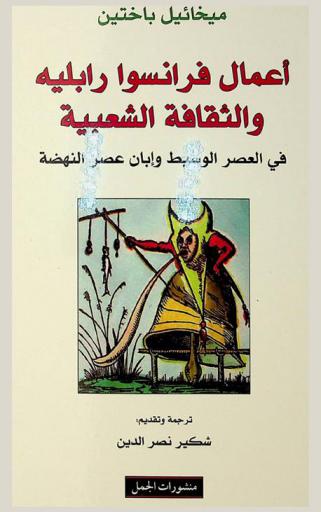
أعمال فرانسوا رابليه والثقافة الشعبية في العصر الوسيط وإبان عصر النهضة
في هذا الكتاب يقوم المؤلف بدراسة الثقافة الهزلية الشعبية التي لم تنصهر أبدا في ثقافة الطبعات السائدة الرسمية، باعتماده على ممثلها المرموق فرانسوا رابليه الذي يستمد أسلوبه من الثقافة الهزلية الشعبية، وثانيا عبر التتبع الدقيق لمظاهرها المتعددة: الضحك الشعبي، اللغة المألوفة، الاحتفال الشعبي والكرنفال بالأساس، أدب النجاسة، الأسفل المادي والجسدي، المأدبة وغيرها. إنها المرة الأولى التي يتشكل فيها موضوع الدراسة من الشعب الذي يضحك في الساحة العامة وما تعج به من حركات وإيماءات، وصيحات، مصدرها مغفلون أو مهرجون، عمالقة أو أقزام ومخلوقات ممسوخة، مضحكة، وأشكال الشعائر والطقوس والاستعراضات والعروض الفرجوية الهزلية في العصر الوسيط وإبان عصر النهضة، وذلك من خلال وضع مشكل الغروتيسك وماهيته الجمالية على نحو سليم بدراسة مصادره وتجلياته المتنوعة.
Book
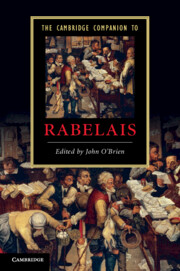
The Cambridge Companion to Rabelais
The Franciscan monk, humanist and physician François Rabelais, who flourished in sixteenth-century France, is widely considered as the Renaissance's greatest comic writer. His work - including most notably Gargantua and Pantagruel - continues to enthral readers with its complex and delicately crafted humour. 'Rabelaisian' and 'Gargantuan' have entered the lexicon but are often misunderstood; this Companion explains the literary and historical reality behind these notions. It provides an accessible account of Rabelais' major works and the contextual information and conceptual tools needed to understand the author and his world. The most up-to-date book on Rabelais to be designed specifically for English-speaking audiences, the Companion is intended to enable a broad spectrum of readers both to appreciate and to enjoy Rabelais. With a detailed guide to further reading and a chronology, and with all quotations given in translation, this is an ideal guide for students and scholars of French and comparative literature.
eBook


Advertising the Self in Renaissance France
Advertising the Self in Renaissance France is a study of how authors and readers are represented in printed editions of three major literary figures of the French Renaissance: Jean Lemaire de Belges, Clément Marot, and François Rabelais.
eBook

Inextinguible Alcofrybas, ineffable Louise
François Rabelais and Louise Labé are emblematic figures of the French Renaissance. Rabelais’ extravagance and Labé’s feminist freedom are now celebrated beyond the circle of those who specialise in Early Modern Studies. Both writers are currently case studies used to demonstrate the importance of considering an author’s oeuvre in its entirety, examining its context and its relationship with other texts, together with the input of the print workshops. Both Rabelais and Labé are uniquely problematic in terms of authenticity and authorship.
Journal Article
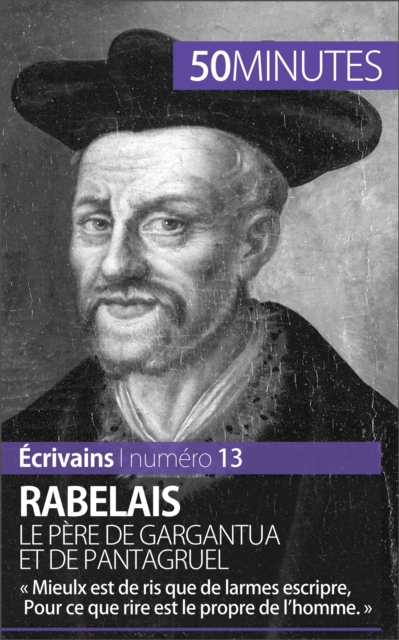
Rabelais, le père de Gargantua et de Pantagruel
Décryptez l'univers de Rabelais en moins d'une heure! Aujourd'hui considéré comme un véritable monument des lettres françaises, Rabelais, avant d'être l'écrivain humaniste que l'on connaît, est d'abord un moine et un médecin. Son ambition, quand il prend la plume pour composer Pantagruel, est d'utiliser le rire pour guérir ses patients de leurs maux. Rabelais exploite alors le comique sous toutes ses formes: gigantisme des personnages, jeux de mots, termes obscènes, exagérations bouffonnes... L'écrivain ne s'interdit rien! Mais ne nous y trompons pas: son œuvre, loin de se résumer à sa verve comique, entend également véhiculer les idées nouvelles de l'époque. Ce livre vous permettra d'en savoir plus sur: •Le contexte politique et culturel dans lequel Rabelais s'inscrit
•La vie de l'écrivain et son parcours
•Les caractéristiques et spécificités de ses œuvres
•Une sélection d'œuvres-clés de Rabelais
•Son impact dans l'histoire littéraire Le mot de l'éditeur:
« Dans ce numéro de la série 50MINUTES | Écrivains, Marie Piette part sur les traces de François Rabelais, dans la France de la Renaissance. Elle nous raconte l'histoire de sa vie, mais aussi, et surtout, de son œuvre. Ses sources, son style, ses personnages... l'essentiel est là. Et pour finir, elle nous propose des analyses détaillées de Pantagruel, de Gargantua et du Tiers Livre, agrémentées de nombreuses citations, histoire de s'immerger encore un peu plus dans l'univers truculent de l'auteur! » Stéphanie Felten À PROPOS DE LA SÉRIE 50MINUTES | Écrivains La série « Écrivains » de la collection 50MINUTES aborde plus de cinquante écrivains qui ont profondément marqué l'histoire littéraire, du Moyen Âge à nos jours. Chaque livre a été conçu à la fois pour les passionnés de littérature et pour les amateurs curieux d'en savoir davantage en peu de temps. Nos auteurs analysent avec précision quelques-unes des œuvres des plus grands écrivains français et étrangers.
eBook