
Catalogue Search | MBRL


Are you sure you want to remove the book from the shelf?

{{itemTitle}}
362
result(s) for
"Race Classification History."
Sort by:


National Races
National Races explores how politics interacted with transnational science in the nineteenth and early twentieth centuries. This interaction produced powerful, racialized national identity discourses whose influence continues to resonate in today's culture and politics. Ethnologists, anthropologists, and raciologists compared modern physical types with ancient skeletal finds to unearth the deep prehistoric past and true nature of nations. These scientists understood certain physical types to be what Richard McMahon calls \"national races,\" or the ageless biological essences of nations. Contributors to this volume address a central tension in anthropological race classification. On one hand, classifiers were nationalists who explicitly or implicitly used race narratives to promote political agendas. Their accounts of prehistoric geopolitics treated \"national races\" as the proxies of nations in order to legitimize present-day geopolitical positions. On the other hand, the transnational community of race scholars resisted the centrifugal forces of nationalism. Their interdisciplinary project was a vital episode in the development of the social sciences, using biological race classification to explain the history, geography, relationships, and psychologies of nations. National Races goes to the heart of tensions between nationalism and transnationalism, politics and science, by examining transnational science from the perspective of its peripheries. Contributors to the book supplement the traditional focus of historians on France, Britain, and Germany, with myriad case studies and examples of nineteenth- and early twentieth-century racial and national identities in countries such as Russia, Italy, Poland, Greece, and Yugoslavia, and among Jewish anthropologists.
eBook


America classifies the immigrants : from Ellis Island to the 2020 census
When more than twenty million immigrants arrived in the United States between 1880 and 1920, the government attempted to classify them according to prevailing ideas about race and nationality. But this proved hard to do. Ideas about racial or national difference were slippery, contested, and yet consequential--were \"Hebrews\" a \"race,\" a \"religion,\" or a \"people\"? As Joel Perlmann shows, a self-appointed pair of officials created the government's 1897 List of Races and Peoples, which shaped exclusionary immigration laws, the wording of the U.S. Census, and federal studies that informed social policy. Its categories served to maintain old divisions and establish new ones. Across the five decades ending in the 1920s, American immigration policy built increasingly upon the belief that some groups of immigrants were desirable, others not. Perlmann traces how the debates over this policy institutionalized race distinctions--between whites and nonwhites, but also among whites--in immigration laws that lasted four decades. Despite a gradual shift among social scientists from \"race\" to \"ethnic group\" after the 1920s, the diffusion of this key concept among government officials and the public remained limited until the end of the 1960s. Taking up dramatic changes to racial and ethnic classification since then, America Classifies the Immigrants concentrates on three crucial reforms to the American Census: the introduction of Hispanic origin and ancestry (1980), the recognition of mixed racial origins (2000), and a rethinking of the connections between race and ethnic group (proposed for 2020).-- Provided by publisher
Book
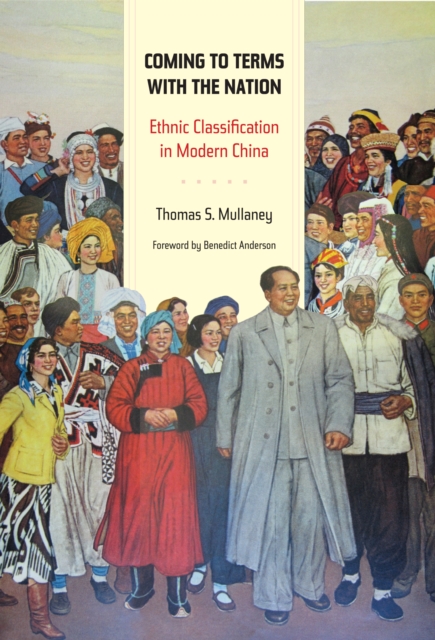
Coming to terms with the nation
China is a vast nation comprised of hundreds of distinct ethnic communities, each with its own language, history, and culture. Today the government of China recognizes just 56 ethnic nationalities, or minzu, as groups entitled to representation. This controversial new book recounts the history of the most sweeping attempt to sort and categorize the nation's enormous population: the 1954 Ethnic Classification project (minzu shibie). Thomas S. Mullaney draws on recently declassified material and extensive oral histories to describe how the communist government, in power less than a decade, launched this process in ethnically diverse Yunnan. Mullaney shows how the government drew on Republican-era scholarship for conceptual and methodological inspiration as it developed a strategy for identifying minzu and how non-Party-member Chinese ethnologists produced a \"scientific\" survey that would become the basis for a policy on nationalities.
eBook


A \Mulatto Escape Hatch\ in the United States? Examining Evidence of Racial and Social Mobility During the Jim Crow Era
Racial distinctions in the United States have long been characterized as uniquely rigid and governed by strict rules of descent, particularly along the black-white boundary. This is often contrasted with countries, such as Brazil, that recognize \"mixed\" or intermediate racial categories and allow for more fluidity or ambiguity in racial classification. Recently released longitudinal data from the IPUMS Linked Representative Samples, and the brief inclusion of a \"mulatto\" category in the U.S. Census, allow us to subject this generally accepted wisdom to empirical test for the 1870-1920 period. We find substantial fluidity in black-mulatto classification between censuses—including notable \"downward\" racial mobility. Using person fixed-effects models, we also find evidence that among Southern men, the likelihood of being classified as mulatto was related to intercensal changes in occupational status. These findings have implications for studies of race and inequality in the United States, cross-national research on racial classification schemes in the Americas, and for how demographers collect and interpret racial data.
Journal Article

Still a house divided
Why have American policies failed to reduce the racial inequalities still pervasive throughout the nation? Has President Barack Obama defined new political approaches to race that might spur unity and progress? Still a House Divided examines the enduring divisions of American racial politics and how these conflicts have been shaped by distinct political alliances and their competing race policies. Combining deep historical knowledge with a detailed exploration of such issues as housing, employment, criminal justice, multiracial census categories, immigration, voting in majority-minority districts, and school vouchers, Desmond King and Rogers Smith assess the significance of President Obama's election to the White House and the prospects for achieving constructive racial policies for America's future.
eBook

Association of historic redlining and present-day health in Baltimore
In the 1930s, the Home Owners' Loan Corporation categorized neighborhoods by investment grade along racially discriminatory lines, a process known as redlining. Although other authors have found associations between Home Owners' Loan Corporation categories and current impacts on racial segregation, analysis of current health impacts rarely use these maps.
To study whether historical redlining in Baltimore is associated with health impacts today.
Fifty-four present-day planning board-defined community statistical areas are assigned historical Home Owners' Loan Corporation categories by area predominance. Categories are red (\"hazardous\"), yellow (\"definitely declining\") with blue/green (\"still desirable\"/\"best\") as the reference category. Community statistical area life expectancy is regressed against Home Owners' Loan Corporation category, controlling for median household income and proportion of African American residents.
Red categorization is associated with 4.01 year reduction (95% CI: 1.47, 6.55) and yellow categorization is associated with 5.36 year reduction (95% CI: 3.02, 7.69) in community statistical area life expectancy at baseline. When controlling for median household income and proportion of African American residents, red is associated with 5.23 year reduction (95% CI: 3.49, 6.98) and yellow with 4.93 year reduction (95% CI: 3.22, 6.23). Results add support that historical redlining is associated with health today.
Journal Article