
Catalogue Search | MBRL


Are you sure you want to remove the book from the shelf?

{{itemTitle}}
24
result(s) for
"Racism in sports -- United States -- History -- 20th century"
Sort by:

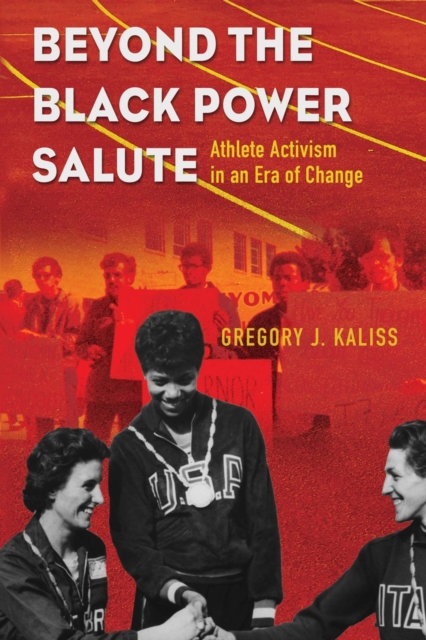
Beyond the Black Power Salute
Unequal opportunity sparked Jim Brown’s endeavors to encourage Black development while Billie Jean King fought so that women tennis players could earn more money and enjoy greater freedom. Gregory J. Kaliss examines these events and others to guide readers through the unprecedented wave of protest that swept sports in the 1960s and 1970s. The little-known story of the University of Wyoming football players suspended for their activism highlights an analysis of protests by college athletes. The 1971 Muhammad Ali–Joe Frazier clash provides a high-profile example of the Black male athlete’s effort to redefine Black masculinity. An in-depth look at the American Basketball Association reveals a league that put Black culture front and center with its style of play and shows how the ABA influenced the development of hip-hop. As Kaliss describes the breakthroughs achieved by these athletes, he also explores the barriers that remained--and in some cases remain today.
eBook


Moments of Impact
In the first half of the twentieth century, Jack Trice, Ozzie Simmons, and Johnny Bright played college football for three Iowa institutions: Iowa State University, the University of Iowa, and Drake University, respectively. At a time when the overwhelming majority of their opponents and teammates were white, the three men, all African American, sustained serious injuries on the gridiron, either because of their talents, their race, or, most likely, because of an ugly combination of the two.Moments of Impacttells their stories and examines how the local communities of which they were once a part have forgotten and remembered those assaults over time. Of particular interest are the ways those memories have manifested in a number of commemorations, including a stadium name, a trophy, and the dedication of a football field.
Jaime Schultz focuses on the historical and racial circumstances of the careers of Trice, Simmons, and Bright as well as the processes and politics of cultural memory. Schultz develops the concept of \"racialized memory\"-a communal form of remembering imbued with racial significance-to suggest that the racial politics of contemporary America have engendered a need to redress historical wrongs, congratulate Americans on the ostensible racial progress they have made, and divert attention from the unrelenting persistence of structural and ideological racism.
eBook

Strong inside : the true story of how Perry Wallace broke college basketball's color line
Perry Wallace was born at an historic crossroads in U.S. history. He entered kindergarten the year that the Brown v. Board of Education decision led to integrated schools, allowing blacks and whites to learn side by side. A week after Martin Luther King Jr.'s \"I Have a Dream\" speech, Wallace enrolled in high school and his sensational jumping, dunking, and rebounding abilities quickly earned him the attention of college basketball recruiters from top schools across the nation. In his senior year his Pearl High School basketball team won Tennessee's first racially-integrated state tournament. The world seemed to be opening up at just the right time, and when Vanderbilt University recruited Wallace to play basketball, he courageously accepted the assignment to desegregate the Southeastern Conference. The hateful experiences he would endure on campus and in the hostile gymnasiums of the Deep South turned out to be the stuff of nightmares. Yet Wallace persisted, endured, and met this unthinkable challenge head on. This insightful biography digs deep beneath the surface to reveal a complicated, profound, and inspiring story of an athlete turned civil rights trailblazer.
Book
Sport and the Color Line
The year 2003 marks the one-hundredth anniversary of W.E.B. Du Bois' \"Souls of Black Folk,\" in which he declared that \"the color line\" would be the problem of the twentieth century. Half a century later, Jackie Robinson would display his remarkable athletic skills in \"baseball's great experiment.\" Now, \"Sport and the Color Line\" takes a look at the last century through the lens of sports and race, drawing together articles by many of the leading figures in Sport Studies to address the African American experience and the history of race relations. The history of African Americans in sport is not simple, and it certainly did not begin in 1947 when Jackie Robinson first donned a Brooklyn Dodgers uniform. The essays presented here examine the complexity of black American sports culture, from the organization of semi-pro baseball and athletic programs at historically black colleges and universities, to the careers of individual stars such as Jack Johnson and Joe Louis, to the challenges faced by black women in sports. What are today's black athletes doing in the aftermath of desegregation, or with the legacy of Muhammad Ali's political stance? The essays gathered here engage such issues, as well as the paradoxes of corporate sport and the persistence of scientific racism in the athletic realm.
eBook

Strong inside : Perry Wallace and the collision of race and sports in the South
The \"untold story of Perry Wallace, a brilliant student and talented athlete who became the first African-American basketball player in the SEC at Vanderbilt University during the tumultuous late 1960s. The [book] places Wallace's struggles and ultimate success into the larger contexts of civil rights and race relations in the South\"--Provided by publisher.
Book

Baseball Rebels
In Baseball Rebels Peter Dreier and Robert Elias examine
the key social challenges-racism, sexism and homophobia-that shaped
society and worked their way into baseball's culture, economics,
and politics. Since baseball emerged in the mid-1800s to become
America's pastime, the nation's battles over race, gender, and
sexuality have been reflected on the playing field, in the
executive suites, in the press box, and in the community. Some of
baseball's rebels are widely recognized, but most of them are
either little known or known primarily for their baseball
achievements-not their political views and activism. Everyone knows
the story of Jackie Robinson breaking baseball's color line, but
less known is Sam Nahem, who opposed the racial divide in the U.S.
military and organized an integrated military team that won a
championship in 1945. Or Toni Stone, the first of three women who
played for the Indianapolis Clowns in the previously all-male Negro
Leagues. Or Dave Pallone, MLB's first gay umpire. Many players,
owners, reporters, and other activists challenged both the baseball
establishment and society's status quo. Baseball Rebels
tells stories of baseball's reformers and radicals who were
influenced by, and in turn influenced, America's broader political
and social protest movements, making the game-and society-better
along the way.
eBook

Conspiracy of Silence
The campaign to desegregate baseball was one of the most important civil rights stories of the 1930s and 1940s. But most of white America knew nothing about this story because mainstream newspapers said little about the color line and less about the efforts to end it. Even today, as far as most Americans know, the integration of baseball revolved around Branch Rickey's signing of Jackie Robinson to the Brooklyn Dodgers' organization in 1945. This book shows how Rickey's move, critical as it may well have been, came after more than a decade of work by black and left-leaning journalists to desegregate the game.
Drawing on hundreds of newspaper articles and interviews with journalists, Chris Lamb reveals how differently black and white newspapers, and black and white America, viewed racial equality. He shows how white mainstream sportswriters perpetuated the color line by participating in what their black counterparts called a \"conspiracy of silence.\" Between 1933 and 1945, black newspapers and the CommunistDaily Workerpublished hundreds of articles and editorials calling for an end to baseball's color line. The efforts of the alternative presses to end baseball's color line, chronicled for the first time inConspiracy of Silence, constitute one of baseball's-and the civil rights movement's-great untold stories.
eBook

Integrating the Gridiron
Even the most casual sports fans celebrate the achievements of professional athletes, among them Jackie Robinson, Muhammad Ali, and Joe Louis. Yet before and after these heroes staked a claim for African Americans in professional sports, dozens of college athletes asserted their own civil rights on the amateur playing field, and continue to do so today.Integrating the Gridiron, the first book devoted to exploring the racial politics of college athletics, examines the history of African Americans on predominantly white college football teams from the nineteenth century through today. Lane Demas compares the acceptance and treatment of black student athletes by presenting compelling stories of those who integrated teams nationwide, and illuminates race relations in a number of regions, including the South, Midwest, West Coast, and Northeast. Focused case studies examine the University of California, Los Angeles in the late 1930s; integrated football in the Midwest and the 1951 Johnny Bright incident; the southern response to black players and the 1955 integration of the Sugar Bowl; and black protest in college football and the 1969 University of Wyoming \"Black 14.\" Each of these issues drew national media attention and transcended the world of sports, revealing how fans-and non-fans-used college football to shape their understanding of the larger civil rights movement.
eBook