
Catalogue Search | MBRL


Are you sure you want to remove the book from the shelf?

{{itemTitle}}
320
result(s) for
"Radiation Fiction."
Sort by:
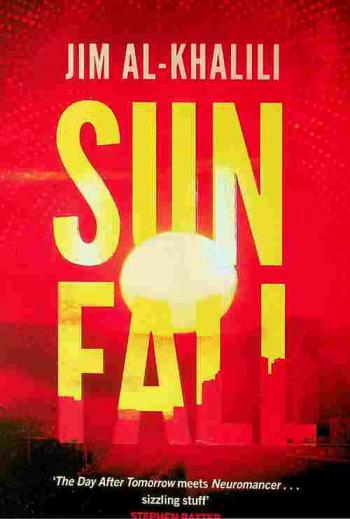
Sunfall
\"2041 and the world as we know it grinds to a halt. Our planet seems to be turning against itself - it would appear that the magnetic field, that protects life on Earth from deadly radiation from space, is failing... Desperate to quell the mass hysteria that would surely follow, world governments have concealed this rapidly emerging Armageddon. But a young Iranian hacktivist stumbles across the truth, and it becomes a race against time to reactivate the earth's core using beams of dark matter. As a small team of brave and brilliant scientists battle to find a way of transforming theory into practice, they face a fanatical group intent on pursuing their own endgame agenda: for they believe mankind to be a plague upon this earth and will do anything, commit any crime, to ensure that the project fails... And so bring about humanity's end.\" --Publisher description.

Experimental Demonstration of Active Electromagnetic Cloaking
Active electromagnetic cloaking uses an array of elementary sources to cancel the scattered fields created by an object. An active interior cloak does this by placing the sources along the boundary of the object. This process can be thought of as introducing a discontinuity in the field to cancel out the scattered field by the object. Here, an experimental version of a thin active cloak at microwave frequencies is demonstrated for an aluminum cylinder with a radius of 0.56λ . The cloak consists of a 12-element magnetic-dipole array. By controlling the weights of the current on each element of the array, the scattering off of the cylinder is reduced in the backward and forward directions. The ability to disguise the aluminum cylinder as another object by varying the weights of the dipole array is also demonstrated. Finally, potential ways of overcoming the constraint of requiring a priori knowledge of the incident field leading to camouflaging-type behavior are discussed.
Journal Article

Flashfall
In a world shattered by radiation fallout, teenaged Orion and her climbing partner Dram, in exchange for freedom, mine terrifying tunnels for a precious element that keeps humans safe from radiation poisoning, but disturbing revelations force Orion to question everything she knows.
BOOK

Geoengineering from the standpoint of uncertainty and related risks: science or science fiction?
In this opinion/comment we discuss the issues related to proposed geoengineering solutions to climate change. We argue, that while scientifically based, these proposals lack the rigorousness appropriate to the seriousness of the problem.
Journal Article

Supernova era
Eight light years away, a star has died, creating a supernova event that showers Earth with deadly levels of radiation. Within a year, everyone over the age of thirteen will die. And so the countdown begins. Parents apprentice their children and try to pass on the knowledge needed to keep the world running. But the last generation may not want to carry on their parents' legacy. And though they imagine a better, brighter world, the future may be so dark humanity won't survive\"-- Provided by publisher.
Book
Shape-Preserving Accelerating Electromagnetic Wave Packets in Curved Space
We present shape-preserving spatially accelerating electromagnetic wave packets in curved space: wave packets propagating along nongeodesic trajectories while periodically recovering their structure. These wave packets are solutions to the paraxial and nonparaxial wave equations in curved space. We analyze the dynamics of such beams propagating on surfaces of revolution, and find solutions that propagate along a variety of nongeodesic trajectories, with their intensity profile becoming narrower (or broader) in a scaled self-similar fashion. Such wave packets reflect the interplay between the curvature of space and interference effects. Finally, we extend this concept to nonlinear accelerating beams in curved space supported by the Kerr nonlinearity. Our study concentrates on optical settings, but the underlying concepts directly relate to general relativity.
Journal Article

The warning
\"There's no place to run in a community that's been taken--and is being intentionally kept--off the grid. A small southern town was evacuated after a freak power-plant accident. As the first anniversary of the mishap approaches, some residents are allowed to return past the national guard roadblocks. Mount Hope natives Maggie and Jordan quickly discover that their hometown is not as it was before. Downed cellular networks fail to resume service. Animals savagely attack humans. And the damaged power plant, where Jordan's father is an engineer, is under military lockdown. As friends and family morph into terrifying strangers, the Maggie and Jordan increasingly turn to each other. Their determination to discover who--or what--has taken control of Mount Hope soon has them in the cross-hairs of a presence more sinister than any they could have imagined\"-- Provided by publisher.
Book

What Is Space For?
Imagine the splendor of the night sky, and consider. Even with light pollution diminishing the clarity of the heavens in most of our cities, there is still something stirring about peering into the abyss. Whether it’s the dozens of stars dotting the cityscape or the thousands you can see from a rural vantage, the expanse of space is staggering, even to the naked eye. Add to that the wonders coming from deep space telescopes and modern astrophysics. To name only a few: Within the past few months, scientists have identified a planet with a shiny, reflective atmosphere; for a brief period of time, there was a sunspot larger than our entire planet; a chunk of metal five times the size of Hawaii’s Big Island is embedded in the mantle of the Moon; the fabric of space-time ripples like an ocean; and apparently these ripples cause the entire cosmos to hum with sonic frequency. Yet, in spite of its grandeur, space is also deadly, a lethal vacuum coupled with lethal radiation. And it’s huge. The great distance between us and our cosmic neighbors radically inhibits the possibility for meaningful interaction. A recent article noted that scientists have discovered one of the closest supernovas to Earth “at only 21 million light-years away.” Such numbers are bewildering. Even a voyage to our next-door neighbor Mars requires astonishing amounts of fuel, thousands of tons at minimum, relegating the prospect of deep space travel to far futures or sci-fi dreams. We are so close, and yet so far. At times, when reading the latest astronomical discovery from this awe-inspiring, magisterial realm, one feels like Jack Skellington, the King of Halloween Town, puzzling over Christmas presents and shouting, “What does it mean? What does it mean?” For us to make progress in the quest to understand what space means, we must linger on the question: What is space for? The question is rarely asked in this direct way. And yet it is there already, just beneath the surface of the many things people say today about a more practical matter: Should we go to space? The answers we hear to this question get us part of the way — but then stop just short of naming the deeper truth human beings have always known about the great promise of space.
Journal Article
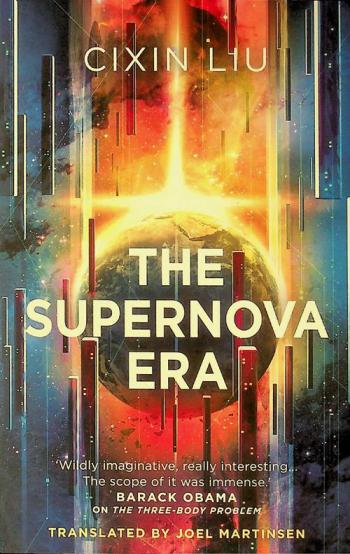
The supernova era
\"Eight light years away, a star has died, creating a supernova event that showers Earth in deadly levels of radiation. Within a year, everyone over the age of thirteen will die. And so the countdown begins. Parents apprentice their children and try to pass on the knowledge needed to keep the world running. But when the world is theirs, the last generation may not want to continue the legacy left to them. And in shaping the future however they want, will the children usher in an era of bright beginnings or final mistakes ?
Dahlia’s Journey: Misplaced Affection and Visual Arts in Thomas Pynchon’s Against the Day
Among the many characters of the labyrinthine saga Against the Day (2006), this paper focuses on Dahlia Rideout. Her foster father is a photographer, her mother elopes with a magician, her childhood friend is a ball lightning. While in Venice, she becomes the muse of radical artists, and on the London stage Dahlia is quite a sensation. The thing that binds together her iconic status and her misfortunes throughout the books is light – that is, electromagnetic radiation, as scientists describe it, but also limelight, the aura of celebrity she shares with other female characters in Thomas Pynchon’s fiction.
Journal Article