
Catalogue Search | MBRL


Are you sure you want to remove the book from the shelf?

{{itemTitle}}
4
result(s) for
"Radicalism -- Germany (West) -- History -- 20th century"
Sort by:
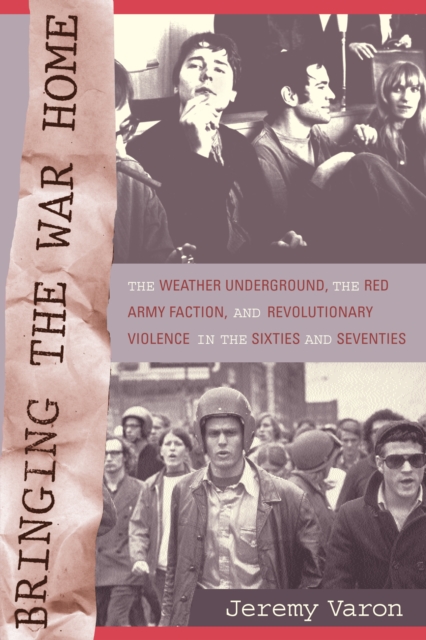
Bringing the War Home
In this first comprehensive comparison of left-wing violence in the United States and West Germany, Jeremy Varon focuses on America's Weather Underground and Germany's Red Army Faction to consider how and why young, middle-class radicals in prosperous democratic societies turned to armed struggle in efforts to overthrow their states. Based on a wealth of primary material, ranging from interviews to FBI reports, this book reconstructs the motivation and ideology of violent organizations active during the 1960s and 1970s. Varon conveys the intense passions of the era--the heat of moral purpose, the depth of Utopian longing, the sense of danger and despair, and the exhilaration over temporary triumphs. Varon's compelling interpretation of the logic and limits of dissent in democratic societies provides striking insights into the role of militancy in contemporary protest movements and has wide implications for the United States' current \"war on terrorism.\" Varon explores Weatherman and RAF's strong similarities and the reasons why radicals in different settings developed a shared set of values, languages, and strategies. Addressing the relationship of historical memory to political action, Varon demonstrates how Germany's fascist past influenced the brutal and escalating nature of the West German conflict in the 60s and 70s, as well as the reasons why left-wing violence dropped sharply in the United States during the 1970s. Bringing the War Home is a fascinating account of why violence develops within social movements, how states can respond to radical dissent and forms of terror, how the rational and irrational can combine in political movements, and finally how moral outrage and militancy can play both constructive and destructive roles in efforts at social change.
eBook

Mit Recht gegen rechts
Erstmals in der deutschen Nachkriegsgeschichte begann 2016 zum zweiten Mal ein Verbotsverfahren gegen dieselbe Partei: Der Bundesrat hatte beim Verfassungsgericht beantragt, die Nationaldemokratische Partei Deutschlands (NPD) als verfassungswidrige Organisation zu verbieten. Erst 13 Jahre zuvor war der erste NPD-Prozess geplatzt, weil die Partei von V-Männern der Inlandsgeheimdienste unterwandert gewesen war. Dies galt auch schon für die in den 1950er Jahren aktive Sozialistische Reichspartei (SRP), deren Auflösung die Verfassungsrichter 1952 dennoch angeordnet hatten. Anhand dieser beiden Parteien untersucht Peter Maxwill die Entwicklung des Parteienverbots und des organisierten Rechtsextremismus in der Bundesrepublik nach 1945. Die Studie zeigt, dass es weniger Gerichte und Gesetze waren, die den Verlauf von Verbotsverfahren geprägt haben – sondern vor allem die Debatten unter Wissenschaftlern, Journalisten und Politikern.
eBook

Protest Song in East and West Germany since the 1960s
The modern German political song is a hybrid of high and low culture. With its roots in the birth of mass culture in the 1920s, it employs communicative strategies of popular song. Yet its tendencies toward philosophical, poetic, and musical sophistication reveal intellectual aspirations. This volume looks at the influence of revolutionary artistic traditions in the lyrics and music of the 'Liedermacher' of east and west Germany: the rediscovery of the revolutionary songs of 1848 by the 1960s West German folk revival, the use of the profane \"carnivalesque\" street-ballad tradition by Wolf Biermann and the GDR duo Wenzel & Mensching, the influence of 1920s artistic experimentation on 'Liedermacher' such as Konstantin Wecker, and the legacy of Hanns Eisler's revolutionary song theory. The book also provides an insider perspective on the countercultural scenes of the two Germanys, examining the conditions in which political songs were written and performed. In view of the decline of the political song form since the fall of communism, the book ends with a look at German avant-garde techno's attempt to create a music that challenges conventional cultural perceptions and attitudes. CONTRIBUTORS: DAVID ROBB, ECKARD HOLLER, ANNETTE BLÜHDORN, PETER THOMPSON. David Robb is Senior Lecturer in German Studies at the Queen's University of Belfast.
eBook
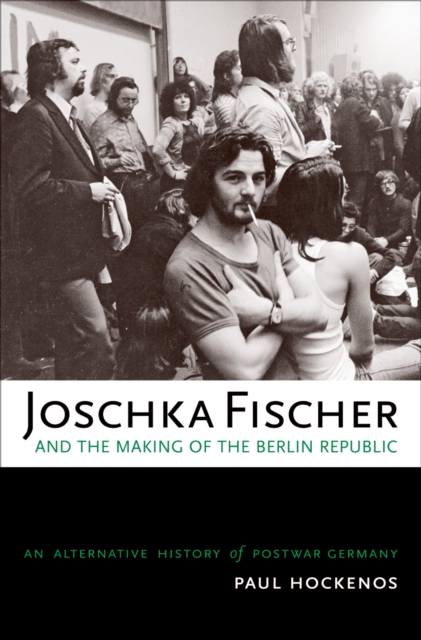
Joschka Fischer and the making of the Berlin Republic : an alternative history of postwar Germany
Over the course of his long and controversial career, Joschka Fischer evolved from an archetypal 1960s radical—a firebrand street activist—into a shrewd political insider, operating at the heights of German politics. In the 1980s he was one of the first elected Greens and went on to become Germany’s foreign minister from 1998 to 2005. His famous challenge to Donald Rumsfeld’s case for invading Iraq—“Excuse me, I am not convinced”—won him worldwide recognition, and the Bush administration’s contempt. Here is both a lively biography of Joschka Fischer and a gripping history ’from below’of postwar Germany. Paul Hockenos begins in the ruins of postwar Germany and guides us through the flashpoints of the late sixties and seventies, from the student protests and the terrorism of the Baader-Meinhof group to the evolution of Europe’s premier Green party, and brings us up to the present in the united Germany. He shows how the grassroots movements that became the German Greens challenged and changed the republic’s status quo, making postwar Germany more democratic, liberal and worldly along the way. Despite the ideological twists and turns of Fischer and his peers, the lessons of the Holocaust and the Nazi terror remained their constant coordinates. Hockenos traces that political journey, providing readers with unique insight into the impact that these movements and the Greens have had on Germany. Informed by hundreds of interviews with key figures and fellow travelers, Joschka Fischer and the Making of the Berlin Republic presents readers with one of the most intriguing personalities on the European scene, and paints a rich picture of the rebellious generation of 1968 that became the political elite of modern Germany.
eBook