
Catalogue Search | MBRL


Are you sure you want to remove the book from the shelf?

{{itemTitle}}
1,958
result(s) for
"Radio wave propagation."
Sort by:


Radio Propagation Measurement and Channel Modelling
A practical guide to radio channel measurement techniques Whilst there are numerous books describing modern wireless communication systems that contain overviews of radio propagation and radio channel modelling, few contain detailed information on the design, implementation and calibration of radio channel measurement equipment, the planning of experiments and the in depth analysis of measured data. This work redresses that balance. Beginning with an explanation of the fundamentals of radio wave propagation, the book progresses through a series of topics, including the measurement of radio channel characteristics, radio channel sounders, measurement strategies, data analysis techniques and radio channel modelling. Application of results for the prediction of achievable digital link performance are discussed with examples pertinent to single carrier, multi-carrier and spread spectrum radio links. It addresses specifics of communications in various different frequency bands for both long range and short range fixed and mobile radio links.
Key features: Focuses on radio channel measurements and characterization with analysis of MIMO channels Discusses the physical and technical considerations involved in the proper assessment of radio channel characteristics for efficient radio system planning, design, and implementation Provides in-depth information on the planning of experiments and the detailed analysis of measured data from radio propagation and channel modelling Unique practical approach describing how to design and implement channel sounders
eBook


Climatology of GPS signal loss observed by Swarm satellites
By using 3-year global positioning system (GPS) measurements from December 2013 to November 2016, we provide in this study a detailed survey on the climatology of the GPS signal loss of Swarm onboard receivers. Our results show that the GPS signal losses prefer to occur at both low latitudes between ±5 and ±20∘ magnetic latitude (MLAT) and high latitudes above 60∘ MLAT in both hemispheres. These events at all latitudes are observed mainly during equinoxes and December solstice months, while totally absent during June solstice months. At low latitudes the GPS signal losses are caused by the equatorial plasma irregularities shortly after sunset, and at high latitude they are also highly related to the large density gradients associated with ionospheric irregularities. Additionally, the high-latitude events are more often observed in the Southern Hemisphere, occurring mainly at the cusp region and along nightside auroral latitudes. The signal losses mainly happen for those GPS rays with elevation angles less than 20∘, and more commonly occur when the line of sight between GPS and Swarm satellites is aligned with the shell structure of plasma irregularities. Our results also confirm that the capability of the Swarm receiver has been improved after the bandwidth of the phase-locked loop (PLL) widened, but the updates cannot radically avoid the interruption in tracking GPS satellites caused by the ionospheric plasma irregularities. Additionally, after the PLL bandwidth increased larger than 0.5 Hz, some unexpected signal losses are observed even at middle latitudes, which are not related to the ionospheric plasma irregularities. Our results suggest that rather than 1.0 Hz, a PLL bandwidth of 0.5 Hz is a more suitable value for the Swarm receiver. Keywords. Ionosphere (equatorial ionosphere; ionospheric irregularities) – radio science (radio wave propagation)
Journal Article


Handbook of dielectric and thermal properties of materials at microwave frequencies
The application of microwave energy for thermal processing of different materials and substances is a rapidly growing trend in modern science and engineering. In fact, optimal design work involving microwaves is impossible without solid knowledge of the properties of these materials. Here's a practical reference that collects essential data on the dielectric and thermal properties of microwaveable materials, saving you countless hours on projects in a wide range of areas, including microwave design and heating, applied electrodynamics, food science, and medical technology. This unique book provides hard-to-find information on complex dielectric permittivity of media at industrial, scientific, and medical frequencies (430 MHz, 915MHz, 2.45GHz, 5.8 GHz, and 24.125GHz). Written by a leading expert in the field, this authoritative book does an exceptional job at presenting critical data on various materials and explaining what their key characteristics are concerning microwaves.
eBook
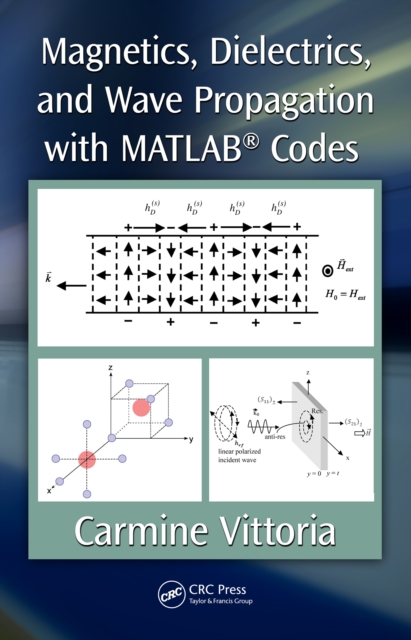
Magnetics, dielectrics, and wave propagation with MATLAB codes
A comprehensive description of wave propagation in magneto-dielectric materials, this textbook presents qualitative and quantitative arguments to calculate magnetic parameters from first principles. The book's theoretical approach combines macroscopic free magnetic energy with Maxwell's equations to yield wave propagation characteristics of magneto-dielectric materials. The author provides a clear understanding of the origin of magnetic parameters and how to calculate these parameters as the dimensionality of materials is reduced toward the microscopic scale.
eBook

The Physics and Mathematics of Electromagnetic Wave Propagation in Cellular Wireless Communication
<p><b>An important resource that examines wireless communications from the point of view of its mathematical and physical aspects</b> <p><i>The Physics and Mathematics of Electromagnetic Wave Propagation in Cellular Wireless Communication</i> describes the electromagnetic principles involved in the design of a cellular wireless system including a number of subtleties that are often overlooked. This important text explores both the physics and mathematical concepts used in deploying antennas for transmission and reception of electromagnetic signals and examines how to select the proper methodology from a wide range of scenarios. <p>In this much-needed guide, the authors—noted experts in the field—explore the principle of electromagnetics as developed through Maxwell's equations and describe the properties of an antenna in the frequency domain. The text also includes a review of the characterization of propagation path loss in a cellular wireless environment and examines ultrawideband antennas and the mechanisms of broadband transmission of both power and information. This important resource: <ul> <li> Includes a discussion of the shortcomings of a MIMO system from both theoretical and practical aspects</li> <li> Demonstrates how to deploy base station antennas with better efficiency</li> <li> Validates the principle and the theoretical analysis of electromagnetic propagation in cellular wireless communication</li> <li>Contains results of experiments that are solidly grounded in mathematics and physics</li> </ul> <p>Written for engineers, researchers, and educators who are or plan to work in the field, <i>The Physics and Mathematics of Electromagnetic Wave Propagation in Cellular Wireless Communication</i> offers an essential resource for understanding the principles underpinning wireless communications.
eBook

Day to night shift in reflection height of VLF radio waves derived from IRI model electron density models
The Very Low Frequency (VLF) radio wave propagation characteristics play a very important role in understanding the behaviour of the D-region. The earth-ionosphere wave guide theory has been used to evaluate the reflection height of VLF radio waves using the electron density profiles obtained from the International Reference Ionosphere (IRI) 2012 and 2016 models. For calculating the conductivity parameter, two different collision frequency models have been used. The diurnal shift in reflection height of 16-kHz VLF waves is evaluated for the midpoint of Visakhapatnam-Rugby path using the two IRI models and the results are compared with those values derived from VLF phase measurements made at Visakhapatnam. The theoretically evaluated values using the FT-2001 option for the D-region electron density profile in the IRI-2012 and IRI–2016 models are in good agreement with those obtained from phase measurements, especially in summer. The day to night shift in reflection height obtained using exponential collision critical frequency model are in good agreement with those derived from VLF phase measurements. The diurnal shift in reflection height of VLF radio waves during winter months derived from IRI models are much lower than those obtained from measurements.
Journal Article

Essentials of Radio Wave Propagation
If you need to maximize efficiency in wireless network planning, an understanding of radio propagation issues is vital, and this 2007 reference guide is for you. Using real-world case studies, practical problems and minimum mathematics, the author explains simply and clearly how to predict signal strengths in a variety of situations. Fundamentals are explained in the context of their practical significance. Applications, including point-to-point radio links, broadcasting and earth-space communications, are thoroughly treated, and more sophisticated methods, which form the basis of software tools for both network planning and spectrum management, are also described. For a rapid understanding and insight into radio propagation, sufficient to enable you to undertake real-world engineering tasks, this concise book is invaluable for network planners, hardware designers, spectrum managers, senior technical managers and policy makers who are either new to radio propagation or who need a quick reference guide.
eBook