
Catalogue Search | MBRL


Are you sure you want to remove the book from the shelf?

{{itemTitle}}
5,698
result(s) for
"Radioactive wastes-Management"
Sort by:

Nuclear waste management in Canada : critical issues, critical perspectives
\"What do frequently used terms such as safety, risk, and acceptability really mean? How and why did the public consultation process in Canada fail to address ethical and social issues? What is the significance and potential of a public consultation process that involves diverse interests, epistemologies, and actors, including Aboriginal peoples?\"-- Publisher.
Book

Risk and Decisions about Disposition of Transuranic and High-Level Radioactive Waste
The U.S.Department of Energy (DOE) manages dozens of sites across the nation that focus on research, design, and production of nuclear weapons and nuclear reactors for defense applications.Radioactive wastes at these sites pose a national challenge, and DOE is considering how to most effectively clean them up.
eBook

The Impact of Low-Level Radioactive Waste Management Policy on Biomedical Research in the United States
The National Research Council's Committee on the Impact of Low-Level Radioactive Waste Management Policy on Biomedical Research in the United States was called on to assess the effects of the low-level radioactive waste management policy on the current and future activities of biomedical research. This report provides an assessment of the effects of the current management policy for low-level radioactive waste (LLRW), and resulting consequences, such as higher LLRW disposal costs and onsite storage of LLRW, on the current and future activities of biomedical research. That assessment will include evaluating the effects that the lack of facilities and disposal capacity, and rules of disposal facilities, have on institutions conducting medical and biological research and on hospitals where radioisotopes are used for the diagnosis and treatment of disease.
eBook


High-Level Radioactive Disposal Policy in Japan: A Sociological Appraisal
This study critically appraises the Japanese government’s high-level radioactive disposal policy by drawing on three sociological perspectives: risk society, sociology of scientific knowledge, and social acceptance. The risk society theory emphasizes that the Government of Japan and scientists under its control are pursuing nuclear power policy and repository siting within the conventional paradigm of the first modernity, which no longer aligns with the current reality of nuclear power utilization and its public awareness in Japan. Thus, a reflexive response from the policy side is essential to address the demands of a risk society. The sociology of scientific knowledge supports this view by demonstrating that, while scientists under governmental control attempt to convince the public of the safety of their geological disposal methods and the scientific validity of their siting procedures, these claims are largely a social construction of knowledge riddled with uncertainty and ambiguity about inherent environmental risks. The social acceptance standpoint also reveals a substantial bias in government measures toward ensuring distributive, procedural, and interpersonal fairness. Specifically, it critiques the heavy official reliance on monetary compensation to the host community, limited consideration of the allocation of intergenerational decision-making rights based on the reversibility principle, and the implementing agency’s one-way asymmetrical risk communication for public deliberation.
Journal Article

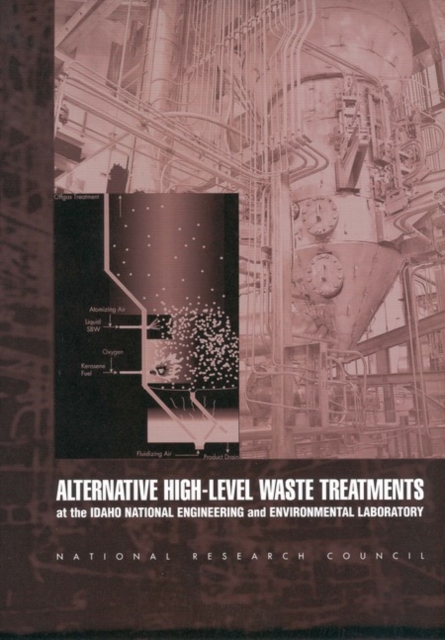

Improving the Characterization and Treatment of Radioactive Wastes for the Department of Energy's Accelerated Site Cleanup Program
The Department of Energy's Office of Environmental Management (EM) directs the massive cleanup of more than 100 sites that were involved in the production of nuclear weapons materials during the Manhattan Project and the Cold War.
eBook