
Catalogue Search | MBRL


Are you sure you want to remove the book from the shelf?

{{itemTitle}}
19,792
result(s) for
"Rain forest ecology."
Sort by:

A rainforest habitat
Children are introduced to the huge trees, colorful flowers, and other plants in South American tropical rain forests, as well as the insects, amphibians, mammals, and other animals that live there.
Book

Cultural Forests of the Amazon
Cultural Forests of the Amazon is a comprehensive and diverse account of how indigenous people transformed landscapes and managed resources in the most extensive region of tropical forests in the world. Until recently, most scholars and scientists, as well as the general public, thought indigenous people had a minimal impact on Amazon forests, once considered to be total wildernesses. William Balée’s research, conducted over a span of three decades, shows a more complicated truth. In Cultural Forests of the Amazon , he argues that indigenous people, past and present, have time and time again profoundly transformed nature into culture. Moreover, they have done so using their traditional knowledge and technology developed over thousands of years. Balée demonstrates the inestimable value of indigenous knowledge in providing guideposts for a potentially less destructive future for environments and biota in the Amazon. He shows that we can no longer think about species and landscape diversity in any tropical forest without taking into account the intricacies of human history and the impact of all forms of knowledge and technology. Balée describes the development of his historical ecology approach in Amazonia, along with important material on little-known forest dwellers and their habitats, current thinking in Amazonian historical ecology, and a narrative of his own dialogue with the Amazon and its people.
eBook


Maya tropical forest
The Maya Tropical Forest, which occupies the lowlands of southern Mexico, Guatemala, and Belize, is the closest rainforest to the United States and one of the most popular tourist destinations in the Western Hemisphere. It has been home to the Maya peoples for nearly four millennia, starting around 1800 BC. Ancient cities in the rainforest such as Palenque, Yaxchilan, Tikal, and Caracol draw thousands of tourists and scholars seeking to learn more about the prehistoric Maya. Their contemporary descendants, the modern Maya, utilize the forest's natural resources in village life and international trade, while striving to protect their homeland from deforestation and environmental degradation. Writing for both visitors and conservationists, James Nations tells the fascinating story of how ancient and modern Maya peoples have used and guarded the rich natural resources of the Maya Tropical Forest. He opens with a natural history that profiles the forest's significant animals and plants. Nations then describes the Maya peoples, biological preserves, and major archaeological sites in Mexico, Guatemala, and Belize. Drawing on more than twenty-five years of conservation work in the Maya Tropical Forest, Nations tells first-hand stories of the creation of national parks and other protected areas to safeguard the region's natural resources and archaeological heritage. He concludes with an expert assessment of the forest's future in which he calls for expanded archaeological tourism to create an ecologically sustainable economic base for the region.
eBook

The tropical rain forest : discover this wet biome
\"Discusses the plants and animals of the tropical rain forest biome, including their roles in the food chain\"-- Provided by publisher.
Book

British Columbia's inland rainforest
This book brings together information from a wide range of sources about the ecology, management, and conservation of British Columbia's inland rainforest.
eBook

If I ran the rain forest
In rhyming text, the Cat in the Hat introduces the tropical rainforest and the ways in which its plants and animals interact.
Book
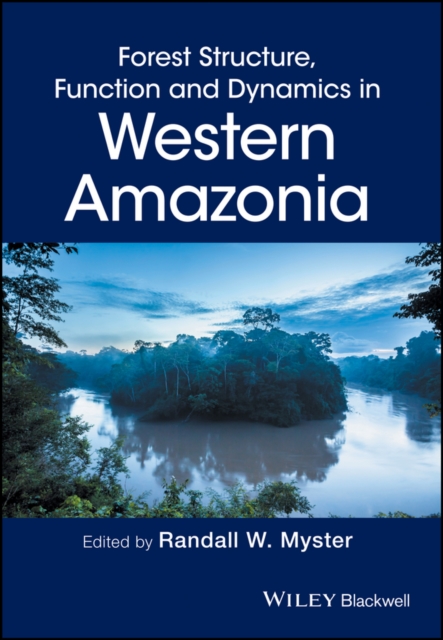
Forest structure, function and dynamics in western Amazonia
The Amazon Basin contains the largest and most diverse tropical rainforest in the world.Besides the Andes and the Atlantic Ocean, the rainforest is bounded to the north by the Guiana crystalline shield and to the south by the Brazilian crystalline shield, marked at their edges by cataracts in the rivers and often dominated by grasslands.
eBook

In the rainforest
The rainforest habitat is incredibly diverse so diverse that scientists are discovering new species of plants and animals all the time! In this book, readers journey deep into the rainforest with many kinds of scientists and learn about what they study, their methods, and recent discoveries. Full-color photographs show researchers and their tools and technology up close, from sun-protective gear to infrared cameras. The main content also touches on important STEM curriculum content, including conservation and features of this amazing habitat.
Book

Flammable Australia
In Flammable Australia: Fire Regimes, Biodiversity and Ecosystems in a Changing World, leading researchers in fire ecology and management discuss how fire regimes have shaped and will continue to shape the distribution and abundance of Australia's highly diverse plants and animals. Central to this is the exploration of the concept of the fire regime - the cumulative pattern of fires and their individual characteristics (fire type, frequency, intensity, season) and how variation in regime components affects landscapes and their constituent biota. Contributions by 44 authors explore a wide range of topics including classical themes such as pre-history and evolution, fire behaviour, fire regimes in key biomes, plant and animal life cycles, remote sensing and modelling of fire regimes, and emerging issues such as climate change and fire regimes, carbon dynamics and opportunities for managing fire regimes for multiple benefits. In the face of significant global change, the conservation of our native species and ecosystems requires an understanding of the processes at play when fires and landscapes interact. This book provides a comprehensive treatment of this complex science, in the context of one of the world's most flammable continents.
eBook