
Catalogue Search | MBRL


Are you sure you want to remove the book from the shelf?

{{itemTitle}}
83
result(s) for
"Re-enactment"
Sort by:

Reconstruction, Replication and Re-Enactment in the Humanities and Social Sciences
This book offers sustained, interdisciplinary reflections on performative methods, variously known as Reconstruction, Replication and Re-enactment (RRR) practices across the fields of history of science, archaeology, art history, conservation, musicology and anthropology.
eBook

Visions from behind a desk? Archival performance and the re-enactment of colonial bureaucracy
Can ten weeks of archival research be considered a re-enactment of the daily life of black African clerks who created the records? What would such a claim entail when it is made by a white female scholar? Drawing from my experience of archival research in Zambia, and from recent enthusiasm in historical geography for “enlivening” or “animating” the past, I analyse what parameters would be necessary for this re-enactment to be considered a success. This paper explores how breaking up historical situations into units of gesture and experience affects the narrating of history. It asks what models of the self are implied by re-enactive historical investigation; in relation to the agency of historical actors, and also to the performativity of their original gestures. It argues that performative investigation of the social and cultural geographies of the subaltern sits uncomfortably with current scholarly practices in historical geography. This is in part because that work is largely carried out by lone scholars, but also because of the highly individualised, self-conscious and self-possessed modes through which the outcomes of performative research are narrated. Finally, borrowing the term “acts of transfer” (from the performance scholar Diana Taylor), this paper proposes that this contemporary performance of clerical work is only one route through which the colonial past resonates, or acts, in the present. The lives of the colonial clerks were locked into structures of racial and socioeconomic inequality that survive outside my performance. Does “performing” the past overwrite or obscure these other continuities? To avoid such an erasure, both the ethical consequences and epistemological goals of performative research in historical geography need to be more clearly articulated in relationship to the sociomaterial geographies of the present.
Journal Article

Children’s everyday lifeworlds out of school, in Hong Kong, Melbourne, and Singapore: Family, enrichment activities, and local communities
Children’s everyday lives beyond school need to be considered holistically, in a way which moves beyond time use. In this article we draw on our adaptation of Sarah Pink’s (e.g. 2012) video re-enactment methodology for considering children’s out-of-school lifeworlds with Year 4 children (9 and 10 years old) in the global cities of Hong Kong, Melbourne, and Singapore. The data presented and discussed here was part of a larger Global Childhoods Project with children in the three global cities of Melbourne, Hong Kong, and Singapore. We use video re-enactment methodology to ‘think with’, to open up lines of inquiry and create conversations about children’s lives in and between the cities. Through these we consider the specifics of each city context, as well as socioeconomic and sociocultural contexts and factors that may impact differently on children’s everyday lifeworlds out-of-school within the same city. In order to focus the scope of the article, we consider family routines, enrichment activities and local communities, as aspects that we find useful to reflect on when exploring what children’s lives look like, in and across locations. We focus on these as we are interested in how they might add to the complexities of thinking about children in each location. We move between thinking about the re-enactments themselves and broader literature to explore children’s out-of-school lifeworlds in the three cities, painting a picture of children’s lives and considering the contexts which make particular activities and practices possible and desirable.
Journal Article

Multi-attention-based approach for deepfake face and expression swap detection and localization
Advancements in facial manipulation technology have resulted in highly realistic and indistinguishable face and expression swap videos. However, this has also raised concerns regarding the security risks associated with deepfakes. In the field of multimedia forensics, the detection and precise localization of image forgery has become essential tasks. Current deepfake detectors perform well with high-quality faces within specific datasets, but often struggle to maintain their performance when evaluated across different datasets. To this end, we propose an attention-based multi-task approach to improve feature maps for classification and localization tasks. The encoder and the attention-based decoder of our network generate localized maps that highlight regions with information about the type of manipulation. These localized features are shared with the classification network, improving its performance. Instead of using encoded spatial features, attention-based localized features from the decoder’s first layer are combined with frequency domain features to create a discriminative representation for deepfake detection. Through extensive experiments on face and expression swap datasets, we demonstrate that our method achieves competitive performance in comparison to state-of-the-art deepfake detection approaches in both in-dataset and cross-dataset scenarios. Code is available at https://github.com/saimawaseem/Multi-Attention-Based-Approach-for-Deepfake-Face-and-Expression-Swap-Detection-and-Localization.
Journal Article
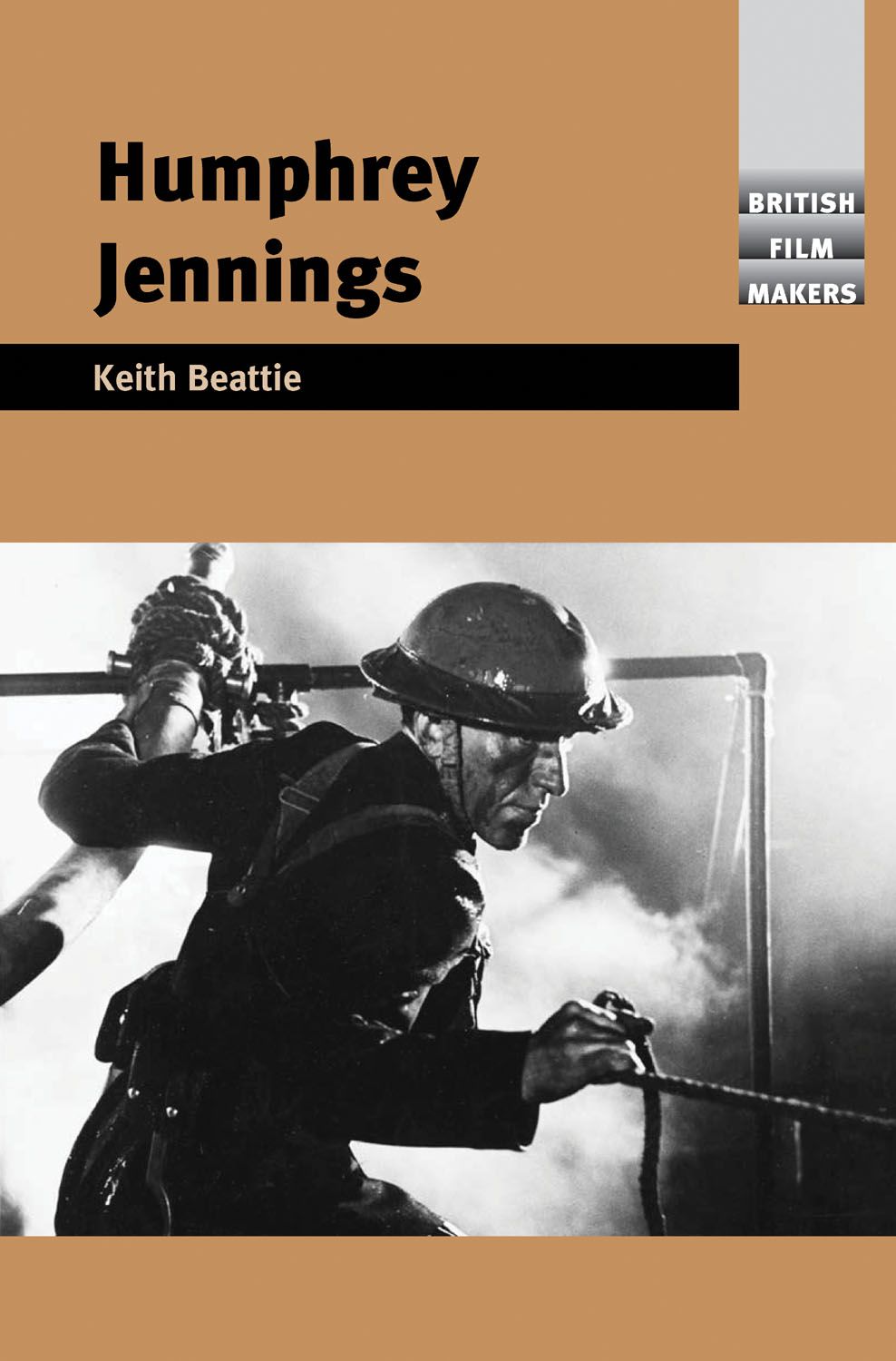
Humphrey Jennings
Humphrey Jennings has been described as the only real poet that British cinema has produced. His documentary films are remarkable records of Britain at peace and war, and his range of representational approaches transcended accepted notions of wartime propaganda and revised the strict codes of British documentary film of the 1930s and 1940s.Poet, propagandist, surrealist and documentary filmmaker – Jennings' work embodies an outstanding mix of startling apprehension, personal expression and representational innovation. This book carefully examines and expertly explains the central components of Jennings' most significant films, and considers the relevance of his filmmaking to British cinema and contemporary experience.Films analysed include Spare Time, Words for Battle, Listen to Britain, Fires Were Started, The Silent Village, A Diary for Timothy and Family Portrait.
eBook

Authorizing Authority: Constitutive Rhetoric and the Poetics of Re-enactment in Cicero’s Pro Lege Manilia
This paper studies the persuasive strategies in Pro Lege Manilia in conversation with contemporary rhetorical theory, drawing especially on the perspective of constitutive discourse and the interaction between what is in the text and what is outside. Prior receptions of Pompey by internal audiences double as sites of panegyric image construction, which was itself then instrumentalized to influence external groups. The speech self-referentially thematizes this production of authority, disclosing its rhetorical mechanisms as both performed and performative text. Cicero himself, in the process of proclaiming Pompey, crucially participates in the manufacture and mediation of the image, and in constituting ideological cohesion.
Journal Article

Knowing as Remembering: Methodological Experiments in Embodied Experiences of Number
A premise of this article is that the current methods used in mathematics education research may be preventing researchers from adequately addressing the body and, in particular, the alignment of acting and knowing. Pursuing a non-dualistic and non-hierarchical approach to learning and knowing, I experiment with new methods that aim to increase situated and embodied validity. I do so through a short video clip of a four-year-old child interacting with
TouchCounts
, which is a multi-touch application designed to support early number sense. I work through the many arm, hand and finger actions made by the child, both manually on the screen and digitally in the air, focusing on the translations of these actions across contexts, which I understand as learning through remembering. I then discuss some consequences of these methods, which involve narrative and re-enactment, on knowledge production, both for learners and for researchers, specifically when digital technologies are involved.
Journal Article

Steganography-based facial re-enactment using generative adversarial networks
This paper presents a technique for hiding secret messages in images while transferring them over a network using steganography. The preprocessed standard datasets create steganographic datasets for facial re-enactment purposes. The facial re-enactment GAN (FRe-GAN) technique and qualitative and quantitative results have been presented over various datasets. A comparative study has been conducted that showcase the drawbacks of existing literature and motivated their work. We propose a steganography-based GAN model and used benchmark datasets such as Flickr-Faces-HQ (FFHQ), IMPA-FACE3D, FaceForensics++, and CelebFaces Attributes (CelebA) facial datasets in the experimentation. We have derived a Generative Adversarial Networks-based approach to face re-synthesis and re-enactment that adjusts for facial expressions and pose. The face blending network is used to blend two faces seamlessly. We have compared the proposed approach with existing state-of-the-art systems and show that our method achieves qualitatively and quantitatively better results.
Journal Article

Let them research with
The French natural philosopher Henri Victor Regnault (1810–1878) was one of many researchers who contributed to the development of the thermometer in the 19th century. In this paper, we use an example from Regnault’s work to explore how the history of thermometry can provide a context for teaching upper-secondary chemistry students about the nature of science (NOS), particularly its aims and values. The study takes form as a hermeneutical spiral, wherein literature on the history and philosophy of science, NOS, the family resemblance approach (FRA), NOS teaching, characteristics of narratives, and the new performative paradigm feed into the spiral, along with input from an empirical study. A teaching unit (n = 21, duration = 90 min) was developed and tested on Norwegian students aged 17–18 years, and a thematic analysis of students’ statements (n = 13) was carried out. The students identified “being first,” “usefulness,” “accuracy,” and “minimalism” as values and aims that guided Regnault’s work. We argue that the use of this particular historical episode framed within FRA (1) invited students to identify with the human actor—Regnault, (2) invited students into the historical context of the development of the thermometer, and (3) demonstrated complexity and provided context to support students’ own construction of their understanding of NOS. To summarize, by deriving the term “research
with
” from the performative paradigm and using the context of the historical episode related to the thermometer within the FRA framework students were invited to research
with
Henri Regnault.
Journal Article

Embodiments and co-actions: The function of trust and re-enactment in the practice of psychotherapy
This paper is an empirically-based theoretical contribution to the field of research that investigates the function of trust and re-enactment in psychotherapeutic interaction. We use an ecological, embodied approach that pays attention to how human interaction is constrained by multiple timescales (past, present and future). The analysis sheds light on how trust, here in terms of a therapeutic alliance, is enabled, performed and maintained in interaction through the work with embodied re-enactments of previous events. Specifically, we describe how this therapeutic work constitutes an emerging, situated opportunity for teaching/practising embodied emotion regulation in the form of a co-participated enaction of “taking a deep breath,” and we emphasise how embodied, co-participated re-enactment of past (dys)functional behaviours outside of therapy can be a resource for redirecting, teaching and reinforcing therapeutically relevant behaviours in the context of therapy presenting themselves as fruitful opportunities for facilitating incremental change. Further, psychotherapy serves as a useful case for demonstrating the relevance of such an embodied interaction approach far more generally.
Journal Article