
Catalogue Search | MBRL


Are you sure you want to remove the book from the shelf?

{{itemTitle}}
14,497
result(s) for
"Reaction mechanisms"
Sort by:


Synergy between Fe and Ni in the optimal performance of (Ni,Fe)OOH catalysts for the oxygen evolution reaction
The oxygen evolution reaction (OER) is critical to solar production of fuels, but the reaction mechanism underlying the performance for a best OER catalyst, Fe-doped NiOOH [(Ni,Fe)OOH], remains highly controversial. We used grand canonical quantum mechanics to predict the OER mechanisms including kinetics and thus overpotentials as a function of Fe content in (Ni,Fe)OOH catalysts. We find that density functional theory (DFT) without exact exchange predicts that addition of Fe does not reduce the overpotential much. However, DFT with exact exchange predicts dramatic improvement in performance for (Ni,Fe)OOH, leading to an overpotential of 0.42 V and a Tafel slope of 23 mV/decade (dec), in good agreement with experiments, 0.3–0.4 V and 30 mV/dec. We reveal that the high spin d⁴ Fe(IV) leads to efficient formation of an active O radical intermediate, while the closed shell d⁶ Ni(IV) catalyzes the subsequent O–O coupling, and thus it is the synergy between Fe and Ni that delivers the optimal performance for OER.
Journal Article

Catalytic Hydrogenation of CO2 to Methanol: A Review
High-efficiency utilization of CO2 facilitates the reduction of CO2 concentration in the global atmosphere and hence the alleviation of the greenhouse effect. The catalytic hydrogenation of CO2 to produce value-added chemicals exhibits attractive prospects by potentially building energy recycling loops. Particularly, methanol is one of the practically important objective products, and the catalytic hydrogenation of CO2 to synthesize methanol has been extensively studied. In this review, we focus on some basic concepts on CO2 activation, the recent research advances in the catalytic hydrogenation of CO2 to methanol, the development of high-performance catalysts, and microscopic insight into the reaction mechanisms. Finally, some thinking on the present research and possible future trend is presented.
Journal Article
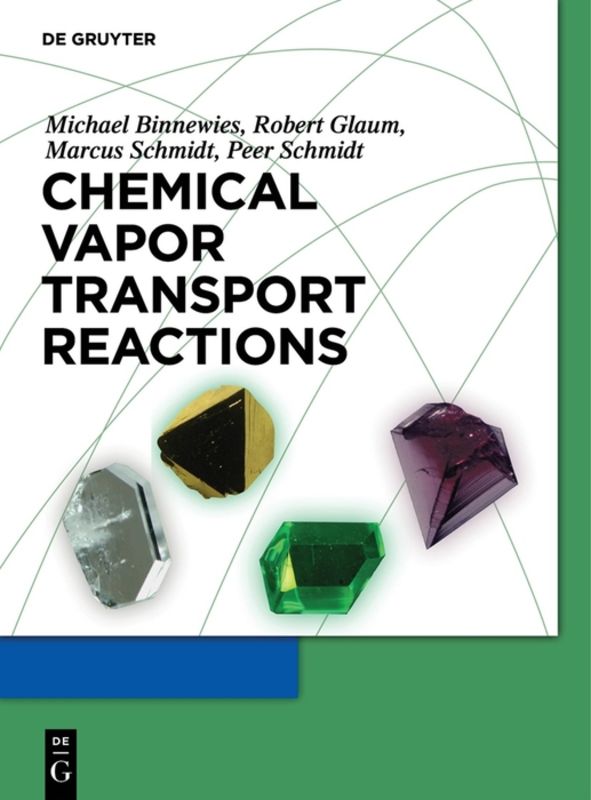
Chemical Vapor Transport Reactions
This comprehensive handbook covers the diverse aspects of chemical vapor transport reactions from basic research to important practical applications. The book begins with an overview of models for chemical vapor transport reactions and then proceeds to treat the specific chemical transport reactions for the elements, halides, oxides, sulfides, selenides, tellurides, pnictides, among others. Aspects of transport from intermetallic phases, the stability of gas particles, thermodynamic data, modeling software and laboratory techniques are also covered. Selected experiments using chemical vapor transport reactions round out the work, making this book a useful reference for researchers and instructors in solid state and inorganic chemistry.
eBook

Recent Developments in Enzymatic Antioxidant Defence Mechanism in Plants with Special Reference to Abiotic Stress
The stationary life of plants has led to the evolution of a complex gridded antioxidant defence system constituting numerous enzymatic components, playing a crucial role in overcoming various stress conditions. Mainly, these plant enzymes are superoxide dismutase (SOD), catalase (CAT), peroxidase (POX), glutathione peroxidase (GPX), glutathione reductase (GR), glutathione S-transferases (GST), ascorbate peroxidase (APX), monodehydroascorbate reductase (MDHAR), and dehydroascorbate reductase (DHAR), which work as part of the antioxidant defence system. These enzymes together form a complex set of mechanisms to minimise, buffer, and scavenge the reactive oxygen species (ROS) efficiently. The present review is aimed at articulating the current understanding of each of these enzymatic components, with special attention on the role of each enzyme in response to the various environmental, especially abiotic stresses, their molecular characterisation, and reaction mechanisms. The role of the enzymatic defence system for plant health and development, their significance, and cross-talk mechanisms are discussed in detail. Additionally, the application of antioxidant enzymes in developing stress-tolerant transgenic plants are also discussed.
Journal Article

Advanced Catalyst Design Strategies and In-Situ Characterization Techniques for Enhancing Electrocatalytic Activity and Stability of Oxygen Evolution Reaction
Water electrolysis for hydrogen production holds great promise as an energy conversion technology. The electrolysis process contains two necessary electrocatalytic reactions, one is the hydrogen evolution reaction (HER) at the cathode, and the other is the oxygen evolution reaction (OER) at the anode. In general, the kinetics of OER is much slower than that of HER, dominating the overall of performance electrolysis. As identified, the slow kinetics of catalytic OER is mainly resulted from multiple electron transfer steps, and the catalysts often undergo compositional, structural, and electronic changes during operation, leading to complicated dynamic reaction mechanisms which have not been fully understood. Obviously, this challenge presents formidable obstacles to the development of highly efficient OER electrocatalysts. To address the issue, it is crucial to unravel the origins of intrinsic OER activity and stability and elucidate the catalytic mechanisms across diverse catalyst materials. In this context, in-situ/operando characterization techniques would play a pivotal role in understanding the catalytic reaction mechanisms by enabling real-time monitoring of catalyst structures under operational conditions. These techniques can facilitate the identification of active sites for OER and provide essential insights into the types and quantities of key reaction intermediates. This comprehensive review explores various catalyst design and synthesis strategies aimed at enhancing the intrinsic OER activity and stability of catalysts and examines the application of advanced in-situ/operando techniques for probing catalyst mechanisms during the OER process. Furthermore, the imperative need for developing innovative in-situ/operando techniques, theoretical artificial intelligence and machine learning and conducting theoretical research to better understand catalyst structural evolution under conditions closely resembling practical OER working states is also deeply discussed. Those efforts should be able to lay the foundation for the improved fabrication of practical OER catalysts.
Graphical Abstract
Journal Article
Recent Progress in Sodium-Ion Batteries: Advanced Materials, Reaction Mechanisms and Energy Applications
For energy storage technologies, secondary batteries have the merits of environmental friendliness, long cyclic life, high energy conversion efficiency and so on, which are considered to be hopeful large-scale energy storage technologies. Among them, rechargeable lithium-ion batteries (LIBs) have been commercialized and occupied an important position as secondary batteries due to their high energy density and long cyclic life. Nevertheless, the uneven distribution of lithium resources and a large number of continuous consumptions result in a price increase for lithium. So, it is very crucial to seek and develop alternative batteries with abundant reserves and low cost. As one of the best substitutes for widely commercialized LIBs, sodium-ion batteries (SIBs) display gorgeous application prospects. However, further improvements in SIB performance are still needed in the aspects of energy/power densities, fast-charging capability and cyclic stability. Electrode materials locate at a central position of SIBs. In addition to electrode materials, electrolytes, conductive agents, binders and separators are imperative for practical SIBs. In this review, the latest progress and challenges of applications of SIBs are reviewed. Firstly, the anode and cathode materials for SIBs are symmetrically summarized from aspects of the design strategies and synthesis, electrochemical active sites, surrounding environments of active sites, reaction mechanisms and characterization methods. Secondly, the influences of electrolytes, conductive agents, binders and separators on the electrochemical performance are elucidated. Finally, the technical challenges are summarized, and the possible future research directions for overcoming the challenges are proposed for developing high performance SIBs for practical applications.
Graphical abstract
Journal Article

Electrocatalytic oxidation of 5‐hydroxymethylfurfural for sustainable 2,5‐furandicarboxylic acid production—From mechanism to catalysts design
Catalytic conversion of biomass‐based platform chemicals is one of the significant approaches to utilize renewable biomass resources. 2,5‐Furandicarboxylic acid (FDCA), obtained by an electrocatalytic oxidation of 5‐hydroxymethylfurfural (HMF), has attracted extensive attention due to the potential of replacing terephthalic acid to synthesize high‐performance polymeric materials for commercialization. In the present work, the pH‐dependent reaction pathways and factors influencing the degree of functional group oxidation are first discussed. Then the reaction mechanism of HMF oxidation is further elucidated using the representative examples. In addition, the emerging catalyst design strategies (defects, interface engineering) used in HMF oxidation are generalized, and structure–activity relationships between the abovementioned strategies and catalysts performance are analyzed. Furthermore, cathode pairing reactions, such as hydrogen evolution reaction, CO2 reduction reaction (CO2RR), oxygen reduction reaction, and thermodynamically favorable organic reactions to lower the cell voltage of the electrolysis system, are discussed. Finally, the challenges and prospects of the electrochemical oxidation of HMF for FDCA are presented, focusing on deeply investigated reaction mechanism, coupling reaction, reactor design, and downstream product separation/purification. In this paper, the latest progress in the preparation of FDCA by the electrochemical oxidation of hydroxymethylfurfural is reviewed. The main work focuses on the reaction mechanism, catalyst design strategies, and the integrated system of proper cathodic coupling reduction reactions (inorganic/organic). It is hoped to serve as guidance for the identification and resolution of the electrochemical oxidation of nucleophile oxidation reaction.
Journal Article

Room‐temperature metal–sulfur batteries: What can we learn from lithium–sulfur?
Rechargeable metal–sulfur batteries with the use of low‐cost sulfur cathodes and varying choice of metal anodes (Li, Na, K, Ca, Mg, and Al) represent diverse energy storage solutions to satisfy different application requirements. In comparison to the highly‐regarded lithium–sulfur batteries, the use of nonlithium‐metal anodes in metal–sulfur batteries offers multiple advantages in terms of abundance, cost, and volumetric energy density. Although with the same sulfur cathode, metal–sulfur batteries show considerably differences in the electrochemical reaction pathway and capacity fading mechanism. Herein, we provide an overview of correlations and differences in metal–sulfur batteries, highlighting the knowledge and experience that can be transplanted from lithium–sulfur to other metal–sulfur batteries. We first discuss the historical development and the electrochemical reaction mechanism of various metal–sulfur batteries. This is then followed by an analysis of key challenges of metal–sulfur batteries including polysulfide shutting, cathode passivation, and anode stability. Finally, a short perspective is presented about the possible future development of metal–sulfur batteries. Deciphering the correlations and differences between the lithium–sulfur battery and other metal–sulfur batteries is essential to broaden the knowledge of lithium–sulfur batteries and contribute to other metal–sulfur batteries. This work presents an overview of correlations and differences in metal–sulfur batteries, highlighting the knowledge and experience that can be transplanted from lithium–sulfur to other metal–sulfur batteries.
Journal Article
Research Progress and Reaction Mechanism of CO2 Methanation over Ni-Based Catalysts at Low Temperature: A Review
The combustion of fossil fuels has led to a large amount of carbon dioxide emissions and increased greenhouse effect. Methanation of carbon dioxide can not only mitigate the greenhouse effect, but also utilize the hydrogen generated by renewable electricity such as wind, solar, tidal energy, and others, which could ameliorate the energy crisis to some extent. Highly efficient catalysts and processes are important to make CO2 methanation practical. Although noble metal catalysts exhibit higher catalytic activity and CH4 selectivity at low temperature, their large-scale industrial applications are limited by the high costs. Ni-based catalysts have attracted extensive attention due to their high activity, low cost, and abundance. At the same time, it is of great importance to study the mechanism of CO2 methanation on Ni-based catalysts in designing high-activity and stability catalysts. Herein, the present review focused on the recent progress of CO2 methanation and the key parameters of catalysts including the essential nature of nickel active sites, supports, promoters, and preparation methods, and elucidated the reaction mechanism on Ni-based catalysts. The design and preparation of catalysts with high activity and stability at low temperature as well as the investigation of the reaction mechanism are important areas that deserve further study.
Journal Article