
Catalogue Search | MBRL


Are you sure you want to remove the book from the shelf?

{{itemTitle}}
111
result(s) for
"Read, Herbert"
Sort by:
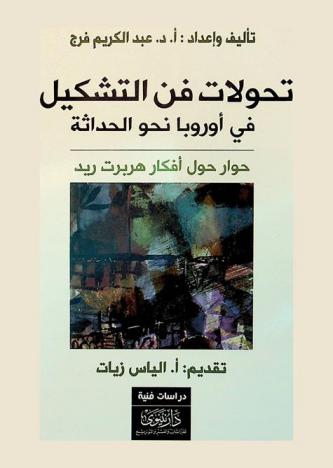

A new era
Strang talks about the progressive avant-garde art world of the 1930s in Edinburgh, Scotland which centered on three men and three institutions. Besides the efforts of Herbert Read, Hubert Wellington and Stanley Cursiter at the university, art college and national galleries, Edinburgh's avant-garde art world of the 1930s consisted of the activities of many other individuals and institutions, not least the progressive an which Scottish artists were making--and were able to see--in the capital during the decade. Throughout die decade, the Society of Scottish Artists' (SSA) annual exhibitions showcased the best of the country's contemporary art, hung alongside loans of significant European modern art.
Journal Article

Kropotkin, Read, and the intellectual history of British anarchism : between reason and romanticism
\"British anarchism has a rich intellectual history. Although marginal as a political force, anarchist ideas developed in Britain into a distinctive political tradition. Kropotkin, Read, and the Intellectual History of British Anarchism explores this lost history, offering a new appraisal of the work of Kropotkin and Read, and examining the ways in which they endeavoured to articulate a politics fit for the particular challenges of Britain's modern history. This book traces how their politics emerged in response to the controversies animating Britain's intellectual history, including the social implications of Darwinism, the role of the state, and the status of modern art and culture. Challenging existing interpretations of their work, it re-conceptualises the history of British anarchism, uncovering the attempt to broaden anarchism, the politics of protest, into a comprehensive philosophical system\"-- Provided by publisher.
BOOK
To Hell with Culture
Herbert Read was a maverick character in the cultural life of the twentieth century. A radical leader of the avant garde in the 1930s, and an anarchist revolutionary during the war years, by the time of his death in 1968 he had become a key figure at the heart of the British cultural establishment. To Hell with Culture offers readers an ideal overview of the ideas that marked out this seminal and hugely influential thinker. It is a controversial work that engages the reader in a wide range of topics, from revolutionary art to pornography.Adept at challenging assumptions and penetrating to the heart of any issue, Read's deft prose encourages the reader to think critically, to question and to subvert the voice of authority, of whatever political or cultural creed. Only through such a critical evaluation of culture, Read believes, can one appreciate the art that arises from the 'unpolitical manifestation of the human spirit'. At a time when authority and value are questionable terms, and when culture itself is a contested concept, Read's is both a challenging and an enlightening voice.
eBook

Curriculum, Culture, and Art Education
Through international case studies, this book explores the causes and effects of historical and contemporary cultural changes in art education.
A general broadening of content and methods, a renewed emphasis on student interests, and diverse critical perspectives can currently be seen internationally in art curricula. This book explores ways that visual culture in education is helping to move art curricula off their historical foundations and open the field to new ways of teaching, learning, and prefiguring worlds. It highlights critical histories and contemporary stories, showing how cultural milieu influences and is influenced by the various practices that make up the professional field inside and outside of institutional borders. This book shows students how contemporary art educators are responding, revising, and re-creating the field.
eBook


Meeting the Enemy in World War I Poetry: Cognitive Dissonance as a Vehicle for Theme
Some World War I poems show an enemy soldier up close. This choice usually proves very effective for expressing the general irony of war, to be sure. However, I submit that showing interaction with the enemy also allows the speaker space to wrestle with internal conflict, guilt, or cognitive dissonance, and that it allows—or even forces—readers to participate in that struggle along with the speaker. While the poets’ writings no doubt had therapeutic effects for the poets themselves, I focus more on the literary effects, specifically arguing that the poems are powerful to us readers since they heighten the personal exposure of the poets’ psyches and since they make us share the dissonance as readers. I consider poems by Siegfried Sassoon, Wilfred Owen, Robert Graves, Ford Madox Ford, Herbert Read, and Robert Service.
Journal Article

Herbert Read’s Egoist Roots
According to Wyndham Lewis, he possessed an unenviable knack of providing, at a week’s notice, almost any movement, or sub-movement, in the visual arts, with a neatly-cut party-suit—with which it can appear, appropriately caparisoned, at the cocktail-party thrown by the capitalist who has made it possible, in celebration of the happy event.3 Certainly, his enthusiasm for new artistic and intellectual initiatives at times led Read to make what were, even in his own estimation, some questionable alliances. First encountering Jung in the 1930s, Read quickly became a convert,eventually ending up as the chief editor of his collected works.38 The benefit of Jung’s model as he saw it was that while Freud’s unconscious was as individual and unpredictable as the surrealist art it inspired, Jung’s unconscious was populated by an order of collectively recognized archetypes. [...]without circumventing the quasi-egoist agency of the artist—by the 1940s, Read was able to figure aesthetic judgement as being “the discrimination of effective shapes,” and an individual’s “preference for certain physical laws” as a sign that the unconscious was engaged in “seeking an archetypal order.” [...]when Read replied he openly acknowledged to Gabo that “you express the philosophy which I also believe in”: constructivism, guided by an altruistic form of egoism, chimed closely with the ontology behind of the “community of individuals” that Read had been outlining in his social criticism.43 While he agreed with Gabo that the creative impulse should be essentially egoistic, however, the vocabulary that Read had picked up from Jung also allowed him to channel that egoism towards essentially collectivist ends.
Journal Article

Arnold Hauser (1892-1978) y la gestación de Manierismo (1964): la precariedad económica del intelectual independiente
Según Arnold Hauser, el propósito de la historia es comprender el presente. Su controvertida Historia social de la literatura y el arte (1951) culmina «bajo el signo del cine». Este interés por el cine se remonta a su experiencia como distribuidor de películas en Viena (1924-1938), cuando proyectó una inacabada Dramaturgia y sociología del film. No obstante, su siguiente investigación, Manierismo: la crisis del Renacimiento y los orígenes del arte moderno (1964), parece renunciar a la problemática del medio artístico de masas, habiendo sido interpretado como una «retirada del marxismo». Recurriendo a los archivos de C. H. Beck (Múnich), de la Biblioteca del Congreso (Washington D.C.), y del archivo de literatura alemana (Marbach), indagamos en por qué Hauser escribió Manierismo y no un libro sobre cine, recogiendo su contacto con Theodor Adorno, Herbert Read y Siegfried Kracauer. Concluimos que la historia de su gestación documenta la elección pragmática de un intelectual independiente, exiliado, y en intranquila precariedad económica.
Journal Article

Modernism, Media, and Propaganda
Though often defined as having opposite aims, means, and effects, modernism and modern propaganda developed at the same time and influenced each other in surprising ways. The professional propagandist emerged as one kind of information specialist, the modernist writer as another. Britain was particularly important to this double history. By secretly hiring well-known writers and intellectuals to write for the government and by exploiting their control of new global information systems, the British in World War I invented a new template for the manipulation of information that remains with us to this day. Making a persuasive case for the importance of understanding modernism in the context of the history of modern propaganda, Modernism, Media, and Propaganda also helps explain the origins of today's highly propagandized world. Modernism, Media, and Propaganda integrates new archival research with fresh interpretations of British fiction and film to provide a comprehensive cultural history of the relationship between modernism and propaganda in Britain during the first half of the twentieth century. From works by Joseph Conrad to propaganda films by Alfred Hitchcock and Orson Welles, Mark Wollaeger traces the transition from literary to cinematic propaganda while offering compelling close readings of major fiction by Virginia Woolf, Ford Madox Ford, and James Joyce.
eBook