
Catalogue Search | MBRL


Are you sure you want to remove the book from the shelf?

{{itemTitle}}
2,436
result(s) for
"Reading Computer-assisted instruction."
Sort by:
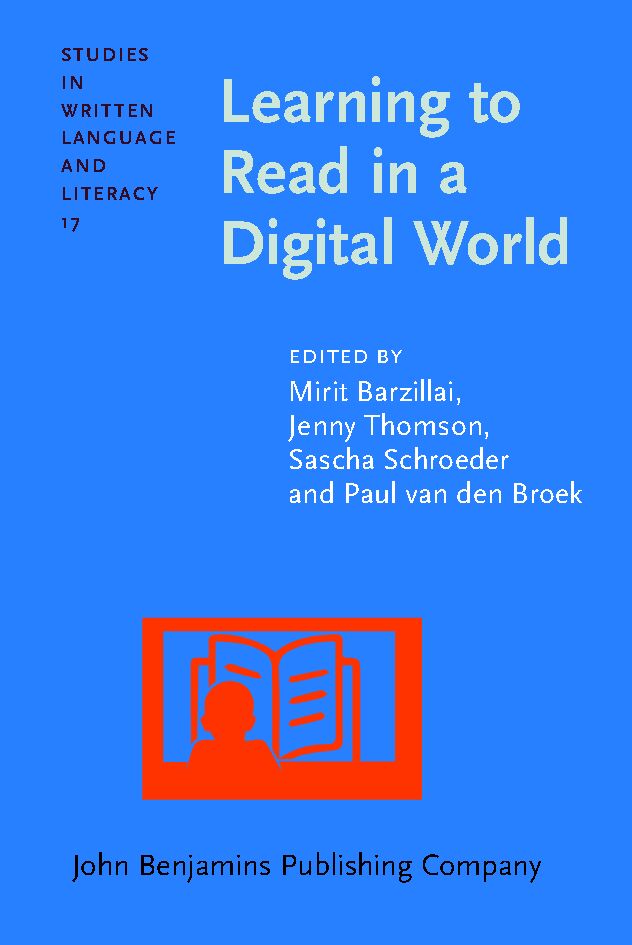
Learning to Read in a Digital World
With digital screens becoming increasingly ubiquitous in the lives of children, from their homes to their classrooms, understanding the influence of these technologies on the ways children read takes on great importance. The aim of this edited volume is to examine how advances in technology are shaping children's reading skills and development. The chapters in this volume explore the influence of various aspects of digital texts, the child's cognitive and motivational skills, and the child's environment on reading development in digital contexts. Each chapter draws upon the expertise of scientists and researchers across countries and disciplines to review what is currently known about the influence of technology on reading, how it is studied, and to offer new insights and research directions based on recent work.
eBook


Developing Reading Comprehension
\"Presents cutting-edge, evidence-based interventions for dealing with specific difficulties of reading comprehension in children aged 7-11. An in-depth introduction to the 'poor comprehender profile', which describes children who despite being fluent readers have difficulty extracting meaning from text. Sets out a range of practical interventions for improving reading skills in this group - along with comprehensive guidance on assessment and monitoring, and insightful accounts of professionals' experience in delivering the techniques described. Includes an overview of psychological theories of reading comprehension, evaluating their practical applicability. \"--
eBook


Rethinking early literacies : reading and rewriting worlds
\"Rethinking Early Literacies theorizes literacy for young children in a way that invites readers to rethink theoretical constructs framing understandings of literacy in contemporary society. Examples from a variety of sites, involving diverse children ages 3-8 prompt reconceptualizations of children's literate identities, challenge how diverse language learners are defined, and revise and expand the notion of texts to encompass digital tools and popular culture. Issues influencing early childhood education and how young children are positioned given trans/national social and political contexts are considered throughout\" -- Provided by pubisher.
Book

Trends, Research Issues and Applications of Artificial Intelligence in Language Education
Artificial Intelligence (AI) plays an increasingly important role in language education; however, the trends, research issues, and applications of AI in language learning remain largely under-investigated. Accordingly, the present paper, using bibliometric analysis, investigates these issues via a review of 516 papers published between 2000 and 2019, focusing on how AI was integrated into language education. Findings revealed that the frequency of studies on AI-enhanced language education increased over the period. The USA and Arizona State University were the most active country and institution, respectively. The 10 most popular topics were: (1) automated writing evaluation; (2) intelligent tutoring systems (ITS) for reading and writing; (3) automated error detection; (4) computer-mediated communication; (5) personalized systems for language learning; (6) natural language and vocabulary learning; (7) web resources and web-based systems for language learning; (8) ITS for writing in English for specific purposes; (9) intelligent tutoring and assessment systems for pronunciation and speech training; and (10) affective states and emotions. The results also indicated that AI was frequently used to assist students in learning writing, reading, vocabulary, grammar, speaking, and listening. Natural language processing, automated speech recognition, and learner profiling were commonly applied to develop automated writing evaluation, personalized learning, and intelligent tutoring systems.
Journal Article

Computer-Assisted Remedial Reading Intervention for School Beginners at Risk for Reading Disability
The aim of the longitudinal study was to investigate whether a computer application designed for remedial reading training can enhance letter knowledge, reading accuracy, fluency, and spelling of at-risk children. The participants, 7-year-old Finnish school beginners (N = 166), were assigned to 1 of 3 groups: (a) regular remedial reading intervention (n = 25), (b) computer-assessed reading intervention (n = 25), and (c) main-stream reading instruction (n = 116). Based on the results, computer-assisted remedial reading intervention was highly beneficial, whereas regular type of intervention was less successful. The results indicated that at-risk children require computer-based letter-name and letter-sound training to acquire adequate decoding and spelling skills, and to reach the level of their non-at-risk peers.
Journal Article

Computer-assisted EFL writing and evaluations based on artificial intelligence: a case from a college reading and writing course
PurposeThe aim of this study is to explore students' expectations and perceived effectiveness of computer-assisted review tools, and the differences in reliability and validity between human evaluation and automatic evaluation, to find a way to improve students' English writing ability.Design/methodology/approachBased on the expectancy disconfirmation theory (EDT) and Intelligent Computer-Assisted Language Learning (ICALL) theory, an experiment is conducted through the observation method, semistructured interview method and questionnaire survey method. In the experiment, respondents were asked to write and submit four essays on three online automated essay evaluation (AEE) systems in total, one essay every two weeks. Also, two teacher raters were invited to score the first and last papers of each student. The respondents' feedbacks were investigated to confirm the effectiveness of the AEE system; the evaluation results of the AEE systems and teachers were compared; descriptive statistics was used to analyze the experimental data.FindingsThe experiment revealed that the respondents held high expectations for the computer-assisted evaluation tools, and the effectiveness of computer scoring feedback on students was higher than that of teacher scoring feedback. Moreover, at the end of the writing project, the students' independent learning ability and English writing ability were significantly improved. Besides, there was a positive correlation between students' initial expectations of computer-assisted learning tools and the final evaluation of learning results.Originality/valueThe innovation lies in the use of observation methods, questionnaire survey methods, data analysis, and other methods for the experiment, and the combination of deep learning theory, EDT and descriptive statistics, which has particular reference value for future works.
Journal Article