
Catalogue Search | MBRL


Are you sure you want to remove the book from the shelf?

{{itemTitle}}
1,419
result(s) for
"Reading Remedial teaching."
Sort by:


School-based interventions for struggling readers, k-8
The volume highlights best practices of literacy instruction for students who have difficulties in reading. From components of effective pedagogy to instruction for specific populations, this text offers an array of expert perspectives on how to engage, scaffold, and prepare students to meet the multimodal demands of schools today.
eBook


Connecting content and academic language for English learners and struggling students, grades 2-6
For English Learners and other struggling students, understanding and using academic language is absolutely critical to literacy development and school achievement, but it takes careful planning to help these students develop mastery. Ruth Swinney and Patricia Velasco's teacher-friendly guide explains how to weave together content and language goals when planning lesson units, as well as offering strategies for moving students from social to academic language and creating a curriculum of talk in the classroom. In addition, Swinney and Velasco provide detailed sample unit plans in all content areas to demonstrate how these strategies can be employed while simultaneously meeting curriculum demands. Using specific structures of balanced literacy including read along, shared reading, and shared writing, these unit plans also include a self-assessment guide for teachers to use as they scaffold the content to increase comprehension and student achievement
eBook

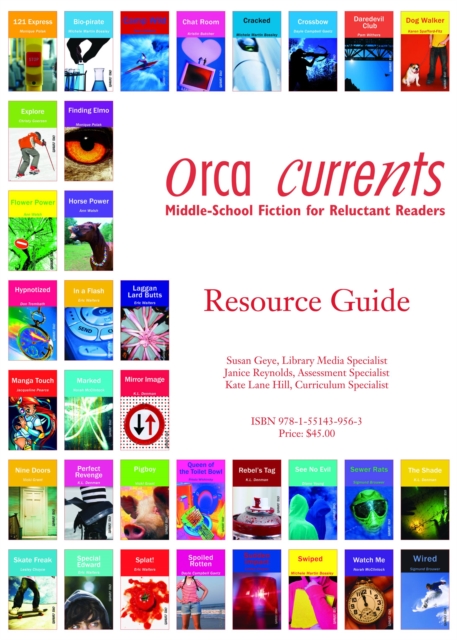
Orca Currents Resource Guide
Orca Soundings are teen novels for reluctant readers. Orca Currents are middle-school novels for reluctant readers. Written at a grade 2.0 to grade 4.5 reading level, these compelling contemporary novels have proven incredibly popular with teachers and librarians looking for material that will engage their most reluctant of readers. Orca has always provided professionally written teachers guides to accompany these books. Now we offer a complete resource guide to enable classroom integration of these popular titles. Including sections on reading levels, book discussion groups, literacy circles, assessment and follow-up activities, this resource guide enables a teacher to implement the Orca Soundings and Orca Currents series as part of a comprehensive independent reading and literacy unit.
eBook

Assessing and addressing literacy needs
\"Assessing and Addressing Literacy Needs: Cases and Instructional Strategies is designed to help preservice and inservice teachers understand the problems that children encounter when learning to read and to provide key instructional strategies related to best practices in literacy instruction. The text promotes reflection and analysis that will provoke thoughtful responses and discussions to help teachers use assessments to identify problems and employ appropriate strategies to help their students become better readers.\" -- Provided by publisher.
eBook


Sound linkage
The third edition of this highly successful phonological training programme, developed to support children with reading delays and dyslexia, has been revised throughout to incorporate the latest research in the field. The package contains a phonological training programme, and explains how this programme can be embedded within a broader reading intervention. These materials and the broader approach have been used with a wide range of children since 1994, and found to be suitable for reading-delayed children, irrespective of cognitive ability and age.
eBook