
Catalogue Search | MBRL


Are you sure you want to remove the book from the shelf?

{{itemTitle}}
3
result(s) for
"Real estate investment trusts Islamic countries"
Sort by:
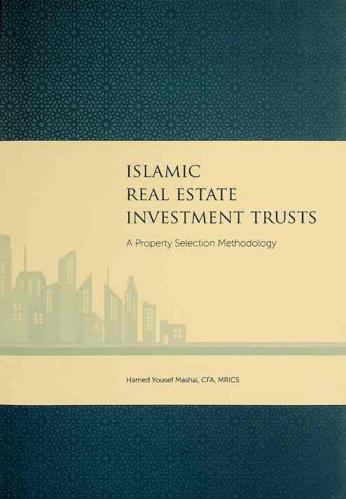
Islamic real estate investment trusts : a property selection methodology
\"This book represents the culmination of over 18 months of research and analysis conducted on the Islamic finance industry in general and Islamic Real Estate Investment Trusts specifically. The fact that Islamic REITs are increasing in popularity within the GCC region is very promising; however, it also magnifies the importance of setting up these structures and managing them in the correct way both financially and ethically in order to ensure that investor confidence in these products increases over time. As REIT structures provide investors with the ability to obtain real estate exposure at very low investment amounts, such structures effectively allow a much larger segment of our society to participate in what may be considered one of the largest asset classes in the GCC region. Initial research conducted indicates that investment products generally tend to fail due to a variety of reasons and one of these reasons is usually where the management activities of these investment products are not well- documented and thought through prior to the marketing of these products. As a result, this book expands on a subset of the investment methodology pertaining to real estate funds by devising a logical and efficient property selection methodology that may be used by Islamic REIT managers in managing such products.\" -- page [4] of cover.
Book

Financial Interdependencies: Analyzing the Volatility Linkages between Real Estate Investment Trusts, Sukuk, and Oil in GCC Countries
This study investigates the financial interconnections among Real Estate Investment Trusts (REITs), sukuk (Islamic bonds), and oil in Gulf Cooperation Council (GCC) nations. The study sample comprises S&P GCC Composite Equity Real Estate Investment Trusts (REITs) Shariah, the S&P GCC Bond and Sukuk Index, and the OPEC crude oil basket on a daily basis. The duration of coverage spans from 2014 until the beginning of 2024. The TVP-VAR methodology is utilized to examine the interrelationship among the assets. The results indicate that Real Estate Investment Trusts (REITs) and oil are sources of volatility transmission, whereas sukuk is a recipient of volatility within the network. Examining the net pairwise directional linkages of two assets, namely REITs and oil markets, reveals that they transfer their volatility to the sukuk market. Moreover, a reciprocal relationship exists between REITs and oil regarding volatility spillover. It means that REITs act as transmitters to the oil markets during specific periods, while the influence is reversed at other times. This study implies that portfolio managers and investors can discern the volatility patterns of assets in order to enhance their risk-management techniques. For policymakers, comprehending the interdependence of certain asset classes provides valuable knowledge for formulating regulations that might stabilize the financial system and foster economic growth. From a research and academic perspective, this study enhances understanding of the interconnections between different financial asset classes and pricing dynamics in financial markets.
Journal Article

Shariah Compliance in Real Estate Investment
This paper examines the cost of Shariah compliance in real estate investments by comparing synthetic Shariah compliant (SC) real estate investment (REIT) portfolios with unconstrained U.S. REIT portfolios, indexes, and real estate mutual funds (REMF). The performance of the synthetic portfolios are compared with various benchmarks in both univariate and multi factor framework. Shariah compliance seems to create a return trade-off and less restrictive compliance requirements appear to provide better historical returns when SC portfolios are compared to broader indexes or REMFs in general. However, Shariah compliance does not mean that SC REIT portfolios necessarily under-perform relevant indexes when relevant risk factors are considered and when differing sensitivities are applied to benchmark returns. The simulation shows that the market-weighted SC simulated REMFs dominate the conventional REMF and the average simulated annualized mean portfolio return for SC and SCLR REMFs are higher than the historical REMF annualized mean return.
Journal Article