
Catalogue Search | MBRL


Are you sure you want to remove the book from the shelf?

{{itemTitle}}
1,437
result(s) for
"Real property History."
Sort by:


Property in East Central Europe
Property is a complex phenomenon comprising cultural, social, and legal rules. During the twentieth century, property rights in land suffered massive interference in Central and Eastern Europe. The promise of universal and formally equal rights of land ownership, ensuring predictability of social processes and individual autonomy, was largely not fulfilled. The national appropriation of property in the interwar period and the communist era represent an onerous legacy for the postcommunist (re)construction of a liberal-individualist property regime. However, as the scholars in this collection show, after the demise of communism in Eastern Europe property is again a major factor in shaping individual identity and in providing the political order and culture with a foundational institution. This volume analyzes both historical and contemporary forms of land ownership in Poland, Romania, and Yugoslavia in a multidisciplinary framework including economic history, legal and political studies, and social anthropology.
eBook

Measure of Wealth
Ginter focuses on the years 1780 to 1832, a period for which many land tax records survive and precisely when modern forms of political organization began to emerge and when industrialization and enclosure are thought to have altered the fabric of society and the economy. Through an examination of more than 5,000 parishes in fifteen historical counties -- approximately one-third of England -- he shows that inequalities in the burden of national taxation were far greater than anyone has estimated. Having researched both local and national taxation procedures, he reveals that, on the eve of the nineteenth-century \"Revolution in Government,\" the tenantry and yeomanry were administratively far more independent of parliamentary statute and of their local gentry and magistracy than has previously been suggested. Drawing on evidence from the three ridings of Yorkshire, he discloses other problems associated with the land tax duplicates.
eBook


Land as a Human Right
Wherever there is a person's right, there is a corresponding duty imposed upon that person to respect the rights of others. This co-existence of rights and duties may be explained better by the principle of reciprocity of rights and duties. Such is the basis of Land as a Human Right: A History of Land Law and Practice in Tanzania. The esteemed author documents Tanzanian land law along its line of historical development (pre- and post-independence) whereby the thorny issues about 'rights' and 'duties' of the landed, landless and the intermediaries are elucidated. This volume is not limited to events in Tanzania, but includes jurisprudence of land law of other countries in order to tap some interpretative devices of our own by way of analogies. Various case types- reported and unreported, local and foreign- provide a tangible content to what would otherwise be pure theory. He also makes references to local newspapers as a way of tapping the public responses about land-related matters. His survey of such cases in and outside Tanzania led automatically to judgments touching on women's right to matrimonial property and inheritance; individual and collective rights to land; and the right to land of the indigenous peoples. It is the author's view that land law has remained poorly documented in Tanzania. There is plenty of literature about Land Law, yet these sources are not easily available or even accessible to every interested person. Equally, some of the available literature is so old that it may not always depict land law and/or practice as we tend to understand it today. This volume is a comprehensive text on land law in which all the necessary land law principles are highlighted with great precision. Advocate Rwegasira does this with a human rights approach, believing that it is through this approach that a person's right to land, whether individual or collective, can best be explained, especially in this era when conflict over land is unabatedly becoming central in family, communal and societal relations. The language of human rights is for all of us to speak. It follows, therefore, that practitioners both of the bar and the bench will also find it useful for quick reference, much as will do policy makers, law reformers and the general public in and outside Tanzania.
eBook


Land and Power in Ptolemaic Egypt
This history of land tenure under the Ptolemies explores the relationship between the new Ptolemaic state and the ancient traditions of landholding and tenure. Departing from the traditional emphasis on the Fayyum, it offers a coherent framework for understanding the structure of the Ptolemaic state, and thus of the economy as a whole. Drawing on both Greek and demotic papyri, as well as hieroglyphic inscriptions and theories taken from the social sciences, Professor Manning argues that the traditional central state 'despotic' model of the Egyptian economy is insufficient. The result is a subtler picture of the complex relationship between the demands of the new state and the ancient, locally organized social structure of Egypt. By revealing the dynamics between central and local power in Egypt, the book shows that Ptolemaic economic power ultimately shaped Roman Egyptian social and economic institutions.
eBook

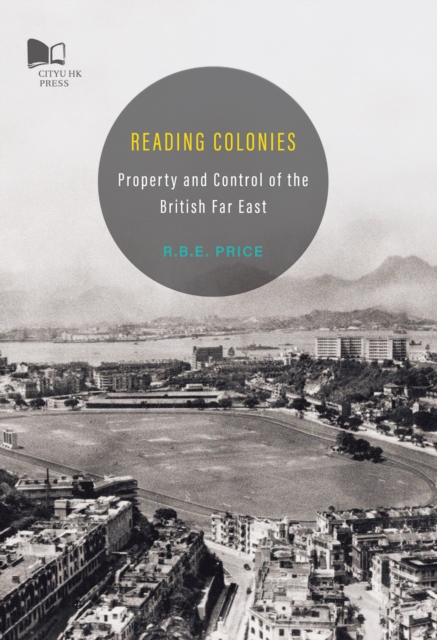
Reading Colonies-Property and Control of the British Far East
This book investigates how the British held on for so long. Rent control legislation and other measures of property law are nominated as key tools used to frustrate decolonization in most Eastern colonies. British colonial administrations tried long and hard to inhibit the dialectical discord between their colonial hierarchism and local forms of nationalism with the prompts and plaudits of property policy.
eBook