
Catalogue Search | MBRL


Are you sure you want to remove the book from the shelf?

{{itemTitle}}
25
result(s) for
"Realitätsbezug"
Sort by:

The brain and the meaning of life
Why is life worth living? What makes actions right or wrong? What is reality and how do we know it? The Brain and the Meaning of Life draws on research in philosophy, psychology, and neuroscience to answer some of the most pressing questions about life's nature and value. Paul Thagard argues that evidence requires the abandonment of many traditional ideas about the soul, free will, and immortality, and shows how brain science matters for fundamental issues about reality, morality, and the meaning of life. The ongoing Brain Revolution reveals how love, work, and play provide good reasons for living.
eBook

Games versus reality?
Digital entertainment games frequently address current societal issues that are also dealt with in geography education, such as climate change or sustainable city development, and give various opportunities for learning. However, in order to be fully able to determine the games’ educational potential and to instruct meaningful reflection on them in class, the designers’ approaches to realism regarding these topics need to be understood. Therefore, [the authors] have developed a model of realism in games and conducted 9 interviews with 10 experts from the entertainment game industry about their understanding of and dealing with realism concerning the represented geographical topics. In many cases, the interviewees’ approach to incorporating real-world issues can be regarded as beneficial for their games’ educational potential, and some designers even pursued learning goals. However, [the authors] also identified approaches that can result in questionable presentations of real societal issues. [The authors] found the most problematic one to be the prioritization of player expectations for the sake of perceived realism. This approach may lead to the depiction of stereotypes and common misconceptions. The results presented in our study may help teachers to prepare reflection on such misrepresentations in class, or designers to become more aware of the educational implications of different forms of game realism. (Orig.).
Journal Article

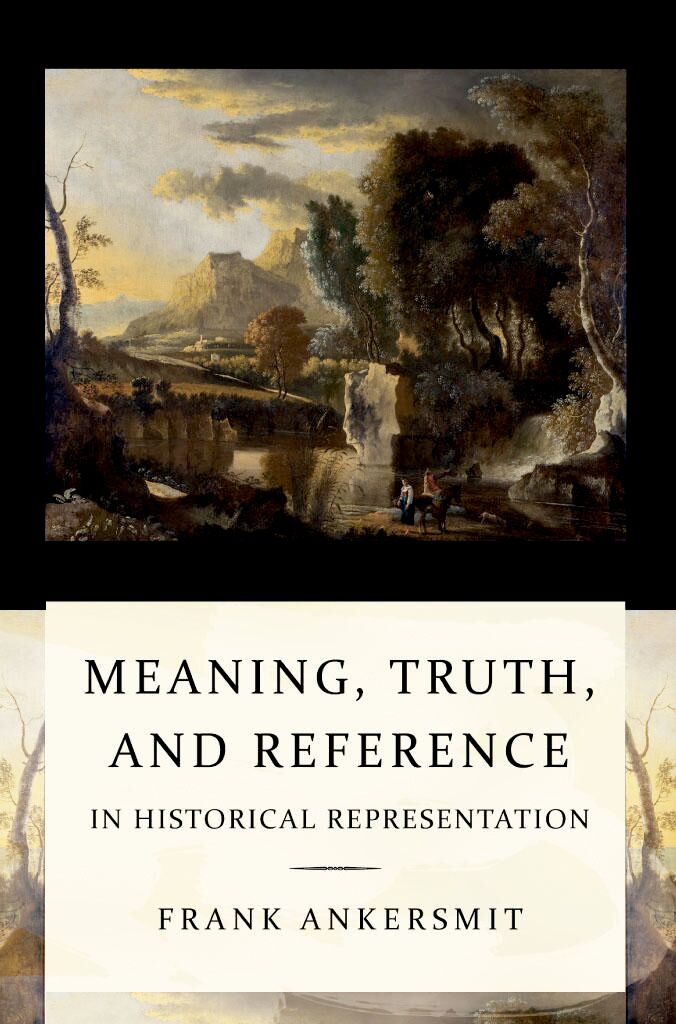
Meaning, Truth, and Reference in Historical Representation
In this book, the noted intellectual historian Frank Ankersmit provides a systematic account of the problems of reference, truth, and meaning in historical writing. He works from the conviction that the historicist account of historical writing, associated primarily with Leopold von Ranke and Wilhelm von Humboldt, is essentially correct but that its original idealist and romanticist idiom needs to be translated into more modern terms. Rehabilitating historicism for the contemporary philosophy of history, he argues, \"reveals the basic truths about the nature of the past itself, how we relate to it, and how we make sense of the past in historical writing.\"
At the heart of Ankersmit's project is a sharp distinction between interpretation and representation. The historical text, he holds, is first and foremost a representation of some part of the past, not an interpretation. The book's central chapters address the concept of historical representation from the perspectives of reference, truth, and meaning. Ankersmit then goes on to discuss the possible role of experience in the history writing, which leads directly to a consideration of subjectivity and ethics in the historian's practice. Ankersmit concludes with a chapter on political history, which he maintains is the \"basis and condition of all other variants of historical writing.\" Ankersmit's rehabilitation of historicism is a powerfully original and provocative contribution to the debate about the nature of historical writing.
eBook
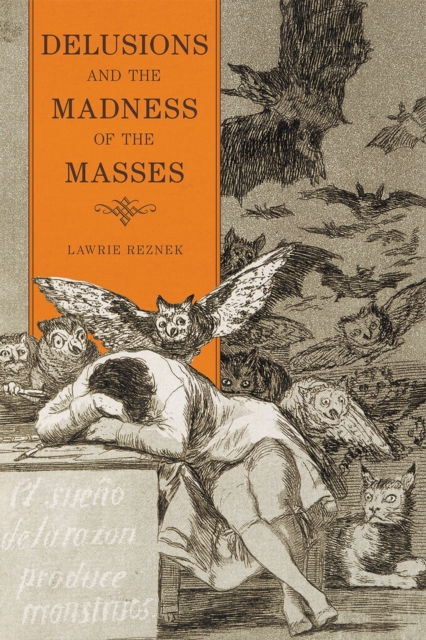
Delusions and the madness of the masses
We all think that we can tell the difference between someone who is mad, or whom psychiatrists call psychotic, and someone who is sane. But can we really tell who is mad and who is not? Do we really know what madness is and how it should be recognized? Have psychiatrists made a sensible distinction between the patient who believes that aliens are beaming messages to him from a foreign planet, and the religious fanatic who believes God communicates to him via automatic writing? Is there a difference between the paranoid patient who believes that the FBI is after him, and the sizeable proportion of our normal population that believe that the US government orchestrated the 9-11 bombings? Here, Reznek hopes to shed light on the delusions of the masses-those delusions that are common to everyday people living so-called ordinary lives. He provides an understanding of madness and the psychological processes that drive us to adopt delusions, arguing that it is a mistake to view only schizophrenic patients as delusional, while excluding large groups of society from such an analysis. If we abandon the idea that whole communities cannot share a delusion, we can come to a better understanding about why the world is such a dangerous place.
eBook

Narrative Unreliability in the Twentieth-Century First-Person Novel
This volume deals with the occurrence and development of unreliable first-person narration in twentieth century Western literature. The different articles in this collection approach this topic both from the angle of literary theory and through a detailed reading of literary texts. By addressing questions concerning the functions, characteristics and types of unreliability, this collection contributes to the current theoretical debate about unreliable narration. At the same time, the collection highlights the different uses to which unreliability has been put in different contexts, poetical traditions and literary movements. It does so by tracing the unreliable first-person narrator in a variety of texts from Dutch, German, American, British, French, Italian, Polish, Danish and Argentinean literature. In this way, this volume significantly extends the traditional 'canon' of narrative unreliability. This collection combines essays from some of the foremost theoreticians of unreliability (James Phelan, Ansgar Nünning) with essays from experts in different national traditions. The result is a collection that approaches the 'case' of narrative unreliability from a new and more varied perspective.
eBook

\Studio of Realism\: On the Need for Art in Exhibitions on Migration History
This essay takes \"Projekt Migration\" as point of departure and as a model--an exhibition on the history of labor migration to Germany and on European border politics, which contained both everyday life objects and art works. It concentrates on the materiality of the objects on display and challenges contemporary history scholars' and public historians' approaches, which rely primarily on artifacts, such as documents and objects of daily use, when they represent migration processes and immigrants' lives. The stories associated with these objects often allude to immigrants' everyday practices during their first years abroad. Transforming them into \"eternal migrants,\" exhibits thus tend to create fictionalizations of immigrants, which are then read as realistic and neutral representations. Artists, unlike museum curators, sign their work and thus assume responsibility for the narratives and allusions, which evoke emotions in the viewers. They insert a critical distance between the viewers and the objects, and thus make the \"cultural spaces\" (LIPPARD, 2003) between object, author, and viewer perceptible. The generalized \"othering\" of the immigrants and the voyeuristic stance of the viewers towards these others' migratory fates can thus be avoided. Works of art in exhibitions on migration history enable and force the visitors, with or without migration backgrounds, to take position themselves as well. This article therefore argues for the need of artists' interventions in exhibitions on migration history. [PUBLICATION ABSTRACT]
Journal Article
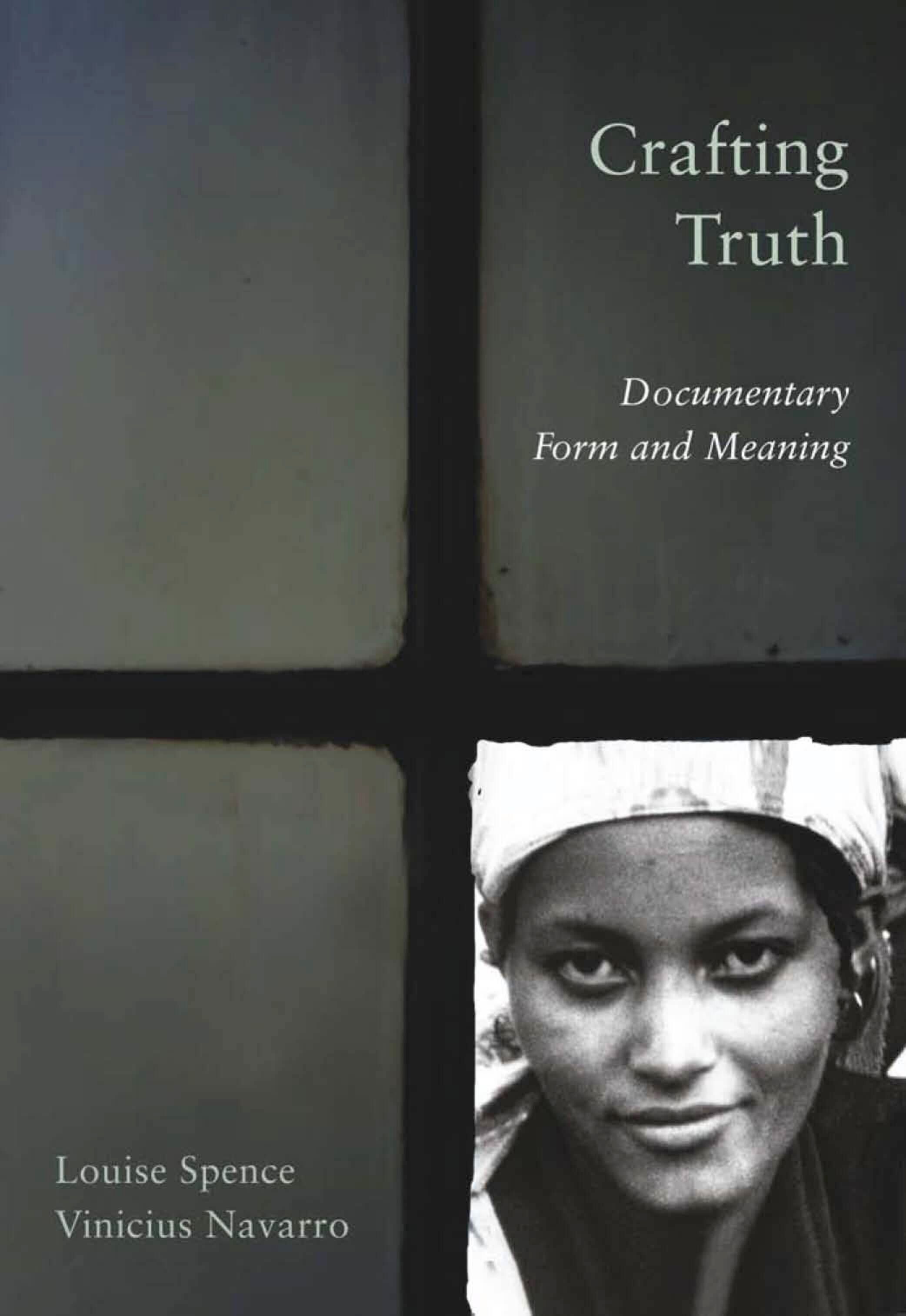
Crafting Truth
Documentaries such as Zana Briski and Ross Kauffman'sBorn into Brothels, Michael Moore'sFahrenheit 9/11, Jeffrey Blitz'sSpellbound, along withMarch of the PenguinsandAn Inconvenient Truthhave achieved critical as well as popular success. Although nonfiction film may have captured imaginations, many viewers enter and leave theaters with a nanve concept of \"truth\" and \"reality\"-for them, documentaries are information sources. But is truth or reality readily available, easily acquired, or undisputed? Or do documentaries convey illusions of truth and reality? What aesthetic means are used to build these illusions?A documentary's sounds and images are always the product of selection and choice, and often underscore points the filmmaker wishes to make.Crafting Truthilluminates the ways these films tell their stories; how they use the camera, editing, sound, and performance; what rhetorical devices they employ; and what the theoretical, practical, and ethical implications of these choices are. Complex documentary concepts are presented through easily accessible language, images, and a discussion of a wide range of films and videos to encourage new ways of thinking about and seeing nonfiction film.
eBook

Experten, Gutachterinnen oder Dilettanten: Welche Evaluationskompetenz und Schulung benötigen Peers?
Are peers sufficiently qualified to conduct high-quality peer reviews at educational institutions simply due to their professional expertise? The article examines the functions and tasks of peers in peer reviews of educational institutions, compares them with similar activities in other professional areas and argues that the assignments of peers in fact require pertinent competence in evaluation. With recourse to work undertaken in the European Peer Review projects the development of a competence profile and a training programme for peers is described. As a contribution to current discussions about the didactics of evaluation, pedagogical-didactical aspects of evaluation training for peers are illustrated. Finally, open questions concerning the organisation, feasibility and quality of such trainings are investigated and the potential contribution of peer training to building evaluation competence within the school sector is highlighted. [PUBLICATION ABSTRACT]
Journal Article
