
Catalogue Search | MBRL


Are you sure you want to remove the book from the shelf?

{{itemTitle}}
6
result(s) for
"Recherche quantitative Histoire."
Sort by:

How data happened : a history from the age of reason to the age of algorithms
\"From facial recognition--capable of checking people into flights or identifying undocumented residents--to automated decision systems that inform who gets loans and who receives bail, each of us moves through a world determined by data-empowered algorithms. But these technologies didn't just appear: they are part of a history that goes back centuries, from the census enshrined in the US Constitution to the birth of eugenics in Victorian Britain to the development of Google search. Expanding on the popular course they created at Columbia University, Chris Wiggins and Matthew L. Jones illuminate the ways in which data has long been used as a tool and a weapon in arguing for what is true, as well as a means of rearranging or defending power. They explore how data was created and curated, as well as how new mathematical and computational techniques developed to contend with that data serve to shape people, ideas, society, military operations, and economies. Although technology and mathematics are at its heart, the story of data ultimately concerns an unstable game among states, corporations, and people. How were new technical and scientific capabilities developed; who supported, advanced, or funded these capabilities or transitions; and how did they change who could do what, from what, and to whom? Wiggins and Jones focus on these questions as they trace data's historical arc, and look to the future. By understanding the trajectory of data--where it has been and where it might yet go--Wiggins and Jones argue that we can understand how to bend it to ends that we collectively choose, with intentionality and purpose.\"-- Publisher marketing.
Book

Politics, Violence, Memory
Politics, Violence, Memory
highlights important new social scientific research on the
Holocaust and initiates the integration of the Holocaust into
mainstream social scientific research in a way that will be useful
both for social scientists and historians. Until recently
social scientists largely ignored the Holocaust despite the
centrality of these tragic events to many of their own concepts and
theories.
In Politics, Violence, Memory the editors bring
together contributions to understanding the Holocaust from a
variety of disciplines, including political science, sociology,
demography, and public health. The chapters examine the sources and
measurement of antisemitism; explanations for collaboration,
rescue, and survival; competing accounts of neighbor-on-neighbor
violence; and the legacies of the Holocaust in contemporary Europe.
Politics, Violence, Memory brings new data to bear on
these important concerns and shows how older data can be deployed
in new ways to understand the \"index case\" of violence in the
modern world.
eBook

Research in economic history
Volume 29 contains articles on the economic history of Europe and the U.S. including \"Understanding Aging During the Epidemiologic Transition\" by Suchit Arora; \"Estimating French Regional Income: Departmental Per Capita Gross Value Added, 1872-1911\" by Paul Caruana-Galizia; \"Improve and Sit.
eBook
Landscapes & labscapes
What is it like to do field biology in a world that exalts experiments and laboratories? How have field biologists assimilated laboratory values and practices, and crafted an exact, quantitative science without losing their naturalist souls? In Landscapes and Labscapes, Robert E. Kohler explores the people, places, and practices of field biology in the United States from the 1890s to the 1950s. He takes readers into the fields and forests where field biologists learned to count and measure nature and to read the imperfect records of \"nature's experiments.\" He shows how field researchers use nature's particularities to develop \"practices of place\" that achieve in nature what laboratory researchers can only do with simplified experiments. Using historical frontiers as models, Kohler shows how biologists created vigorous new border sciences of ecology and evolutionary biology.
eBook
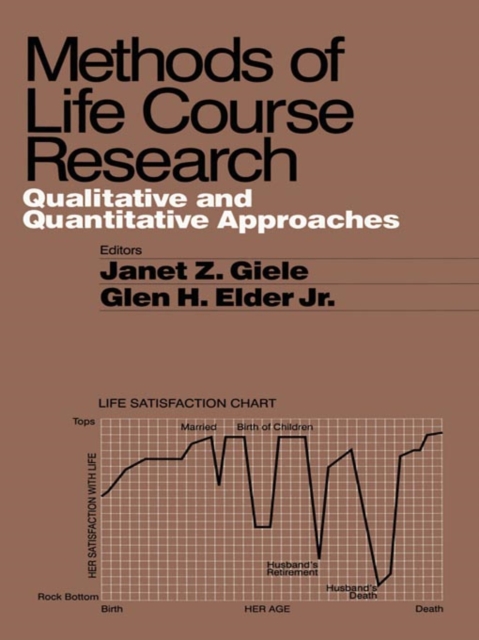
Methods of life course research : qualitative and quantitative approaches
What are the most effective methods for doing life-course research? In this volume, the field′s founders and leaders answer this question, giving readers tips on: the art and method of the appropriate research design; the collection of life-history data; and the search for meaningful patterns to be found in the results.
eBook

Maurice Halbwachs et les sociologues de Chicago
Cet article examine la façon dont Maurice Halbwachs a circulé parmi les réseaux universitaires de Chicago lors de son séjour de l'automne 1930 et, en particulier, les interactions qu'il a eues avec les sociologues. Cette étude est fondée sur les articles savants écrits par Halbwachs à son retour, sa correspondance avec sa famille et les \"Lettres des États-Unis\" publiées anonymement dans le \"Progrès de Lyon\". Le sociologue qui invita le durkheimien fut William F. Ogburn, promoteur des études quantitatives au sein d'un département alors profondément divisé entre les partisans des \"études de cas\" et ceux des \"statistiques\". L'année 1930 fut précisément le moment où les seconds l'emportèrent sur les premiers lors d'une réorientation globale de la politique des fondations Rockefeller et des autorités de l'Université. Halbwachs tenait en faible estime les travaux de Park, Burgess et de leurs élèves: leurs études \"concrètes\" et \"pittoresques\" n'étaient pas, à ses yeux, œuvre de science, mais analogues aux observations des explorateurs et missionnaires qui fournissaient leur matériel aux vrais savants, les ethnologues de cabinet. Halbwachs n'envisageait pas que cette division du travail pût être remise en cause. /// This article examines how Maurice Halbwachs circulated among University of Chicago networks during his autumn 1930 stay there, particularly his interactions with sociologists. It is based on the scientific articles he wrote when he returned, correspondence with his family, and his \"Lettres des États-Unis\", published anonymously in the \"Progrès de Lyon\" newspaper. The Durkheimian sociologist was invited to the University of Chicago by the William F. Ogburn, a promoter of quantitative studies in a sociology department then deeply divided between partisans of \"case study\" sociology and partisans of \"statistics\". 1930 was precisely the year the statistics side won out and funding policy of the University authorities and the Rockefeller Foundation was entirely reoriented. Halbwachs had little esteem for the works of Park, Burgess and their students; what he called their \"concrete\" and \"picturesque\" studies were in his view not science, but comparable instead to the observations provided by explorers and missionaries that then served as material for real savants, sedentary scholar ethnologists. It did not occur to Halbwachs that this division of labor could be called into question. /// Dieser Aufsatz untersucht, wie Maurice Halbwachs innerhalb der Universitätsnetze von Chicago während seines Aufenthaltes im Herbst 1930 umging, und besonders seine Interaktionen mit den Soziologen. Diese Studie stützt sich auf die von Halbwachs nach seiner Rückkehr verfaßten wissenschaftlichen Artikel, seinen Briefwechsel mit seiner Familie und die anonym in der Zeitung Le \"Progrès de Lyon\" veröffentlichten \"Briefen aus den Vereinigten Staaten\". Halbwachs wurde von dem Soziologen William F. Ogburn eingeladen, dem Einleiter der qualitativen Studien innerhalb einer damals tief geteilten Abteilung zwischen den Verteidigern der \"Fallstudien\" und denen der \"Statistiken\". Das Jahr 1930 war gerade der Zeitpunkt in dem die letzteren den Sieg davontrugen über ihre Gegner anläßlich einer globalen Neuorientierung der Politik der Rockefeller Stiftungen und der Universitätsleitung. Halbwachs schätzte die Arbeiten von park, Burgess und ihren Studenten nur gering: in seinen Augen waren ihre \"konkreten\" und \"pittoresken\" Studien kein wissenschaftliches Werk, sondern sie entsprachen den Beobachtungen von Entdeckern und Missionaren die ihre Arbeiten den tatsächlichen Wissenschaftlern, den überlegenden Ethnologen, lieferten. Für Halbwachs war es nicht möglich diese Arbeitsteilung in Frage zu stellen. /// Este artículo examina la manera cómo Maurice Halbwachs circuló en medio de las redes universitarias de Chicago durante su estadía en el otoño de 1930 y en particular, las interelaciones que entretuvo con los sociólogos. Este estudio está basado sobre los artículos especializados escritos por Halbwachs a su regreso, su correspondencia con su familia y las \"Lettres des États-Unis\" publicadas anónimamente en el \"Progrès de Lyon.\" El sociólogo que invita al durkeimiano fue William F. Ogburn, promotor de los estudios cuantitativos en el centro de un departamento a la época profundamente dividido entre los partidarios de los \"estudios de caso\" y los \"estadísticos\". En el año 1930, durante una reorientación global de la política de las fundaciones Rockefeller y de las autoridades de la Universidad fue precisamente el momento en el cual triunfaron los segundos sobre los primeros. Halbwachs tenia en poca estima los trabajos de Park, Burgess y de sus alumnos: sus estudios \"concreto s\" y \"pintorescos\", ante sus ojos, no eran un trabajo científico, si no similares a las observaciones de los exploradores y misioneros quienes proveían de material a los verdaderos sabios, los ethnologos de laboratorio. Halbwachs no imaginaba que esta división de trabajo pudo ser puesta en duda.
Journal Article