
Catalogue Search | MBRL


Are you sure you want to remove the book from the shelf?

{{itemTitle}}
96,723
result(s) for
"Recreational vehicles"
Sort by:


Design Method of Small Recreational Vehicle’s Interior Space Based on User Behavior Data Analysis
With the growing popularity of leisure travel, small recreational vehicles have gained significant attention for their flexibility and cost-effectiveness. A crucial aspect of recreational vehicle design is the interior space, which heavily influences the users’ satisfaction. This paper introduces a novel approach to designing recreational vehicles’ interior space based on users’ behavior data analysis. Firstly, drawing on the properties of the correlation coefficient in statistics, the correlation degree between different functional facilities is defined according to the usage time interval to establish the correlation degree matrix; then, the correlation degree matrix is proved to be a real symmetric positive definite matrix; finally, based on the correlation degree matrix, the factor analysis method is adopted for grouping all the functional facilities to maximize the correlation degrees between functional facilities in the same group and minimize the ones between different groups so as to better satisfy the users’ needs for convenience. A case study using the CCHW–Weiman recreational vehicle demonstrates the effectiveness of this method. Male passengers’ average movement distances during typical activities—washing, cooking, and sleeping—decreased by 17.18%, 36.34%, and 30.68%, respectively, while female passengers’ average movement distances decreased by 13.75%, 37.70%, and 18.82%, respectively. The results suggest that the proposed method offers a data-driven, user-centered approach to improving the interior space of recreational vehicles.
Journal Article

Your destination is on the left
Offered her longed-for opportunity to leave the RV caravan and study art, seventeen-year-old Dessa Rhodes questions whether she's ready to leave her family, the open road, and the boy she loves.
Book
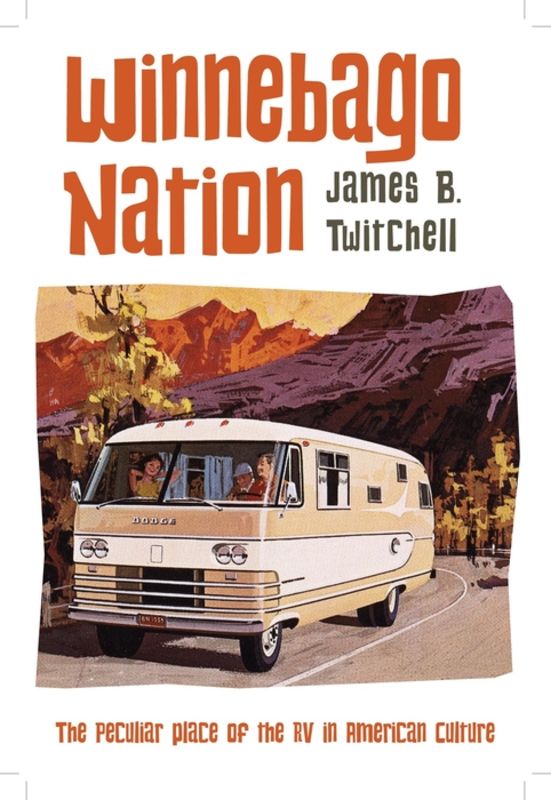
Winnebago nation
In Winnebago Nation, popular critic James B. Twitchell takes a light-hearted look at the culture and industry behind the yearning to spend the night in one's car. For the young the roadtrip is a coming-of-age ceremony; for those later in life it is the realization of a lifelong desire to be spontaneous, nomadic, and free. Informed by his own experiences on the road, Twitchell recounts the RV's origins and evolution over the twentieth century; its rise, fall, and rebirth as a cultural icon; its growing mechanical complexity as it evolved from an estate wagon to a converted bus to a mobile home; and its role in bolstering and challenging conceptions of American identity. Mechanical yet dreamy, independent yet needful, solitary yet clubby, adventurous yet homebound, life in a mobile home is a distillation of the American character and an important embodiment of American exceptionalism, (Richie Rich and Hobo Hank spend time in essentially the same rig at the same campground, albeit for different reasons and in different levels of comfort.) The frontier may be tapped out but we still yearn for the exploratory life. Twitchell concludes with his thoughts on the future of RV communities and the possibility of mobile cities becoming a real part of the American landscape.
eBook


Brief Communication: Early season snowpack loss and implications for oversnow vehicle recreation travel planning
Oversnow vehicle recreation contributes to rural economies but requires a minimum snow depth to mitigate negative impacts on the environment. Daily snow water equivalent (SWE) observations from weather stations in the Lake Tahoe region (western USA) and a SWE reanalysis product are used to estimate the onset dates of SWE corresponding to ∼30 cm in snow depth (SWEmin). Since 1985, median SWEmin onset has shifted later by approximately 2 weeks. Potential proximal causes of delayed onset are investigated; rainfall is increasing during October–January with dry days becoming warmer and more frequent. Adaptation strategies to address oversnow vehicle management challenges in recreation travel planning are explored.
Journal Article

Far from fair
As far as twelve-year-old Odette Zyskowski is concerned, her parents have ruined her life by selling the house she and her younger brother have grown up in, getting an RV, and giving her some little mutt instead of the Labrador Retriever she wanted--but as they travel north to see her grandmother, Odette becomes aware of an even more frightening problem: her parents may be on the verge of a divorce.
Book


Mission unstoppable
On a cross-country vacation with their parents, twins Coke and Pepsi, soon to be thirteen, fend off strange assassins as they try to come to terms with their being part of a top-secret government organization known as The Genius Files.
Book

DESIGN AND ANALYSIS OF THERMAL COMFORT OF A NATURALLY VENTILATED RECREATIONAL VEHICLE
The Tourism Industry is a major source of revenue which contributes to about 9.6% of the GDP of India. With an ever-increasing influx of international tourists, it is time that India introduces Recreational Vehicles (or RVs) as an upmarket mode of transportcumliving-in experience. The aim of this paper is to design an RV suited to the varying climatic conditions of India, with minimal HVAC (Heating, Ventilation and AirConditioning) loads and without having to compromise the thermal comfort and wellbeing of occupants. We show that by altering the orientation, fabric and the glazing ratio, it is possible to substantially reduce energy consumption in these vehicles using sophisticated energy modelling software. We illustrate the complex interplay between the carrier fluids and obstructing structures within it and explain patterns of ventilation in shear generated turbulence. We find a clear separation of the neutral layer dividing two strata of fluids enabling passive cooling in the living space. New estimates of the heat transfer coefficients as well as thermal resistance and transmittance of the building fabrics have been included for temperature profiling inside. It is expected that this first design study on an RV anywhere within the sub-continent will garner attention from manufacturers linked to the tourism industry. We show that the designed vehicle will approximately consume only 25% of the energy consumed by its counterpart hotel rooms.
Journal Article