
Catalogue Search | MBRL


Are you sure you want to remove the book from the shelf?

{{itemTitle}}
36,012
result(s) for
"Red Cross"
Sort by:


The American Red Cross from Clara Barton to the New Deal
Louis, Chicago, and Tulsa between 1917 and 1921; help for African American and white Southerners after the Mississippi flood of 1927; relief projects during the Dust Bowl and after the New DealAn epilogue relates the history of the American Red Cross since the beginning of World War II and illuminates the organization's current practices as well as its international reputation.
eBook

Goodnight, Irene : a novel
Abandoning her abusive fiancâe in New York in 1943 to enlist with the Red Cross and head to Europe, Irene Woodward befriends Dorothy Dunford as they join the Allied soldiers streaming into France after D-Day where they are embroiled in danger, from the Battle of the Bulge to the liberation of Buchenwald, and where Irene learns to trust again through their friendship.\"
Book

Constructing Disability after the Great War
As Americans--both civilians and veterans--worked to determine the meanings of identity for blind veterans of World War I, they bound cultural constructs of blindness to all the emotions and contingencies of mobilizing and fighting the war, and healing from its traumas. Sighted Americans’ wartime rehabilitation culture centered blind soldiers and veterans in a mix of inspirational stories. Veterans worked to become productive members of society even as ableism confined their unique life experiences to a collection of cultural tropes that suggested they were either downcast wrecks of their former selves or were morally superior and relatively flawless as they overcame their disabilities and triumphantly journeyed toward successful citizenship. Sullivan investigates the rich lives of blind soldiers and veterans and their families to reveal how they confronted barriers, gained an education, earned a living, and managed their self-image while continually exposed to the public’s scrutiny of their success and failures.
eBook


The Battle for Algeria
InThe Battle for AlgeriaJennifer Johnson reinterprets one of the most violent wars of decolonization: the Algerian War (1954-1962). Johnson argues that the conflict was about who-France or the National Liberation Front (FLN)-would exercise sovereignty of Algeria. The fight between the two sides was not simply a military affair; it also involved diverse and competing claims about who was positioned to better care for the Algerian people's health and welfare. Johnson focuses on French and Algerian efforts to engage one another off the physical battlefield and highlights the social dimensions of the FLN's winning strategy, which targeted the local and international arenas. Relying on Algerian sources, which make clear the centrality of health and humanitarianism to the nationalists' war effort, Johnson shows how the FLN leadership constructed national health care institutions that provided critical care for the population and functioned as a protostate. Moreover, Johnson demonstrates how the FLN's representatives used postwar rhetoric about rights and national self-determination to legitimize their claims, which led to international recognition of Algerian sovereignty.
By examining the local context of the war as well as its international dimensions, Johnson deprovincializes North Africa and proposes a new way to analyze how newly independent countries and nationalist movements engage with the international order. The Algerian case exposed the hypocrisy of selectively applying universal discourse and provided a blueprint for claim-making that nonstate actors and anticolonial leaders throughout the Third World emulated. Consequently,The Battle for Algeriaexplains the FLN's broad appeal and offers new directions for studying nationalism, decolonization, human rights, public health movements, and concepts of sovereignty.
eBook


De-dehumanization: Practicing humanity
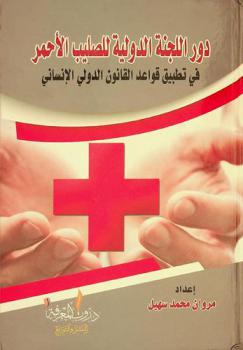
The concept of humanity has been much discussed with respect to humanitarian work and international humanitarian law. There is today an idea of a single humanity, with each member equally valued beyond superficial differences in belief, nationality, ethnicity etc., and a global legal framework exists to prevent needless human suffering, including in war. Dehumanization arises linguistically as the negation of a common, positive and mutually supportive humanity, though there is no single definition, and it certainly predates its opposite. Research indicates that dehumanization increases the risk of conflict/violence, increases the risk of abuses therein, and makes it harder to resolve conflict. This paper gives an overview of how humanity is currently defined and used, notably by the International Committee of the Red Cross (ICRC) as one Fundamental Principle of the International Red Cross and Red Crescent Movement, and what dehumanization means especially in relation to conflict and violence. The paper then explores why and how dehumanization happens and the real-world harm that can result when it is espoused or tacitly condoned by those in positions of power. Finally, the paper examines how global legal frameworks and the principle of humanity, bolstered by impartiality, independence and neutrality, in particular as enacted by the ICRC, work to curb and push back against some of the worst harms that dehumanization can cause.
Journal Article