
Catalogue Search | MBRL


Are you sure you want to remove the book from the shelf?

{{itemTitle}}
119
result(s) for
"Red Fiction."
Sort by:

Vulpes, the red fox
Follows the life of a red fox from his birth in a Maryland den through his growth to maturity to his eventual encounter with a determined hunter.
Book
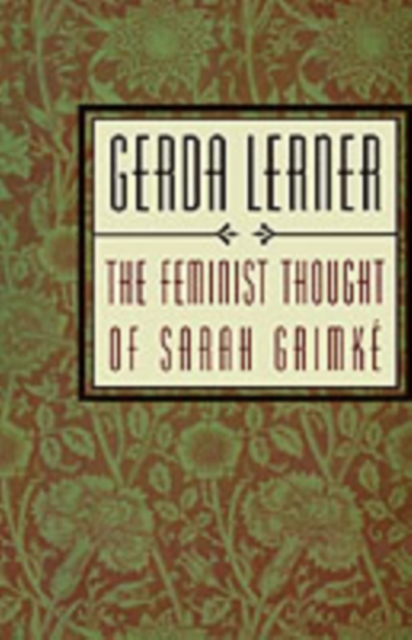
The feminist thought of Sarah Grimké
A collection of the essays, documents and letters of Sarah Grimke, who together with her sister Angelina was one of the leading figures in the abolitionist and early feminist movements in the USA. Lerner provides a commentary on the pieces and asserts the importance of Grimke as feminist theorist.
eBook

This book is red
\"In this humorous concept book, readers are asked to question their logic for naming colors\"-- Provided by publisher.
Book

New Essays on The Red Badge of Courage
First published in 1895, The Red Badge of Courage found immediate success and brought its author immediate fame. In his introduction to this volume, Lee Clark Mitchell discusses how Crane broke with the conventions of both fiction and journalism to create a uniquely 'disruptive' prose style. The five essays that follow each explore different aspects of the novel. One studies the problem of establishing the authentic text; another examines it as a war novel; a third considers it as a critique of the rising mood of militant imperialism in the 1890s; a fourth focuses on the double perspective of the novel - its shift between the hero's perspective and a larger, 'cosmic' one; and the final essay examines the novel's deconstruction of courage/cowardice. Written in a highly accessible style, these essays represent the best of recent scholarship and provide students with a useful introduction to this major novel.
eBook

Goodnight, Irene : a novel
Abandoning her abusive fiancâe in New York in 1943 to enlist with the Red Cross and head to Europe, Irene Woodward befriends Dorothy Dunford as they join the Allied soldiers streaming into France after D-Day where they are embroiled in danger, from the Battle of the Bulge to the liberation of Buchenwald, and where Irene learns to trust again through their friendship.\"
Book

Traces of Another Time
Is the historical novel the outmoded genre that some people imagine--form inseparable from romanticism, nationalism, and the nineteenth century? In this stimulating volume, Margaret Scanlan answers a convincing \"no,\" as she demonstrates the relevance of historical novels by well-known figures such as Anthony Burgess, John le Carr, Graham Greene, Doris Lessing, Iris Murdoch, and Paul Scott, as well as by less well established writers such as Joseph Hone and Thomas Kilroy. Scanlan shows what a skeptical, experimental approach to the relationship between history and fiction these writers adopt and how radically they depart from the mimetic conventions usually associated with historical novels. Drawing on contemporary historiography and literary theory, Scanlan defines the problem of writing historical fiction at a time when people see the subject of history as fragmentary and uncertain. The writers she discusses avoid the great events of history to concentrate on its margins: what interests them is history as it is experienced, usually reluctantly, by human beings who would rather be doing something else. The first section of the book looks at fictional representations of England's difficult history in Ireland; the second examines spies, aliens, and the loss of public confidence; and the third probes the theme of Apocalypse, nuclear or otherwise, and depicts the collapse of the British Empire as an instance of the greatly diminished importance of Western culture in the world.
Originally published in 1990.
ThePrinceton Legacy Libraryuses the latest print-on-demand technology to again make available previously out-of-print books from the distinguished backlist of Princeton University Press. These paperback editions preserve the original texts of these important books while presenting them in durable paperback editions. The goal of the Princeton Legacy Library is to vastly increase access to the rich scholarly heritage found in the thousands of books published by Princeton University Press since its founding in 1905.
eBook

Red : a crayon's story
Red's factory-applied label clearly says that he's red, but despite the best efforts of his teacher, fellow crayons and art supplies, and family members, he can't seem to do anything right until a new friend offers a fresh perspective.
Book

Decolonial Fiction Pedagogy in ELT: Reimagining Memory, History, and Identity Through Laksmi Pamuntjak’s The Question of Red
This study examines the incorporation of Laksmi Pamuntjak’s The Question of Red into Indonesian English Language Teaching (ELT) classrooms as a means of reclaiming silenced histories, specifically the 1965 genocide. Through a critical literacy framework informed by Janks, Freire, and Giroux, the research investigates how literary narratives can disrupt state-sanctioned accounts and foster students’ historical cognizance. Data were gathered through classroom observations, textual analyses, and semi-structured interviews with undergraduate English majors. Findings reveal that students engaged deeply with depictions of political imprisonment and survivor testimony. They critically interrogated the gaps and biases in official histories, demonstrating both sensitivity and skepticism. Many also expressed a heightened awareness of the imperial archive, and they exercised agency by producing counter-texts that reimagined historical events from marginalized perspectives. This participatory rewriting process not only strengthened linguistic competence but also fostered epistemic agency, since it enabled students to position themselves as active interpreters of history. The study highlights the transformative potential of fiction in ELT, showing how it can bridge linguistic, cultural, and historical learning while situating language education as a space of political and ethical engagement. By embedding contested histories in affective and humanized narratives, ELT contributes to wider projects of historical recovery, reconciliation, and decolonial knowledge-making. Overall, these findings advocate for a shift in Indonesian ELT curricula toward literature-driven approaches that prioritize critical engagement with local histories and cultural memory, thereby preparing learners to navigate linguistic, identity, and socio-political complexities in pursuit of a more just world.
Journal Article

Fenway fever
Twelve-year-old Alfredo \"Stats\" Pagano and Boston Red Sox pitcher Billee Orbitt work together to break a potential curse at Fenway Park.
Book

Referencias intermediales e intertextuales en la trilogía Reina Roja de Juan Gómez-Jurado
El autor de la trilogía criminal Reina Roja nunca ha ocultado su admiración por Arturo Pérez-Reverte, así como por otros escritores, directores de cine y otros artistas. El objetivo del presente trabajo es demostrar cómo Gómez-Jurado hace uso de la intertextualidad (Montaner 2003) y de las referencias intermediales (Rajewsky 2020; Prieto 2017) para recrear una experiencia humana en una atmósfera muy concreta. Y lo hace por medio de un vocabulario, un ambiente, un ritmo con rasgos cinematográficos y unos personajes que beben de numerosas fuentes; desde Sherlock Holmes y James Moriarty, hasta Harry Bosch pasando por Phillip Marlowe, V. I. Warshawski, Tom Ripley, o Pepe Carvalho, entre otros. Todo ello acompañado de una banda sonora propia, aderezado con humor cervantino y al ritmo de técnicas cinematográficas que conforman este producto híbrido (Winslow 2022) que es la ficción criminal.
Journal Article