
Catalogue Search | MBRL


Are you sure you want to remove the book from the shelf?

{{itemTitle}}
177
result(s) for
"Redemption Fiction."
Sort by:
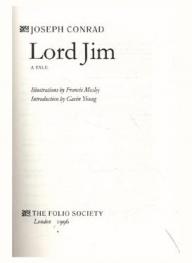
Lord Jim : a tale
Jim (his surname is never disclosed), a young British seaman, becomes first mate on the Patna, a ship full of pilgrims travelling to Mecca for the hajj. Jim joins his captain and other crew members in abandoning the ship and its passengers. A few days later, they are picked up by a British ship. However, the Patna and its passengers are later also saved, and the reprehensible actions of the crew are exposed. The other participants evade the judicial court of inquiry, leaving Jim to the court alone. The court strips him of his navigation command certificate for his dereliction of duty. Jim is angry with himself, both for his moment of weakness, and for missing an opportunity to be a 'hero'. At the trial, he meets Marlow, a sea captain, who in spite of his initial misgivings over what he sees as Jim's moral unsoundness, comes to befriend him, for he is \"one of us\". Marlow later finds Jim work as a ship chandler's clerk. Jim tries to remain incognito, but whenever the opprobrium of the Patna incident catches up with him, he abandons his place and moves further east. At length, Marlow's friend Stein suggests placing Jim as his factor in Patusan, a remote inland settlement with a mixed Malay and Bugis population, where Jim's past can remain hidden. While living on the island he acquires the title 'Tuan' ('Lord'). Here, Jim wins the respect of the people and becomes their leader by relieving them from the predations of the bandit Sherif Ali and protecting them from the corrupt local Malay chief, Rajah Tunku Allang. Jim wins the love of Jewel, a woman of mixed race, and is \"satisfied ... nearly\". The end comes a few years later, when the town is attacked by the marauder \"Gentleman\" Brown. Although Brown and his gang are driven off, Dain Waris, the son of the leader of the Bugis community, is slain. Jim continues the conflict and willingly takes a fatal bullet in the chest, fired by Dain Waris's father Doramin as retribution for the death of his son.--From Wikipedia.
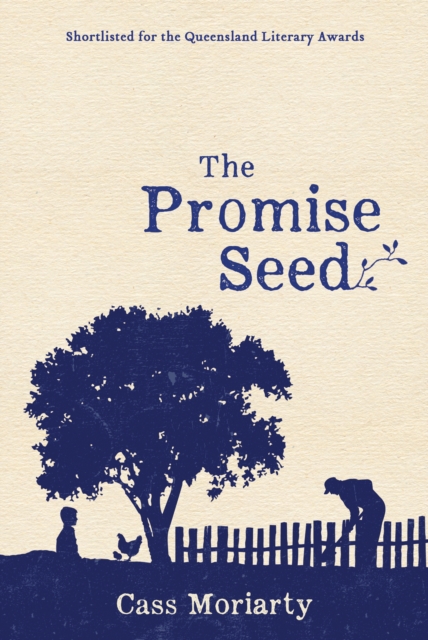
The Promise Seed
An elderly man, living alone in the suburbs, thinks back on his life—the missed opportunities, the shocking betrayals, the rare moments of joy. When his 10-year-old neighbor hides in his garden one afternoon, they begin an unexpected friendship that gives them a reprieve from their individual struggles. The boy, left to his own devices by his mother, finds solace in gardening and playing chess with his new friend, who is still battling the demons of his past. When a sinister figure enters the boy's life, he has to choose between his burgeoning friendship and blood ties. Can the old man protect the boy he has come to know—and redeem the boy he once was? A poignant novel by a fresh new voice, The Promise Seed will linger long after the last page is turned.
eBook

Carolina moon
A woman--still haunted by the unsolved murder of her childhood friend--returns to her small South Carolina hometown.
Book

Feline Divinanimality: Starseed Soteriology and Lyran Ontology
This paper analyzes the entangled relationship between feline divinanimality and extraterrestrial ontology, which has spawned a New Religious Movement (NRM) called Lyran Starseeds, centered upon a human–feline interspecies coevolution and exogenesis. Alongside offering a detailed exposition of this new intergalactic creature exotheology, I will also analyze the many ways it has been inspired by historical feline veneration and contemporary science fiction film and literature. I shall argue that both offer Lyran Starseeds an epistemological framework to situate and legitimize their intergalactic feline ontology.
Journal Article

The little red chairs : a novel
Disgraced when her village's mysterious healer, an Eastern European immigrant whom she loved and begged to help her have a child, is arrested as a war criminal, Fidelma flees to England to take migrant work, only to confront her nemesis at a tribunal in The Hague.
Book
Islands in Speculative Fiction: The Functions of Islands in Science Fiction, Fantasy, and Horror Film and Writing
The study of islands in speculative fiction intersects with cultural geography, political theory, and literary futurology. It unfolds within the concept of relational shifts between islands and continents, the deconstruction and reconstruction of the East-West binary, and the dynamic interplay between technology and human knowledge systems. As one of the most technologically and socially imaginative forms of literature, speculative fiction positions humanity within a vast coordinate system spanning the local, the global, and even the interstellar. In so doing, it examines and reflects upon the past, present, and future of human civilization-ultimately offering insights that may contribute to a more harmonious and sustainable future. Building on these themes, this special section explores how islands are represented and imagined in speculative fiction, including science fiction, to uncover the unique qualities that distinguish future-oriented island narratives from their traditional counterparts. The papers included here can be divided into three key thematic categories: (1) islands as liminal spaces for secking identity and redemption, (2) islands as sites of ecological and economic crisis, and (3) islands as realms of colonial and utopian imaginations.
Journal Article

Sugar run : a novel
\"Jodi McCarty is seventeen when she's sentenced to life in prison for manslaughter. She's released eighteen years later and finds herself reeling from the shock of unexpected freedom. Not yet able to return to her lost home in the Appalachian Mountains, she heads south in search of someone she left behind, as a way of finally making amends. There, she will meet and fall in love with Miranda, a troubled young mother living in a motel room with her children. Together they head toward what they hope will be a new home and fresh start--but what do you do with a town and a family that refuses to change?\"-- Provided by publisher.
Book

Long Live Chairman Mao! Death, Resurrection, and the (Un)Making of a Revolutionary Relic
Why does Mao's embalmed corpse continue to arouse powerful religious feelings among contemporary Chinese writers after the end of his rule, from fantasies of resurrection to yearnings for redemption? While extant scholarship focuses on the sociopolitical aspects of Mao's posthumous cult, this essay reveals the crucial role that literary narrative plays in the (un)making of Mao's quasi-religious appeal. Drawing on literary genres such as diary, memoir, science fantasy, and satirical fiction, I argue that the political theology of Mao can be read as a grand “political fiction” that linked the doubling of Mao's immortal body with the perpetual sovereignty of the Chinese Communist Party. However, even as literary narrative authorizes the political mythology of Mao, contemporary Chinese literature also demonstrates its capacity for ideological critique. My narrative begins with the party's controversial effort to sacralize Mao's biological remains, from the ritualized display of political sovereignty to the ambiguous allusion to religious miracle. Then I look at the bizarre resurrection of Mao's flesh in Liu Cixin's 劉慈欣 1989 science fiction novel China 2185. The story features a cybernetic uprising in the distant future, when a computer engineer breaks into the Mao mausoleum and “uploads” Mao's mind into cyberspace. Lastly, I draw on the satirical fictions of Yan Lianke 閻連科 and Chan Koonchung 陳冠中 to reveal the desacralizing impacts of neoliberal capitalism on the Maoist political religiosity.
Journal Article

The Beast's heart
\"A retelling of Beauty and the Beast in which Beast struggles to come to terms with his horrid behavior as a man, his years of savagery, and his hope of redemption\"-- Provided by publisher.
Book

Video Games as Literature? Realist Discourse in Red Dead Redemption 2
The present essay wishes to explore the link between video games and literary discourse by considering the case of Rockstar Games’s
(2018), the worldwide blockbuster game regarded as a milestone in the Western genre, as well as a contemporary reframing of the nineteenth-century mythology of the American frontier. However, as a theoretical focus on narrativity and storytelling may suggest,
also represents a specimen of narrative work in its own right. In fact,
indirectly adapts literary techniques and tropes typical of realist fiction, in its complex and subtle portrayal of late-nineteenth-century American society.
By means of a close reading of key video game missions set in what can be defined as a typical Gilded Age metropolis, Saint Denis, this essay proposes to reinterpret
in light of the structural connections it shares with classic American realist works – whose authors range from Mark Twain to Henry James, from Stephen Crane to Theodore Dreiser. Indeed,
mirrors three pivotal stages in the development of the literary discourse underlying realist fiction, namely: (a) the examination of an urban environment within the game setting; (b) the representation of stereotypes through non-player characters; and (c) the construction of a socio-cultural individuality through player actions. While representing a case-study of transmedia storytelling – or, more precisely, of
of the American lifestyle characterizing the Gilded Age,
also employs a number of significant strategies comparable to the creation of literary fiction.
Journal Article