
Catalogue Search | MBRL


Are you sure you want to remove the book from the shelf?

{{itemTitle}}
166
result(s) for
"Reflection (Philosophy) in literature"
Sort by:

The quiet contemporary American novel
This book explores the concept of ‘quiet’ – an aesthetic of narrative driven by reflective principles – and argues for the term’s application to the study of contemporary American fiction. In doing so, it makes two critical interventions. Firstly, it maps the neglected history of quiet fictions, arguing that from Hester Prynne to Clarissa Dalloway, from Bartleby to William Stoner, the Western tradition is filled with quiet characters. Secondly, it asks what it means for a novel to be quiet and how we might read for quiet in an American literary tradition that critics so often describe as noisy. Examining recent works by Marilynne Robinson, Teju Cole and Ben Lerner, among others, the book argues that quiet can be a multi-faceted state of existence, one that is communicative and expressive in as many ways as noise but filled with potential for radical discourse by its marginalisation as a mode of expression.
eBook
Mirrors of Entrapment and Emancipation
Mirrors of Entrapment and Emancipation explores the rich diversity of the meanings associated with the mirror and reflection in literature by women on the basis of the works of the Persian Forugh Farrokhzad (1935-1967) and her American contemporary Sylvia Plath (1932-1963). These two poets astutely employed mirror images for the realization as well as for communication of their turbulent psycho-emotional states to their readers, thereby capturing and conveying the essence of women desperately trapped among the antithetical images of twentieth-century womanhood.
eBook

Mirrors of Entrapment and Emancipation
Images of mirrors and reflection have long played a substantial role in literature by women, used to convey ineffable psychological states, the countless images that define and complicate women’s lives, and much more. This book focuses in particular on the work of two major women writers, the Persian poet Forugh Farrokhzad (1935–67) and the American poet Sylvia Plath (1932–63), exploring the various ways that these two artists deployed mirrors and reflections as sites of entrapment or emancipation
eBook
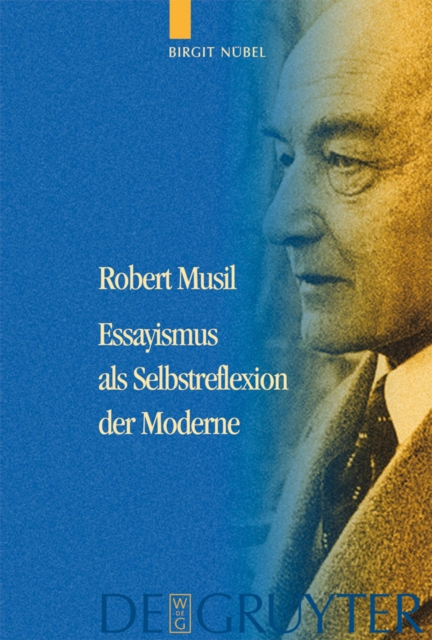
Robert Musil - Essayismus als Selbstreflexion der Moderne
It is not Musil's highly regarded novel \"The Man without Qualities\", which has been the subject of much research, but his essays that form the focus of this innovative study, which defines essayism not as a textual characteristic but as a metatextual textualisation process. As media of cultural self-reflection, Musil's significant essays are at the same time a cultural critique and also a poetology of literary modernity. Drawing together the history of literature and sociology, textual theory and genre poetics, the study develops new criteria for determining the essayistic. Drawing comparisons with texts by Georg Simmel, Georg Lukács, Béla Balázs, Franz Blei and Hermann Broch, it demonstrates the processes of catenation, commentary, continuation, incorporation and traversion which are fundamental to the essayistic metatext. Essayism as a category of literary critical description and analysis here defines an expandable principle of textualisation which transcends named authors, individual texts, genres and discourses.
eBook

The Mirror crack'd: Reflection and self-reflection in French literature from the enlightenment to the 20th century
As my thesis will demonstrate, representations of mirrors serve as a gateway to the exploration of personal identity in fiction. An analysis of characters' reactions to their reflection in different genres of fiction demonstrates the significance of mirrors as literary devices that inspire those characters' contemplation of identity as well as reality. This contemplation often leads to the destabilization of identity and gives voice to the author's social commentary. Literary mirrors lead to self-reflection, and the evolution of the fictional use of mirrors symbolizes humanity's transformation in the modern era.
Dissertation

Mirrors of Entrapment and Emancipation
Mirrors of Entrapment and Emancipation explores the rich diversity of the meanings associated with the mirror and reflection in literature by women on the basis of the works of the Persian Forugh Farrokhzad (1935-1967) and her American contemporary Sylvia Plath (1932-1963). These two poets astutely employed mirror images for the realization as well as for communication of their turbulent psycho-emotional states to their readers, thereby capturing and conveying the essence of women desperately trapped among the antithetical images of twentieth-century womanhood.
eBook

A Mobilising Concept? Unpacking Academic Representations of Responsible Research and Innovation
This paper makes a plea for more reflexive attempts to develop and anchor the emerging concept of responsible research and innovation (RRI). RRI has recently emerged as a buzzword in science policy, becoming a focus of concerted experimentation in many academic circles. Its performative capacity means that it is able to mobilise resources and spaces despite no common understanding of what it is or should be ‘made of’. In order to support reflection and practice amongst those who are interested in and using the concept, this paper unpacks understandings of RRI across a multi-disciplinary body of peer-reviewed literature. Our analysis focuses on three key dimensions of RRI (motivations, theoretical conceptualisations and translations into practice) that remain particularly opaque. A total of 48 publications were selected through a systematic literature search and their content was qualitatively analysed. Across the literature, RRI is portrayed as a concept that embeds numerous features of existing approaches to govern and assess emerging technologies. Our analysis suggests that its greatest potential may be in its ability to unify and provide political momentum to a wide range of long-articulated ethical and policy issues. At the same time, RRI’s dynamism and resulting complexity may represent its greatest challenge. Further clarification on what RRI has to offer in practice—beyond what has been offered to date—is still needed, as well as more explicit engagement with research and institutional cultures of responsibility. Such work may help to realise the high political expectations that are attached to nascent RRI.
Journal Article

Clinical Ethics Support for Healthcare Personnel: An Integrative Literature Review
This study describes which clinical ethics approaches are available to support healthcare personnel in clinical practice in terms of their construction, functions and goals. Healthcare personnel frequently face ethically difficult situations in the course of their work and these issues cover a wide range of areas from prenatal care to end-of-life care. Although various forms of clinical ethics support have been developed, to our knowledge there is a lack of review studies describing which ethics support approaches are available, how they are constructed and their goals in supporting healthcare personnel in clinical practice. This study engages in an integrative literature review. We searched for peer-reviewed academic articles written in English between 2000 and 2016 using specific Mesh terms and manual keywords in CINAHL, MEDLINE and Psych INFO databases. In total, 54 articles worldwide described clinical ethics support approaches that include clinical ethics consultation, clinical ethics committees, moral case deliberation, ethics rounds, ethics discussion groups, and ethics reflection groups. Clinical ethics consultation and clinical ethics committees have various roles and functions in different countries. They can provide healthcare personnel with advice and recommendations regarding the best course of action. Moral case deliberation, ethics rounds, ethics discussion groups and ethics reflection groups support the idea that group reflection increases insight into ethical issues. Clinical ethics support in the form of a “bottom-up” perspective might give healthcare personnel opportunities to think and reflect more than a “top-down” perspective. A “bottom-up” approach leaves the healthcare personnel with the moral responsibility for their choice of action in clinical practice, while a “top-down” approach risks removing such moral responsibility.
Journal Article

Purity, body, and self in early rabbinic literature
This book explores the ways in which the early rabbis reshaped biblical laws of ritual purity and impurity and argues that the rabbis' new purity discourse generated a unique notion of a bodily self. Focusing on the Mishnah, a Palestinian legal codex compiled around the turn of the third century CE, Mira Balberg shows how the rabbis constructed the processes of contracting, conveying, and managing ritual impurity as ways of negotiating the relations between one's self and one's body and, more broadly, the relations between one's self and one's human and nonhuman environments. With their heightened emphasis on subjectivity, consciousness, and self-reflection, the rabbis reinvented biblically inherited language and practices in a way that resonated with central cultural concerns and intellectual commitments of the Greco-Roman Mediterranean world. Purity, Body, and Self in Early Rabbinic Literature adds a new dimension to the study of practices of self-making in antiquity by suggesting that not only philosophical exercises but also legal paradigms functioned as sites through which the self was shaped and improved.
eBook

Scoping reviews in health professions education: challenges, considerations and lessons learned about epistemology and methodology
Scoping reviews are increasingly used in health professions education to synthesize research and scholarship, and to report on the depth and breadth of the literature on a given topic. In this Perspective, we argue that the philosophical stance scholars adopt during the execution of a scoping review, including the meaning they attribute to fundamental concepts such as
knowledge
and
evidence,
influences how they gather, analyze, and interpret information obtained from a heterogeneous body of literature. We highlight the principles informing scoping reviews and outline how
epistemology
—the aspect of philosophy that “deals with questions involving the nature of knowledge, the justification of beliefs, and rationality”—should guide methodological considerations, toward the aim of ensuring the production of a high-quality review with defensible and appropriate conclusions. To contextualize our claims, we illustrate some of the methodological challenges we have personally encountered while executing a scoping review on clinical reasoning and reflect on how these challenges could have been reconciled through a broader understanding of the methodology’s philosophical foundation. We conclude with a description of lessons we have learned that might usefully inform other scholars who are considering undertaking a scoping review in their own domains of inquiry.
Journal Article