
Catalogue Search | MBRL


Are you sure you want to remove the book from the shelf?

{{itemTitle}}
1,236
result(s) for
"Reformation Europe."
Sort by:


The Renaissance and Reformation in Northern Europe
This updated version of Humanism and the Northern Renaissance now includes over 60 documents exploring humanist and Renaissance ideals, the zeal of religion, and the wealth of the new world. Together, the sources illuminate the chaos and brilliance of the historical period—as well as its failures and inconsistencies.
The reader has been thoroughly revised to meet the needs of the undergraduate classroom. Over 30 historical documents have been added, including material by Martin Luther, John Calvin, John Knox, William Shakespeare, Christopher Columbus, Miguel de Cervantes, and Galileo Galilei. In the introduction, Bartlett and McGlynn identify humanism as the central expression of the European Renaissance and explain how this idea migrated from Italy to northern Europe. The editors also emphasize the role of the church and Christianity in northern Europe and detail the events leading up to the Reformation. A short essay on how to read historical documents is included. Each reading is preceded by a short introduction and ancillary materials can be found on UTP's History Matters website (www.utphistorymatters.com).
eBook


The Book in the Renaissance
The dawn of print was a major turning point in the early modern world. It rescued ancient learning from obscurity, transformed knowledge of the natural and physical world, and brought the thrill of book ownership to the masses. But, as Andrew Pettegree reveals in this work of great historical merit, the story of the post-Gutenberg world was rather more complicated than we have often come to believe.
The Book in the Renaissancereconstructs the first 150 years of the world of print, exploring the complex web of religious, economic, and cultural concerns surrounding the printed word. From its very beginnings, the printed book had to straddle financial and religious imperatives, as well as the very different requirements and constraints of the many countries who embraced it, and, as Pettegree argues, the process was far from a runaway success. More than ideas, the success or failure of books depended upon patrons and markets, precarious strategies and the thwarting of piracy, and the ebb and flow of popular demand. Owing to his state-of-the-art and highly detailed research, Pettegree crafts an authoritative, lucid, and truly pioneering work of cultural history about a major development in the evolution of European society.
eBook


Protestants and mysticism in Reformation Europe
Protestants and Mysticism in Reformation Europe, edited by Ronald K. Rittgers and Vincent Evener, is a research handbook on the Protestant reception of mysticism, from the beginnings of the Reformation through the mid-seventeenth century.
eBook
The reformation of historical thought
In 'The Reformation of Historical Thought', Mark Lotito re-examines the development of Western historiography by concentrating on Philipp Melanchthon (1497-1560) and his universal history, 'Carion's Chronicle' (1532). With the 'Chronicle', Melanchthon overturned the medieval papal view of history, and he offered a distinctly Wittenberg perspective on the foundations of the \"modern\" European world. Through its immense popularity, the 'Chronicle' assumed extraordinary significance across the divides of language, geography and confession. Indeed, Melanchthon's intervention would become the point of departure for theologians, historians and jurists to debate the past, present and future of the Holy Roman Empire. Through the 'Chronicle', the Wittenberg reformation of historical thought became an integral aspect of European intellectual culture for the centuries that followed.
BOOK

North/South
The division of European society and culture along a North/South axis was one of the most decisive and enduring developments in the modern world. In North/South , which completes a trilogy of works devoted to the study of the mind and body of Europe, Ricardo J. Quinones examines the momentous early modern origins of this division. Quinones focuses on four concepts connected with the Protestant Reformation whose emergence defines the rise of the North and the subjugation of the South: Christian liberty, skepticism, tolerance, and time. Tracing their influence through the political and philosophical conflicts of the era and forward into the Enlightenment, he suggests that they constitute the basis of Europe’s transformation between the sixteenth century and the dawn of the industrial revolution.
A fascinating combination of cultural and intellectual history, philosophy, and comparative literature written in the vein of Quinones’ award-winning Dualisms , this work, called “dazzling” by one critic, shows a contemporary pertinence with the relapse of the South into the subordinate position which it was thought to have overcome.
eBook

Reform, revolution and crisis in Europe : landmarks in history, memory and thought
\"Today Europe stands at a crossroads unlike any it has faced since 1945. Since the 2008 financial crash, Europe has weathered the Greek debt crisis, the 2015 refugee crisis, and the identity crisis brought about by Brexit in 2016. The future of the European project is in doubt. How will Europe respond? Reform and revolution have been two forms of response to crisis that have shaped Europe's history. To understand Europe's present, we must understand that past. This interdisciplinary book considers, through the prism of several landmark moments, how the dynamics of reformation and revolution, and the crises they either addressed or created, have shaped European history, memory, and thought\"-- Provided by publisher.
Book
A Companion to the Reformation in Central Europe
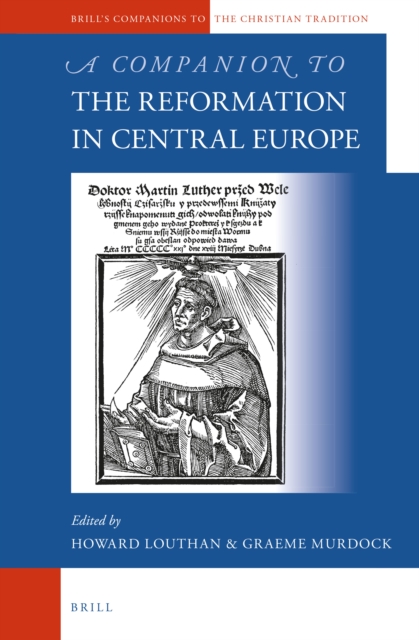
A Companion to the Reformation in Central Europe analyses the diverse Christian cultures of the Polish-Lithuanian Commonwealth, the Czech lands, Austria, and lands of the Hungarian kingdom between the 15th and 18th centuries. It establishes the geography of Reformation movements across this region, and then considers different movements of reform and the role played by Protestant, Catholic, and Orthodox clergy. This volume examines different contexts and social settings for reform movements, and investigates how cities, princely courts, universities, schools, books, and images helped spread ideas about reform. This volume brings together expertise on diverse lands and churches to provide the first integrated account of religious life in Central Europe during the early modern period.Contributors are: Phillip Haberkern, Maciej Ptaszynski, Astrid von Schlachta, Márta Fata, Natalia Nowakowska, Luka Ilic, Michael Springer, Edit Szegedi, Mihály Balázs, Rona Johnston Gordon, Howard Louthan, Tadhg Ó hAnnracháin, Liudmyla Sharipova, Alexander Schunka, Rudolf Schlögl, Václav Buzek, Mark Hengerer, Michael Tworek, Pál Ács, Maria Craciun, Grazyna Jurkowlaniec, Laura Lisy-Wagner, and Graeme Murdock.
eBook