
Catalogue Search | MBRL


Are you sure you want to remove the book from the shelf?

{{itemTitle}}
52
result(s) for
"Refugees Germany Biography."
Sort by:

Nujeen : one girl's incredible journey from war-torn Syria in a wheelchair
Traces the inspiring story of Syrian refugee Nujeen Mustafa, who after being born with cerebral palsy and denied an education because of her disability made a harrowing journey by wheelchair from her war-ravaged home to safety in Germany.
BOOK

Once They Had a Country
Muriel Gillick draws from a remarkable set of primary source
materials, including letters, telegrams, and police records to
relate the story of two teenage refugees during World War II.
Once They Had a Country conveys well what it was like
to establish a new life in a foreign country—over and
over again and in constant fear for one’s life. The work
tells of the extraordinary experiences of the author’s
parents in Europe and demonstrates how citizens and the
governments of Belgium, France, Switzerland, Brazil, America,
China, and postwar Germany treated refugees. This story also
reveals the origins of the Convention Relating to the Status of
Refugees, the basis of contemporary international law affecting
refugees in many countries today.
In addition to the dramatic human story it tells, this work
brings the plight of refugees home to the reader—and with
over 8 million refugees worldwide today, the subject of how
individuals and nation states respond to these individuals is
indeed timely.
eBook
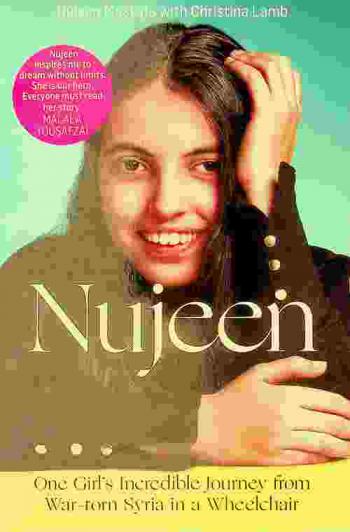
Nujeen : one girl's incredible journey from war-torn Syria in a wheelchair
This book tells the inspiring true story of a remarkable young hero: Nujeen Mustafa, a teenager born with cerebral palsy, whose harrowing journey from war-ravaged Syria to Germany in a wheelchair is a breathtaking tale of fortitude, grit, and hope that lends a face to the greatest humanitarian issue of our time, the Syrian refugee crisis. For millions around the globe, sixteen-year-old Nujeen Mustafa embodies the best of the human spirit. Confined to a wheelchair because of her cerebral palsy and denied formal schooling in Syria because of her illness, Nujeen taught herself English by watching American soap operas. When her small town became the epicenter of the brutal fight between ISIS militants and US-backed Kurdish troops in 2014, she and her family were forced to flee. Despite her physical limitations, Nujeen embarked on the arduous trek to safety and a new life. The grueling sixteen-month odyssey by foot, boat, and bus took her across Turkey and the Mediterranean to Greece, through Macedonia to Serbia and Hungary, and finally, to Germany. Yet, in spite of the tremendous physical hardship she endured, Nujeen's extraordinary optimism never wavered. Refusing to give in to despair or see herself as a passive victim, she kept her head high. As she told a BBC reporter, \"You should fight to get what you want in this world.\"Nujeen's positivity and resolve infuses this unforgettable story of one young woman determined to make a better life for herself. Told by acclaimed British foreign correspondent Christina Lamb, Nujeen is a unique and powerful memoir that gives voice to the Syrian refugee crisis, helping us to understand that the world must change--and offering the inspiration to make that change reality.
BOOK

The Life and Thought of Louis Lowy
Louis Lowy (1920–1991), an international social worker and gerontologist, rarely spoke publicly about the Holocaust. During the last months of his life, however, he recorded an oral narrative that explores his activities during the Holocaust as the formative experiences of his career. Whether caring for youth in concentration camps, leading an escape from a death march, or forming the self-government of a Jewish displaced persons center, Lowy was guided by principles that would later inform his professional identity as a social worker, including the values of human worth and self-determination, the interdependence of generations, and the need for social participation and lifelong learning. Drawing on Lowy’s oral narrative and accounts from three other Holocaust survivors who witnessed his work in the Terezín ghetto and the Deggendorf Displaced Persons Center, Gardella offers a rich portrait of Lowy’s personal and professional legacy. In chronicling his life, Gardella also uncovers a larger story about Jewish history and the meaning of the Holocaust in the development of the social work profession.
eBook

The tiger in the attic
In 1939, on the eve of Hitler's invasion of Poland, seven-year-old Edith Milton (then Edith Cohn) and her sister Ruth left Germany by way of the Kindertransport, the program which gave some 10,000 Jewish children refuge in England. The two were given shelter by a jovial, upper-class British foster family with whom they lived for the next seven years. Edith chronicles these transformative experiences of exile and good fortune in The Tiger in the Attic, a touching memoir of growing up as an outsider in a strange land. In this illuminating chronicle, Edith describes how she struggled to fit in and to conquer self-doubts about her German identity. Her realistic portrayal of the seemingly mundane yet historically momentous details of daily life during World War II slowly reveals istelf as a hopeful story about the kindness and generosity of strangers. She paints an account rich with colorful characters and intense relationships, uncanny close calls and unnerving bouts of luck that led to survival. Edith's journey between cultures continues with her final passage to America—yet another chapter in her life that required adjustment to a new world—allowing her, as she narrates it here, to visit her past as an exile all over again. The Tiger in the Attic is a literary gem from a skilled fiction writer, the story of a thoughtful and observant child growing up against the backdrop of the most dangerous and decisive moment in modern European history. Offering a unique perspective on Holocaust studies, this book is both an exceptional and universal story of a young German-Jewish girl caught between worlds.
eBook

The Second Generation : âEmigrâes from Nazi Germany as Historians
\"Of the thousands of children and young adults who fled Nazi Germany in the years before the Second World War, a remarkable number went on to become trained historians in their adopted homelands. By placing autobiographical testimonies alongside historical analysis and professional reflections, this richly varied collection comprises the first sustained effort to illuminate the role these men and women played in modern historiography. Focusing particularly on those who settled in North America, Great Britain, and Israel, it culminates in a comprehensive, meticulously researched biobibliographical guide that provides a systematic overview of the lives and works of this 'second generation'\"--From publisher's website.
Book

Ensnared between Hitler and Stalin
In the 1930s, hundreds of scientists and scholars fled Hitler’s Germany. Many found safety, but some made the disastrous decision to seek refuge in Stalin’s Soviet Union. The vast majority of these refugee scholars were arrested, murdered, or forced to flee the Soviet Union during the Great Terror. Many of the survivors then found themselves embroiled in the Holocaust. Ensnared between Hitler and Stalin explores the forced migration of these displaced academics from Nazi Germany to the Soviet Union.
The book follows the lives of thirty-six scholars through some of the most tumultuous events of the twentieth century. It reveals that not only did they endure the chaos that engulfed central Europe in the decades before Hitler came to power, but they were also caught up in two of the greatest mass murders in history. David Zimmerman examines how those fleeing Hitler in their quests for safe harbour faced hardship and grave danger, including arrest, torture, and execution by the Soviet state. Drawing on German, Russian, and English sources, Ensnared between Hitler and Stalin illustrates the complex paths taken by refugee scholars in flight.
eBook

The man with the poison gun : a Cold War spy story
\"In the fall of 1961, a KGB agent defected to West Germany. The slim 30-year-old man in police custody had papers in the name of an East German ... but claimed that his real name was Bogdan Stashinsky, and he was a citizen of the Soviet Union ... He had traveled on numerous occasions to Munich, where he singlehandedly tracked down and killed two enemies of the communist regime. He used a new, specially designed secret weapon--a spray pistol delivering liquid poison that, if fired into the victim's face, killed him without leaving any trace ... Stashinsky escaped ... and crossed into West Berlin just hours before the Berlin Wall was erected. In 1962, after spilling his secrets to the CIA, Stashinky was put on trial in what would be the most publicized assassination case in Cold War history\"--Provided by publisher.
Book

Two lives in uncertain times : facing the challenges of the 20th century as scholars and citizens
Published in Association with the German Historical Institute [http://www.ghi-dc.org/], Washington, D.C.
Wilma and Georg Iggers came from different backgrounds, Wilma from a Jewish farming family from the German-speaking border area of Czechoslovakia, Georg from a Jewish business family from Hamburg. They both escaped with their parents from Nazi persecution to North America where they met as students. As a newly married couple they went to the American South where they taught in two historic Black colleges and were involved in the civil rights movement. In 1961 they began going to West Germany regularly not only to do research but also to further reconciliation between Jews and Germans, while at the same time in their scholarly work contributing to a critical confrontation with the German past. After overcoming first apprehensions, they soon felt Göttingen to be their second home, while maintaining their close involvements in America. After 1966 they frequently visited East Germany and Czechslovakia in an attempt to build bridges in the midst of the Cold War.
The book relates their very different experiences of childhood and adolescence and then their lives together over almost six decades during which they endeavored to combine their roles as parents and scholars with their social and political engagements. In many ways this is not merely a dual biography but a history of changing conditions in America and Central Europe during turbulent times.
eBook