
Catalogue Search | MBRL


Are you sure you want to remove the book from the shelf?

{{itemTitle}}
33
result(s) for
"Refuse as art material."
Sort by:

Junk modeling
Simple household items that are easily thrown away can become amazing works of art! In this book, readers will learn how to create cool crafts out of \"junk\" objects, including toilet paper rolls, bottle tops, egg cartons, and corks. Readers will delight in turning these everyday objects into toy cars, caterpillars, snowmen, and frogs. A helpful hint and clear lists of materials give readers the knowledge they need to begin their project. Accessible instructions help readers understand the project, while photographs allow them to visualize all the ways they can make ordinary objects into fun and useful crafts.
Book
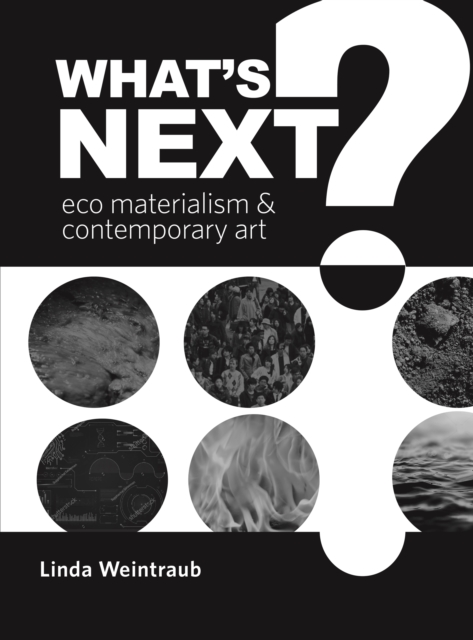
What's next? : eco materialism and contemporary art
By paying tribute to matter, materiality and materialisation, the examples of contemporary art assembled in What's Next? Eco Materialism and Contemporary Art challenge the social, cultural and ethical norms that prevailed in the twentieth century. This significant frontier of contemporary culture is identified as Eco Materialism because it affirms the emergent philosophy of Neo Materialism and attends to the pragmatic urgency of environmentalism. Any licensing requests to reuse the content can be made through Intellect books webpage.
eBook


Paper Mountain
Minaxi May is passionate about colour. Her work explodes with it. Often using everyday, throwaway materials such as drinking straws and coloured tape, she creates intricate patterned works and large-scale installations. Her practice explores themes of consumerism and popular culture as well as more materials-based research. Zakka, held at Paper Mountain mid-2012, continued May's investigation into colour and form, through the assemblage and sculpture of everyday materials.
Journal Article

Put on a show with cardboard (& duct tape)
Step-by-step instructions on how to use cardboard and duct tape to construct items to help you put on a show.
Book

Recycling of Thermoset Materials and Thermoset-Based Composites: Challenge and Opportunity
Thermoset materials and their composites are characterized by a long life cycle with their main applications in aircrafts, wind turbines and constructions as insulating materials. Considering the importance of recovery and valorization of these materials at their end-of-life, avoiding landfilling, the interest concerning their recycling grows continuously. The thermoset materials and their composites, to be successfully recovered and valorized, must degrade their three-dimensional structures and recover the mono-oligomers and/or fillers. The thermoset materials could successfully degrade through thermal treatment at different temperatures (for example, above 1000 °C for incineration, ca. 500 °C for oxidation/combustion of organic constituents, etc.), chemical degradation by catalyst, irradiation with or without the presence of water, alcohol, etc., and mechanical recycling, obtaining fine particles that are useful as filler and/or reinforcement additives. Among these recycling methods, this mini-review focuses on the formulation and recovery method of innovative thermoset with in-build recyclability, i.e., materials having chemical links that could be degraded on-demand or containing dynamic covalent bonds to have re-processable and/or recyclable thermoset. This issue could be considered the future perspective in developing novel thermoset materials. The aim of this review is to get an overview of the state of the art in thermoset recycling and of the most commonly used thermoset composites, recovering valuable reinforcing fibers. Additionally, in this work, we also report not only known recycling routes for thermoset and thermoset-based composites, but also new and novel formulating strategies for producing thermosets with built-in recyclability, i.e., containing chemical-triggered on-demand links. This mini-review is also a valuable guide for educational purposes for students and specialized technicians in polymer production and recycling.
Journal Article

Recycling crafts
Using step-by-step instructions, readers will reuse paper towel tubes, plastic bottles, and other recyclables found around the house to make bracelets, pencil cases, and colorful decorations. Full-color photographs of the crafts steps help readers complete them as they follow along with clear, easy-to-understand directions.
Book


Travel through time with cardboard & duct tape
Step-by-step instructions show how to reuse cardboard of various types, duct tape, glue, markers, old CDs, and other recyclables to create a variety of crafts.
Book

A Comprehensive Review on Thermal Coconversion of Biomass, Sludge, Coal, and Their Blends Using Thermogravimetric Analysis
Lignocellulosic biomass is a vital resource for providing clean future energy with a sustainable environment. Besides lignocellulosic residues, nonlignocellulosic residues such as sewage sludge from industrial and municipal wastes are gained much attention due to its large quantities and ability to produce cheap and clean energy to potentially replace fossil fuels. These cheap and abundantly resources can reduce global warming owing to their less polluting nature. The low-quality biomass and high ash content of sewage sludge-based thermal conversion processes face several disadvantages towards its commercialization. Therefore, it is necessary to utilize these residues in combination with coal for improvement in energy conversion processes. As per author information, no concrete study is available to discuss the synergy and decomposition mechanism of residues blending. The objective of this study is to present the state-of-the-art review based on the thermal coconversion of biomass/sewage sludge, coal/biomass, and coal/sewage sludge blends through thermogravimetric analysis (TGA) to explore the synergistic effects of the composition, thermal conversion, and blending for bioenergy production. This paper will also contribute to detailing the operating conditions (heating rate, temperature, and residence time) of copyrolysis and cocombustion processes, properties, and chemical composition that may affect these processes and will provide a basis to improve the yield of biofuels from biomass/sewage sludge, coal/sewage sludge, and coal/biomass blends in thermal coconversion through thermogravimetric technique. Furthermore, the influencing factors and the possible decomposition mechanism are elaborated and discussed in detail. This study will provide recent development and future prospects for cothermal conversion of biomass, sewage, coal, and their blends.
Journal Article