
Catalogue Search | MBRL


Are you sure you want to remove the book from the shelf?

{{itemTitle}}
2,283
result(s) for
"Refuse collection."
Sort by:
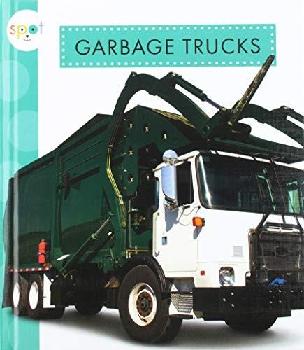
Garbage trucks
\"This search-and-find book invites early readers to look for new vocabulary words and pictures while giving simple facts about garbage trucks and how they pick up trash in order to keep communities clean\"--Provided by publisher.
Book

Models and Algorithms for the Integrated Planning of Bin Allocation and Vehicle Routing in Solid Waste Management
The efficient organization of waste collection systems based on bins located along the streets involves the solution of several tactical optimization problems. In particular, the bin configuration and sizing at each collection site as well as the service frequency over a given planning horizon have to be decided. In this context, a higher service frequency leads to higher routing costs, but at the same time less or smaller bins are required, which leads to lower bin allocation investment costs. The bins used have different types and different costs and there is a limit on the space at each collection site as well as a limit on the total number of bins of each type that can be used. In this paper we consider the problem of designing a collection system consisting of the combination of a vehicle routing and a bin allocation problem in which the trade-off between the associated costs has to be considered. The solution approach combines an effective variable neighborhood search metaheuristic for the routing part with a mixed integer linear programming-based exact method for the solution of the bin allocation part. We propose hierarchical solution procedures where the two decision problems are solved in sequence, as well as an integrated approach where the two problems are considered simultaneously. Extensive computational testing on synthetic and real-world instances with hundreds of collection sites shows the benefit of the integrated approaches with respect to the hierarchical ones.
Journal Article

Garbage trucks
\"Bang! Crash! Garbage Trucks are here to clean! Learn how and where they do their work in this Machines! song. Includes glossary, critical thinking questions, and sheet music\"-- Provided by publisher.
Book

Extended Maximal Covering Location and Vehicle Routing Problems in Designing Smartphone Waste Collection Channels: A Case Study of Yogyakarta Province, Indonesia
Most people will store smartphone waste or give it to others; this is due to inadequate waste collection facilities in all cities/regencies in Indonesia. In Yogyakarta Province, there is no electronic waste collection facility. Therefore, an e-waste collection network is needed to cover all potential e-waste in the province of Yogyakarta. This study aims to design a collection network to provide easy access to facilities for smartphone users, which includes the number and location of each collection center and the route of transporting smartphone waste to the final disposal site. We proposed an extended maximal covering location problem to determine the number and location of collection centers. Nearest neighbor and tabu search are used in forming transportation routes. The nearest neighbor is used for initial solution search, and tabu search is used for final solution search. The study results indicate that to facilitate all potential smartphone waste with a maximum distance of 11.2 km, the number of collection centers that must be established is 30 units with three pick-up routes. This research is the starting point of the smartphone waste management process, with further study needed for sorting, recycling, repairing, or remanufacturing after the waste has been collected.
Journal Article

Trash talk : an eye-opening exploration of our planet's dirtiest problem
\"In a world of mass consumption and busy schedules, taking the time to understand our own trash habits can be daunting. In Talking Trash, the ever-curious and talented Iris Gottlieb pulls back the curtain on the intricacies of the global trash production system and its contribution to climate change . From the history of the mafia's rule of the New York sanitation system to orbital debris (space trash) to the myth of recycling, Gottlieb will help readers see trash in a whole new way. Complete with beautiful illustrations and several landfills' worth of research, Talking Trash shines a much-needed light on a system that has been broken for far too long, providing readers with surprising, disgusting, and insightful information to better understand how we affect garbage and how it affects us\"-- Provided by publisher.
BOOK
Estimating Time Spent at the Waste Collection Point by A Garbage Truck with A Multiple Regression Model
The planning of the garbage trucks’ routes is an essential process in waste collection companies. The main issues in garbage truck routing are determining the optimal routes, minimizing time, decreasing the costs, and reducing the pollution’s emission. In the literature, the time spent at a waste collection point (WCP) is considered as the average time, or it is not included at all. Time spent at a WCP is determined by the processes of picking up, emptying, and putting down the waste containers and the factors specific for different WCPs. Those factors impact the time spent at WCP significantly. Excluding time spent at a WCP or taking the average of that in the planning approach may lead to the inaccurate estimation of total collection time. The aim of this article is to present the multiple regression model for estimating time spent at a WCP. We analyzed the impact of the WCP factors (i.e., building type and number of containers) on the time that a garbage truck spends at it. We initially considered seven chosen factors, five categorical and two numerical. Based on this, we developed the multiple regression model based on linear regression use. Later, the proposed model was validated based on data obtained from the municipal company operating in Wroclaw city, Poland. The study confirmed that the defined factors significantly affect garbage truck’s time spent at a WCP and should be taken into account during waste collection planning processes’ performance.
Journal Article

Sanitation workers help us
\"Introduces pre-readers to simple concepts about the sanitation workers using short sentences and repetition of words\"-- Provided by publisher.
Book

Research on optimization of transportation routes for infectious medical waste
During the pandemic, the amount of infectious medical waste has increased dramatically. Currently, the medical waste recycling process generally suffers from defects such as long distances, high costs, and a lack of emergency response mechanisms. This paper addresses the problem of medical waste collection and route optimization for regions with multiple vehicle types and stages. It comprehensively considers factors such as transportation costs, distance, vehicle allocation, and contamination risks during the collection and distribution of medical waste. The goal is to minimize transportation costs and risks, with constraints including uniqueness, connectivity between nodes, and vehicle load capacity. A segmented collection approach is used to model the medical waste collection process. An optimization method for medical waste collection site selection and vehicle routing is proposed. Given the NP-hard nature of the problem, a location allocation method based on minimum envelope clustering analysis is employed, and an improved NSGA-II algorithm incorporating a fast non-dominated sorting mechanism is designed to obtain Pareto optimal solutions. Comparing with the results of traditional genetic algorithms through simulation, the results show that using the improved NSGA-II to solve practical problems: 1. When the production of medical waste is flat (1 disposal center, 4 backup transfer points, 58 producing points), the total cost is reduced by 13.94%, the total mileage is reduced by 7.17%, the full load rate is increased by 6.14%, and the convergence time is 26 seconds. 2. When the production of medical waste increased significantly (1 disposal center, multiple backup transfer points, 58 producing points), the total cost, total mileage, and transportation risk were reduced by 9.50%, 10.35%, and 2.03%, respectively, and the full load rate increased by 5.98%. The final results also indicate that compared to the results obtained by traditional genetic algorithms, the improved NSGA-II algorithm performs better in solving the optimization problem of infectious medical waste transportation routes.
Journal Article

Every Monday Mabel
Every Monday Mabel takes her breakfast outside and waits for her favorite part of the week: the garbage truck.
BOOK
Power and interest levels in safely managed sanitation services in Zambia: A stakeholder mapping
Access to safely managed sanitation (SMS) in sub-Saharan Africa including Zambia remains a challenge. Variations in power and interest among stakeholder significantly influence access to SMS. However, there is limited contextualization of how power and interest levels among stakeholders influenced access to SMS. The study aimed to explore and analyze how stakeholders perceived their power and interest in the context of providing SMS. The study applied the Mendelow Stakeholder Matrix to identify, characterize and analyze the actors involved in the provision of SMS in peri-urban areas in Lusaka, Zambia.
A narrative qualitative research design was employed in this study. Ninety-four (94) respondents participated in the study - 25 key informants who were representatives from Government Institutions/Departments, Cooperating Partners, NGOs and community level stakeholders; 60 discussants who participated in focus group discussions, while nine (9) community leaders took part in transect walks conducted in the target areas of Kanyama, Chawama and George. Nvivo14 was utilized for data management and analysis.
The main results suggested that stakeholders displayed interrelationships that were symbiotic as they depended on each other to deliver their mandates. Stakeholders categorized into Mendelow quadrants displayed varying levels of homogeneity in power and interest. In addition, some stakeholders such as the Local Authority shifted quadrants when seen to perform dual roles for example to implement and enforce the policies aimed at improved public health.
The stakeholders' quadrant position coupled with persisted changes in their positions influenced their capacity to contribute effectively to the implementation of strategies to enhance access to SMS. This equally meant that implementers of SMS interventions have to regularly assess their engagement mechanisms to foster dialogue and coordination among stakeholders. Policy implications, especially to Government, may mean allocation of adequate resources to key players to enable them deliver on their respective mandates. Similarly, implications to practitioners might be the need to periodically review stakeholders and forge alliances coupled with conducting multi-sectoral meetings aimed to streamline their functions for the successful delivery of SMS.
Journal Article