
Catalogue Search | MBRL


Are you sure you want to remove the book from the shelf?

{{itemTitle}}
42,818
result(s) for
"Reggae"
Sort by:

Time and memory in reggae music : the politics of hope
\"On the basis of a body of reggae songs from the 1970s and late 1990s, this book offers a sociological analysis of memory, hope and redemption in reggae music. From Dennis Brown to Sizzla, the way in which reggae music constructs a musical, religious and socio-political memory in rupture with dominant models is vividly illustrated by the lyrics themselves.\"--Provided by publisher.
Book

The Influence of Tiken Jah Fakoly’s Reggae Music in Post-independence Côte d’Ivoire
Tiken Jah Fakoly, a prominent Ivoirian reggae artist, has played an important role in the social and political development of post-independence Côte d’Ivoire. This paper explores the impact and influence of Tiken Jah Fakoly’s music on the socio-political dynamics of the country, especially as these relate to national unity, political awareness, and social movements. To assess Fakoly’s influence on the social fabric of Côte d’Ivoire, we administered a questionnaire-based survey to a diverse sample of participants. The questions included information on demographics, music consumption habits, familiarity with Fakoly’s music, perceptions of his recordings, his influence of their sense of identity, and their impressions of the impact his music has on social and political issues. The results show that Tiken Jah Fakoly’s music has had a significant effect on the attitudes of Ivoirians and has helped shape the unique character of Ivorian reggae. His music has fostered a sense of unity and solidarity among Ivorians, and it has inspired numerous individuals to take part in advocacy and activism-related activities. The outcomes of this research have broad implications for the role African music plays in nation-building processes, in the creation of a sense of cultural identity, and in the capacity to motivate political and social movements.
Journal Article

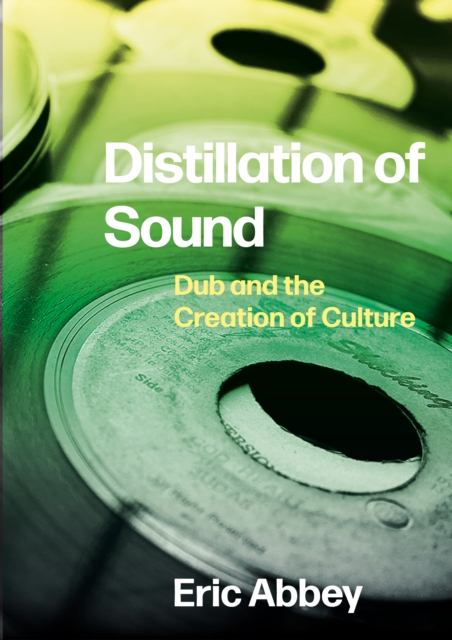
Distillation of Sound
Distillation of Sound focuses on the original music of Jamaica and how, through dub reggae, Jamaican culture was expanded and shifted. It will further the discussion on dub music, its importance to Jamaican culture, and its influence on the rest of the world. Dub music in Jamaica started in the early 1970s and by the end of the decade had influenced an entire population. The music began to use the rhythm track of a song as a song itself and spread quickly throughout the sound systems of the island. The importance of dub music and its influence on the music world frames the discussions in this new book. How dub travelled and distilled to three places in the world is covered in chapters focussing on the rise and spread of dub in New York City, in England and in Japan. Abbey discusses the separation between dub as a product and dub as an act of the engineer. Codifying these two elements, and tracing them, will allow for a more definitive approach to the culture and music of dub. To define it, and its surrounding elements, five of the first albums produced in the genre are discussed in three parameters that help to define and set up the culture of dub music. The albums discussed are Java, Java, Java, Java (Impact All Stars), Aquarius Dub (Herman Chin Loy), Blackboard Jungle Dub (Lee 'Scratch' Perry), The Message Dubwise (Prince Buster), King Tubbys Meets Rockers Uptown (Augustus Pablo). From the Preface: 'Jamaican music has always been about creating with what is at hand. Taking what is around you and making it into something great is the key to dub and Jamaican culture. This attitude is what this project is about. There is not enough written on the music that has inspired and influenced so many people around the world and this is an addition to the conversation. Dub music fixates on the engineer as a musician and, in doing so, allows for the creator to interact with echnology. Through this, the mixing board and other electronic elements become musical instruments. Now, these technologies are dominant in contemporary music and allow for people to easily create in their own homes. Without the engineers and musicians in the following work, these changes and shifts in technology and music would not have occurred. Dub is also a refiguring of already existing music. What this demonstrates is that music is ever evolving and can be shifted through technology. It also suggests that recorded music can always be modified and expanded upon. In our contemporary world, this modification is seen every day online and in people's daily lives. Dub created a way to view these changes through music. The influence of technology in the development of culture is the key to this work and to our development in society. How technology can be modified, changed, and evolved through the interaction of the engineer is the focus of this project. This work will further the importance of dub music and culture in our society. The definition and distinction between version and dub is also an important element in the following work. Jamaican music needs to be discussed more for its influence and creative force in the entirety of the music world. The author is a professional musician with the groups J. Navarro & the Traitors, Detroit Riddim Crew, and 1592 and a producer of dub, reggae and ska, and a professor of English and literature at Oakland Community College in Michigan, USA. Genuine popular and academic appeal. Will appeal to students and scholars of music and Jamaican culture – and to academic libraries. Has genuine popular appeal to those with an interest in Jamaican culture and music.
eBook

Bob Marley : the untold story
Chris Salewicz interviewed Marley in Jamaica in 1979. In this thorough and detailed account of Marley's life and the world in which he grew up and came to dominate, Salewicz brings to life not only the Rastafari religion and the musical scene in Jamaica but also the spirit of the man himself.
Book


The natural mystics : Marley, Tosh, and Wailer
Traces the history of the Wailers from their upbringing in the slums of Kingston to their first recordings and superstardom through the lens of Jamaican politics, heritage, race, religion, and the cultural revolution taking place in the 1970s.
Book
