
Catalogue Search | MBRL


Are you sure you want to remove the book from the shelf?

{{itemTitle}}
183
result(s) for
"Regicides."
Sort by:

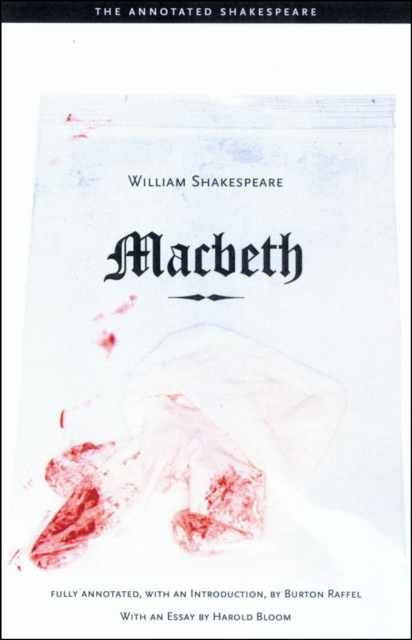
Macbeth
Perhaps no other Shakespearean drama so engulfs its readers in the ruinous journey of surrender to evil as does Macbeth. A timeless tragedy about the nature of ambition, conscience, and the human heart, the play holds a profound grip on the Western imagination.
eBook

Charles I's killers in America : the lives & afterlives of Edward Whalley and William Goffe
When the British monarchy was restored in 1660, King Charles II was faced with the conundrum of what to with those who had been involved in the execution of his father eleven years earlier. Facing a grisly fate at the gallows, some of the men who had signed Charles I's death warrant fled to America. 'Charles I's Killers in America' traces the gripping story of two of these men - Edward Whalley and William Goffe - and their lives in America, from their welcome in New England until their deaths there. With fascinating insights into the governance of the American colonies in the seventeenth century, and how a network of colonists protected the regicides, Matthew Jenkinson overturns the enduring theory that Charles II unrelentingly sought revenge for the murder of his father. 'Charles I's Killers in America' also illuminates the regicides' afterlives, with conclusions that have far-reaching implications for our understanding of Anglo-American political and cultural relations. Novels, histories, poems, plays, paintings, and illustrations featuring the fugitives were created against the backdrop of America's revolutionary strides towards independence and its forging of a distinctive national identity. The history of the 'king-killers' was distorted and embellished as they were presented as folk heroes and early champions of liberty, protected by proto-revolutionaries fighting against English tyranny. Jenkinson rewrites this once-ubiquitous and misleading historical orthodoxy, to reveal a far more subtle and compelling picture of the regicides on the run.
BOOK

Popular Theopolitics and the Last Russian Tsar’s Intangible Remains
The article tells the story of the remains of the last Russian Tsar Nicholas II and his family, who were killed in Ekaterinburg in 1918, discovered in 1979, found again in 1991, solemnly buried in 1998, and canonized as saints by the Russian Orthodox Church in 2000. Thoroughly researched in the cause of official criminal investigation and identified with genetic tests in several labs in Russia and abroad, the royal remains have not been recognized by the Church. The failure to reach a consensus on the veracity of the remains of the Romanovs occurred in parallel with the inability to decide what to do with the mummified body of Soviet founder Vladimir Lenin, a contemporary of Nicholas II who has been kept in a mausoleum in the Red Square since the 1920s. Though, after 1991, voices have been raised for removing his body from this symbolic center of the country, no consensus has been reached so far as to where to move it and why. Revisiting Verdery’s famous work, the present article argues that such a movement necessitates a political commitment to voicing new notions of belonging and citizenship. The liminal status of these two bodies proves that the contemporary state in Russia is a continuation of both the Soviet and imperial state programs, not a new political structure like other post-socialist countries. Based on the works by Kantorowicz and Cherniavsky, this research develops the concept of popular theopolitics and aims to examine how people’s political and religious ontologies make use of the Tsar’s image.
Journal Article

Macbeth
A graphic novel adaptation of William Shakespeare's play about Macbeth, the eleventh-century king of Scotland, and of the tragedy of prophecy and royal murder.
BOOK

KILLING KINGS: Patterns of Regicide in Europe, ad 600—1800
This paper examines the frequency of violent death and regicide amongst 1,513 monarchs in 45 monarchies across Europe between ad 600 and 1800. The analyses reveal that all types of violence combined account for about 22 per cent of all deaths. Murder is by far the most important violent cause of death, accounting for about 15 per cent of all deaths and corresponding to a homicide rate of about 1,000 per 100,000 ruler-years. Analyses of trends over time reveal a significant decline in the frequency of both battle deaths and homicide between the Early Middle Ages and the end of the eighteenth century. A significant part of the drop occurred during the first half of the period, suggesting that the civilizing processes assumed by Norbert Elias started between the seventh and the twelfth centuries. Finally, preliminary analyses suggest that regicide has a significant 'autoregressive' component in that the murder of the predecessor and the pre-predecessor increases the risk of homicide for the current monarch. It is suggested that such bundles of regicide may be interpreted as part of extended periods of civil wars and feuding that accompanied the state-building process. The paper concludes by suggesting several individual and contextual risk factors that may be involved in the risk of regicide.
Journal Article

The white king : Charles I, traitor, murderer, martyr
Profiles the English monarch in the first half of the 17th century, drawing on previously unseen manuscripts to display how his human flaws and misjudgments ultimately led to his downfall.
Book
The Aetiology and the Pyschogenesis of Tyrannical Behaviour in \Macbeth\
This article explores the aetiology and the psychogenesis of Macbeth’s tyrannical ambitions and the growth of his psychic degradation. Macbeth deigns to be an incorrigible regicide, but his ambition is ultimately overpowered by his conscience. This aporetic conflict is ultimately fatal to his morality and sense of Self. Character analysis informed by psychoanalytic criticism will investigate the protagonist's tormented psyche in its struggle between the ego-syntonic (Persona) and the ego-dystonic (Shadow) leading to neurosis that culminates in psychosis as Macbeth’s identity fractures throughout the play. The ontological issue of the Witches is explored in an attempt to explain the role the metamorphic environment plays in Macbeth’s psychic atrophy. For this reason, the Witches present us with the conundrum of their being both phenomenal and noumenal. Macbeth’s difficulty to distinguish between the real and the phantasmagoric results in a psychotic breakdown. Accordingly, he becomes a mad tyrant seeking to protect his unlawful reign
Journal Article

Macbeth : a dagger of the mind
From the ambitious and mad titular character to his devilish wife Lady Macbeth to the moral and noble Banquo to the mysterious Three Witches, Macbeth is one of William Shakespeare's more brilliantly populated plays and remains among the most widely read, performed in innovative productions set in a vast array of times and locations, from Nazi Germany to Revolutionary Cuba. Macbeth is a distinguished warrior hero, who over the course of the play, transforms into a brutal, murderous villain and pays an extraordinary price for committing an evil act. A man consumed with ambition and self-doubt, Macbeth is one of Shakespeare's most vital meditations on the dangerous corners of the human imagination. Award-winning writer and beloved professor Harold Bloom investigates Macbeth's interiority and unthinkable actions with razor-sharp insight, agility, and compassion. He also explores his own personal relationship to the character: Just as we encounter one Anna Karenina or Jay Gatsby when we are seventeen and another when we are forty, Bloom writes about his shifting understanding--over the course of his own lifetime--of this endlessly compelling figure, so that the book also becomes an extraordinarily moving argument for literature as a path to and a measure of our humanity. Bloom is mesmerizing in the classroom, wrestling with the often tragic choices Shakespeare's characters make. He delivers that kind of exhilarating intimacy and clarity in Macbeth, the final book in an essential series.
Book

Elizabethan Revenge Tragedy, 1587-1642
A most thorough study of the Elizabethan Tragedy of Revenge, its origins, development, the ethical influence affecting it and the inter-relations of the plays. Originally published in 1966. The Princeton Legacy Library uses the latest print-on-demand technology to again make available previously out-of-print books from the distinguished backlist of Princeton University Press. These editions preserve the original texts of these important books while presenting them in durable paperback and hardcover editions. The goal of the Princeton Legacy Library is to vastly increase access to the rich scholarly heritage found in the thousands of books published by Princeton University Press since its founding in 1905.
eBook