
Catalogue Search | MBRL


Are you sure you want to remove the book from the shelf?

{{itemTitle}}
437,113
result(s) for
"Regression Analysis"
Sort by:

Regression analysis : a practical introduction
\"With the rise of \"big data\", there is an increasing demand to learn the skills needed to undertake sound quantitative analysis without requiring students to spend too much time on high-level math and proofs. This book provides an efficient alternative approach, with more time devoted to the practical aspects of regression analysis and how to recognise the most common pitfalls. By doing so, the book will better prepare readers for conducting, interpreting, and assessing regression analyses, while simultaneously making the material simpler and more enjoyable to learn. Logical and practical in approach, Regression Analysis teaches: (1) the tools for conducting regressions; (2) the concepts needed to design optimal regression models (based on avoiding the pitfalls); and (3) the proper interpretations of regressions. Furthermore, this book emphasizes honesty in research, with a prevalent lesson being that statistical significance is not the goal of research. This book is an ideal introduction to regression analysis for anyone learning quantitative methods in the social sciences, business, medicine, and data analytics. It will also appeal to researchers and academics looking to better understand what regressions do, what their limitations are, and what they can tell us. This will be the most engaging book on regression analysis (or Econometrics) you will ever read!\"-- Provided by publisher.
Book

Digital Games, Design, and Learning: A Systematic Review and Meta-Analysis
In this meta-analysis, we systematically reviewed research on digital games and learning for K–16 students. We synthesized comparisons of game versus nongame conditions (i.e., media comparisons) and comparisons of augmented games versus standard game designs (i.e., value-added comparisons). We used random-effects meta-regression models with robust variance estimates to summarize overall effects and explore potential moderator effects. Results from media comparisons indicated that digital games significantly enhanced student learning relative to nongame conditions (ḡ = 0.33, 95% confidence interval [0.19, 0.48], k = 57, n = 209). Results from value-added comparisons indicated significant learning benefits associated with augmented game designs (ḡ = 0.34, 95% confidence interval [0.17, 0.51], k = 20, n = 40). Moderator analyses demonstrated that effects varied across various game mechanics characteristics, visual and narrative characteristics, and research quality characteristics. Taken together, the results highlight the affordances of games for learning as well as the key role of design beyond medium.
Journal Article

Handbook of regression analysis
\"Written by two established experts in the field, the purpose of this handbook is to provide a practical, one-stop reference on regression analysis. The focus is on the tools that both practitioners and researchers use in real life. It is intended to be a comprehensive collection of the theory, methods, and applications of the subject matter, but it is deliberately written at an accessible level. The handbook will provide a quick and convenient reference or \"refresher\" on ideas and methods that are useful for the accurate analysis of data and its resulting interpretations. Students can use the book as an introduction to and/or summary of key concepts in regression and related course work (such as linear, nonlinear, and nonparametric regressions). Plentiful references are supplied for the more motivated readers. Theory is presented when necessary, and always supplemented by hands-on examples. Software routines are available via an author-maintained web site\"-- Provided by publisher.
Book

What motivates consumers to buy organic foods? Results of an empirical study in the United States
Consumers perceive organic foods as more nutritious, natural, and environmentally friendly than non-organic or conventional foods. Since organic foods developed, studies on consumer behavior and organic foods have contributed significantly to its development. The presesent study aims to identify the factors affecting consumer buying behaviour toward organic foods in the United States. Survey data are collected from 770 consumers in the Midwest, United States. ANOVA, multiple linear regression, factor analysis, independent t-tests, and hierarchical multiple regression analysis are used to analyze the collected primary data. This research confirms health consciousness, consumer knowledge, perceived or subjective norms, and perception of price influence consumers’ attitudes toward buying organic foods. Availability is another factor that affected the purchase intentions of consumers. Age, education, and income are demographic factors that also impact consumers’ buying behavior. The findings help marketers of organic foods design strategies to succeed in the US’s fast-growing organic foods market.
Journal Article
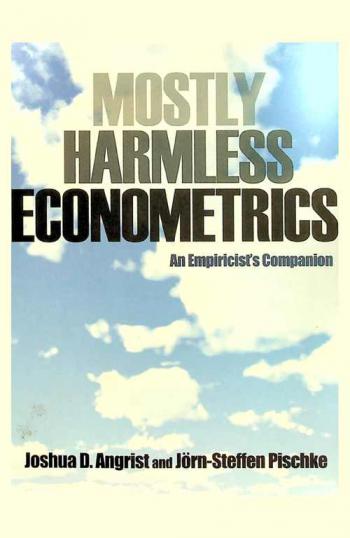
Mostly harmless econometrics : an empiricist's companion
In addition to econometric essentials, this book covers important new extensions as well as how to get standard errors right. The authors explain why fancier econometric techniques are typically unnecessary and even dangerous.
Book
Evaluating variable selection methods for multivariable regression models: A simulation study protocol
Researchers often perform data-driven variable selection when modeling the associations between an outcome and multiple independent variables in regression analysis. Variable selection may improve the interpretability, parsimony and/or predictive accuracy of a model. Yet variable selection can also have negative consequences, such as false exclusion of important variables or inclusion of noise variables, biased estimation of regression coefficients, underestimated standard errors and invalid confidence intervals, as well as model instability. While the potential advantages and disadvantages of variable selection have been discussed in the literature for decades, few large-scale simulation studies have neutrally compared data-driven variable selection methods with respect to their consequences for the resulting models. We present the protocol for a simulation study that will evaluate different variable selection methods: forward selection, stepwise forward selection, backward elimination, augmented backward elimination, univariable selection, univariable selection followed by backward elimination, and penalized likelihood approaches (Lasso, relaxed Lasso, adaptive Lasso). These methods will be compared with respect to false inclusion and/or exclusion of variables, consequences on bias and variance of the estimated regression coefficients, the validity of the confidence intervals for the coefficients, the accuracy of the estimated variable importance ranking, and the predictive performance of the selected models. We consider both linear and logistic regression in a low-dimensional setting (20 independent variables with 10 true predictors and 10 noise variables). The simulation will be based on real-world data from the National Health and Nutrition Examination Survey (NHANES). Publishing this study protocol ahead of performing the simulation increases transparency and allows integrating the perspective of other experts into the study design.
Journal Article

Regression models for categorical, count, and related variables : an applied approach
\"Social science and behavioral science students and researchers are often confronted with data that are categorical, count a phenomenon, or have been collected over time. Sociologists examining the likelihood of interracial marriage, political scientists studying voting behavior, criminologists counting the number of offenses people commit, health scientists studying the number of suicides across neighborhoods, and psychologists modeling mental health treatment success are all interested in outcomes that are not continuous. Instead, they must measure and analyze these events and phenomena in a discrete manner. This book provides an introduction and overview of several statistical models designed for these types of outcomes--all presented under the assumption that the reader has only a good working knowledge of elementary algebra and has taken introductory statistics and linear regression analysis. Numerous examples from the social sciences demonstrate the practical applications of these models. The chapters address logistic and probit models, including those designed for ordinal and nominal variables, regular and zero-inflated Poisson and negative binomial models, event history models, models for longitudinal data, multilevel models, and data reduction techniques such as principal components and factor analysis. Each chapter discusses how to utilize the models and test their assumptions with the statistical software Stata, and also includes exercise sets so readers can practice using these techniques. Appendices show how to estimate the models in SAS, SPSS, and R; provide a review of regression assumptions using simulations; and discuss missing data. A companion website includes downloadable versions of all the data sets used in the book\"--Provided by publisher.
Book
Statistically Controlling for Confounding Constructs Is Harder than You Think
Social scientists often seek to demonstrate that a construct has incremental validity over and above other related constructs. However, these claims are typically supported by measurement-level models that fail to consider the effects of measurement (un)reliability. We use intuitive examples, Monte Carlo simulations, and a novel analytical framework to demonstrate that common strategies for establishing incremental construct validity using multiple regression analysis exhibit extremely high Type I error rates under parameter regimes common in many psychological domains. Counterintuitively, we find that error rates are highest--in some cases approaching 100%--when sample sizes are large and reliability is moderate. Our findings suggest that a potentially large proportion of incremental validity claims made in the literature are spurious. We present a web application (http://jakewestfall.org/ivy/) that readers can use to explore the statistical properties of these and other incremental validity arguments. We conclude by reviewing SEM-based statistical approaches that appropriately control the Type I error rate when attempting to establish incremental validity.
Journal Article


Cognition and Memory after Covid-19 in a Large Community Sample
Investigators found that persons with resolved persistent symptoms after Covid-19 had objectively measured cognition similar to that in persons with short-duration symptoms, although small deficits remained.
Journal Article