
Catalogue Search | MBRL


Are you sure you want to remove the book from the shelf?

{{itemTitle}}
735
result(s) for
"Reise"
Sort by:


The Spell of Italy
Wearied by his life as an administrator at the Duke’s court in Weimar, in 1786 Johann Wolfgang von Goethe departed unannounced in the middle of the night for what had been the destination of his imagination since childhood: Italy. His extended stay there dramatically affected his views of art, architecture, prose, poetry, and science. When he returned to Germany and Weimar, Goethe’s experiences translated into his life and work in ways that influenced countless others as they developed Germany’s own brand of high culture.
The Spell of Italy: Vacation, Magic, and the Attraction of Goethe tracks the peculiar space Italy occupies in the cultural consciousness of German writers by reconsidering the Italian journeys of Goethe and Winckelmann and the legacy of those journeys in the works of Heine, Nietzsche, Freud, Mann, Carossa, and Bachmann. Author Richard Block contests previous assumptions about Italy as a place to encounter classical culture and creative rebirth. His study examines the degree to which Germany’s literary and cultural traditions appropriated a phantasmic Italy, showing how Winckelmann’s art history and Goethe’s Italian journey predisposed later writers to search for an aesthetic ideal in Italy that did not exist, and how their search for this absent ideal eventually resulted in disillusionment and deception. Building on previous work on Goethe, literary theory, and cultural history, The Spell of Italy offers compelling new ways of understanding Germany’s fascination with Italy from the eighteenth century to its troubled political history of the twentieth century.
eBook
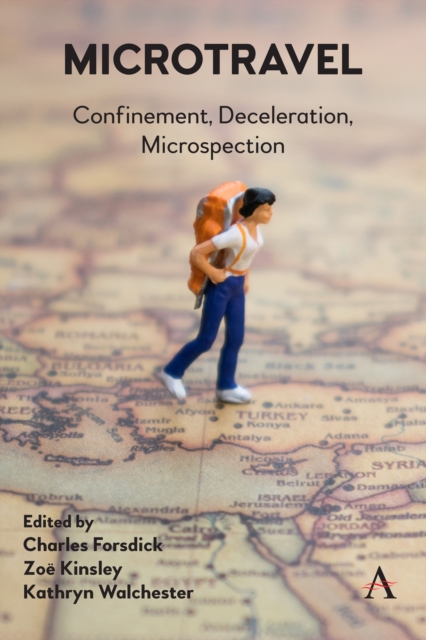
Microtravel
This volume explores and historicizes the phenomenon of 'microtravel', a term coined to designate slower journeys within a limited radius which allow, and sometimes necessitate, new forms of experiencing the world. The chapters study travelogues that recalibrate the scale of journeying, with travellers slowing down their journeys and readjusting their relationship to the proximate and nearby.
eBook

Sustainable urban mobility: evidence from three developed European countries
The importance acquired by private cars as the leading travel mode in most advanced countries has drawn attention to concerns related to pro-environmental travel behaviour. Indeed, the car has brought great benefits to society, albeit causing a whole lot of environmental and socio-economic consequences. In this perspective, we exploit Eurobarometer data on the attitudes of Europeans towards urban mobility to investigate the main motivations of citizens’ public transport use frequency. Ordered logistic regressions are estimated by country (Germany, Italy, and the Netherlands) and by gender. Our results suggest the key role played by a comprehensive set of socio-demographic, economic, and environmental aspects in determining urban travel behaviour. Moreover, our investigation brings to light some relevant cross-country and cross-gender commonalities and differences. The provided evidence may give policymakers a better knowledge of travel behaviour, useful for designing new interventions for environmentally-sustainable travelling.
Journal Article

Does Telework Make People Experience More Segregation in Daily Activity Spaces?
Telework reshapes daily mobility, but its implications for lived social exposure remain underexplored. This study examines whether and how telework affects experienced racial segregation by integrating socioeconomic characteristics, built‐environment context, and activity–travel behavior in a structural equation modeling analysis. Using pooled cross‐sectional data from the Puget Sound Regional Travel Surveys (2017, 2019, 2021), we distinguish residential segregation (home census block group) from experienced segregation measured across non‐work activity destinations using an entropy‐based index of multi‐group racial diversity. Results show that telework is associated with an increase in experienced racial segregation, primarily through mobility reorganization: Telework increases non‐work activity participation but reduces the spatial extent of daily activity spaces, and the localization effect dominates. Residential segregation remains a strong baseline determinant, yet telework contributes additional exposure differences beyond the residential context. Telework adoption is structurally patterned by socioeconomic and built‐environment conditions, while density and accessibility shape exposure indirectly via activity behaviors. These findings imply that telework policy is not socially neutral; hybrid arrangements and compact, mixed‐use, amenity‐rich environments may mitigate telework‐related exposure segregation.
Journal Article

Struck by Apollo
In the winter of 1801-02, Friedrich Hölderlin traveled more than
one thousand kilometers from his home near Stuttgart to Bordeaux,
partly on foot, partly by post coach. It took him two months. Then,
after four months serving as a tutor, he inexplicably decided to
return home. Not long after he set out, his coach was held up by
highwaymen, and, with no money, he had to walk the rest of the way.
By the time he arrived, he was so disheveled and disoriented his
friends did not recognize him. Though Hölderlin was just thirty-two
years old, the trip marked the beginning of the end of his active
life as one of Germany's greatest poets and thinkers. With more
than sixty black-and-white photographs by the author and eighteen
historical route maps, Struck by Apollo follows Hölderlin
to Bordeaux and back and beyond. David Farrell Krell retraces the
journeys in striking detail, reflecting on their significance for
Hölderlin's life and work in ways that will interest a wide swath
of fellow thinkers and travelers.
eBook
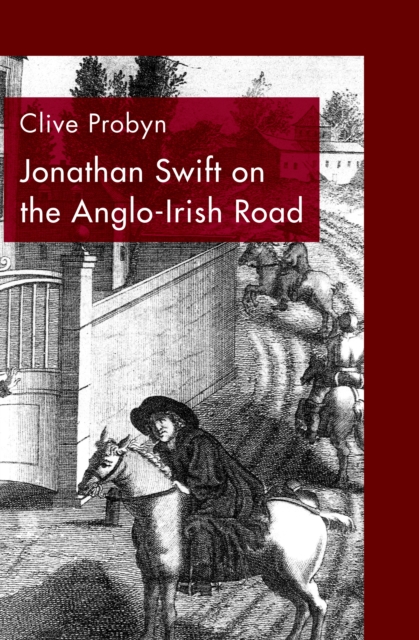
Jonathan Swift on the Anglo-Irish Road
What was the relationship between Jonathan Swift, author of Gullivers's Travels, and his own experience of contemporary Anglo-Irish travel?This new investigation shows how his family history, his politics, his writing life and also his mysterious relationship with two women were both predetermined by and enabled by geography.
eBook
Lesbian Couples’ Assisted Reproductive Technologies Trajectories in Switzerland and Abroad: Navigating Heteronormative Norms and Healthcare Disparities
On July 1, 2022, marriage became legal for same‐gender couples in Switzerland, granting married lesbian couples access to assisted reproductive technologies (ART) and recognition of co‐maternity from birth. Before this change, lesbian couples had to resort to reproductive travel to access ART abroad. Yet, significant barriers remain. Restrictive Swiss regulations continue to prohibit certain technologies, such as egg donation (i.e., reception of oocytes from a partner), even for married couples. Legal constraints are further compounded by financial inequities: Unlike heterosexual couples, lesbian couples are excluded from insurance coverage for ART because they do not meet the medical definition of infertility. Additionally, Swiss childbirth and parenting culture are deeply heteronormative, and healthcare providers—including fertility clinics—are ill‐prepared to welcome lesbian couples. As a result, some couples will continue to turn to reproductive travel, with Swiss health providers involved in their medical care trajectories before and after insemination abroad. Drawing on interviews with Swiss lesbian couples who pursued ART abroad, this article examines their experiences with reproductive travel. How did they access information to select a country and a clinic? And how did they navigate the constraints of reproductive travel alongside work, family, and social obligations? Using a reproductive justice framework, this article analyzes how recent legal changes fall short of ensuring equitable access to parenthood for same‐gender couples. It highlights enduring structural inequalities embedded in ART regulations, which intersect with socio‐economic norms and disparities in access to medical treatment.
Journal Article

Americans in the Treasure House
When railroads connected the United States and Mexico in 1884 and overland travel between the two countries became easier and cheaper, Americans developed an intense curiosity about Mexico, its people, and its opportunities for business and pleasure. Indeed, so many Americans visited Mexico during the Porfiriato (the long dictatorship of Porfirio Díaz, 1876–1911) that observers on both sides of the border called the hordes of tourists and business speculators a “foreign invasion,” an apt phrase for a historical moment when the United States was expanding its territory and influence.Americans in the Treasure House examines travel to Mexico during the Porfiriato, concentrating on the role of travelers in shaping ideas of Mexico as a logical place for Americans to extend their economic and cultural influence in the hemisphere. Analyzing a wealth of evidence ranging from travelogues and literary representations to picture postcards and snapshots, Jason Ruiz demonstrates that American travelers constructed Mexico as a nation at the cusp of modernity, but one requiring foreign intervention to reach its full potential. He shows how they rationalized this supposed need for intervention in a variety of ways, including by representing Mexico as a nation that deviated too dramatically from American ideals of progress, whiteness, and sexual self-control to become a modern “sister republic” on its own. Most importantly, Ruiz relates the rapid rise in travel and travel discourse to complex questions about national identity, state power, and economic relations across the U.S.–Mexico border.
eBook

Walkability and Parental Safety Perceptions as Determinants of Children’s School Commutes: A Systematic Review
Walking is the oldest, most affordable, and environmentally healthy mode of transport. Its importance is widely recognised in the scientific and political fields, with active school travel being a consensual target goal. Children’s active school travel promotes physical activity, independence, and social interaction. Additionally, it contributes to mitigating traffic congestion, reducing air pollution, and enhancing societal well-being. Despite these positive effects, children’s commuting patterns and outdoor activities are becoming more restricted due to the continuous growth of motorised traffic and car-oriented urban environment conditions. As a result, school walkability indexes are emerging in literature, although few consider parental safety perceptions. This review offers a comprehensive overview of the existing evidence, examining and summarising quantitative and qualitative studies on school walkability and the impact of parental barriers on children walking to school. The updated information provided in this review highlights the link between the urban environment, parental fear of traffic, and children’s school travel behaviour. Using the PRISMA method and a series of in-depth interviews, we developed a comprehensive walkability model. The literature review highlights the importance of geographical differences and social and environmental diversities, requiring different solutions to promoting active commuting to school. Distance and quality of infrastructure are critical factors, but not exclusive. Our interview results suggest that social norms, parents’ fear of car traffic, and educational background can influence the results. This study offers insights into perceived walkability, particularly regarding school walkability in a Portuguese context.
Journal Article