
Catalogue Search | MBRL


Are you sure you want to remove the book from the shelf?

{{itemTitle}}
93
result(s) for
"Reiseliteratur"
Sort by:

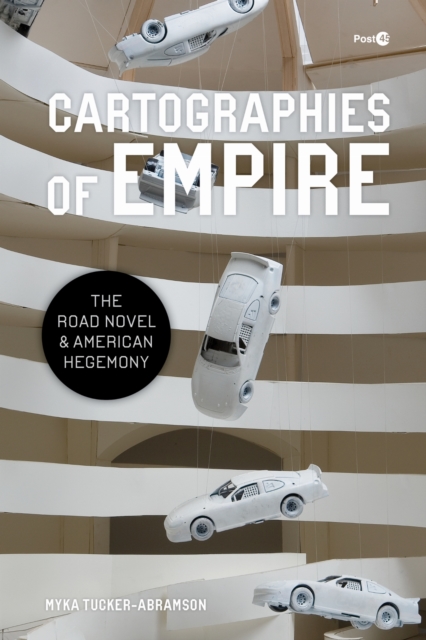
Cartographies of Empire
\"The road novel is often dismissed as a mundane, nostalgic genre: Jack, Sal, and other tedious white men on the road trying to recapture an authentic youth and American past that never existed. Yet, new road novels appear every year, tackling unexpected questions and spanning new geographies, from Mexico, Brazil, Bulgaria, Palestine, Ukraine, and former-Yugoslavia. Why did the road novel emerge and why does it persist? What does it do and why has it traveled so widely? Myka Tucker-Abramson draws from an archive of more than one-hundred-and-forty global road novels from over twenty countries, challenging dominant conceptions of the road novel as primarily concerned with American experiences and subjectivities. Grounding her analysis in materialist theories of genre, world-ecology and commodity frontier frameworks, and post-45 American literary studies, Tucker-Abramson persuasively argues that the road novel is a genre specific to, coterm
eBook

First impressions : a reader's journey to iconic places of the American Southwest
This unique guide for literate travelers in the American Southwest tells the story of fifteen iconic sites across Arizona, New Mexico, southern Utah, and southern Colorado through the eyes of the explorers, missionaries, and travelers who were the first non-natives to describe them. Noted borderlands historians David J. Weber and William deBuys lead readers through centuries of political, cultural, and ecological change. The sites visited in this volume range from popular destinations within the National Park System--including Carlsbad Caverns, the Grand Canyon, and Mesa Verde--to the Spanish colonial towns of Santa Fe and Taos and the living Indian communities of Acoma, Zuni, and Taos. Lovers of the Southwest, residents and visitors alike, will delight in the authors' skillful evocation of the region's sweeping landscapes, its rich Hispanic and Indian heritage, and the sense of discovery that so enchanted its early explorers. Publisher description
Book

Literature, travel, and colonial writing in the English Renaissance 1545-1625
What was the purpose of representing foreign lands for writers in the English Renaissance? This book argues that writers often used their works as vehicles to reflect on the state of contemporary English politics, particularly their own lack of representation in public institutions. Sometimes such analyses took the form of displaced allegories, whereby writers contrasted the advantages enjoyed, or disadvantages suffered, by foreign subjects with the political conditions of Tudor and Stuart England. Elsewhere, more often in explicitly colonial writings, authors meditated on the problems of government when faced with the possibly violent creation of a new society. If Venice was commonly held up as a beacon of republican liberty which England would do well to imitate, the fear of tyrannical Catholic Spain was ever present—inspiring and haunting much of the colonial literature from 1580 onwards. This book examines fictional and non-fictional writings, illustrating both the close connections between the two made by early modern readers and the problems involved in the usual assumption that we can make sense of the past with the categories available to us. The book explores representations of Europe, the Americas, Africa, and the Far East, selecting pertinent examples rather than attempting to embrace a total coverage. It also offers fresh readings of Shakespeare, Marlowe, More, Lyly, Hakluyt, Harriot, Nashe, and others.
eBook
The legacy of the grand tour
This collection examines a wide variety of literature-travel, memoir, and fiction-and explores the ways travel and ideas of \"culture\" have evolved since the heyday of the Grand Tour. The sites of the Grand Tour remain a powerful cultural draw, and they continue to define ideas of taste and learning for those who visit them.
eBook
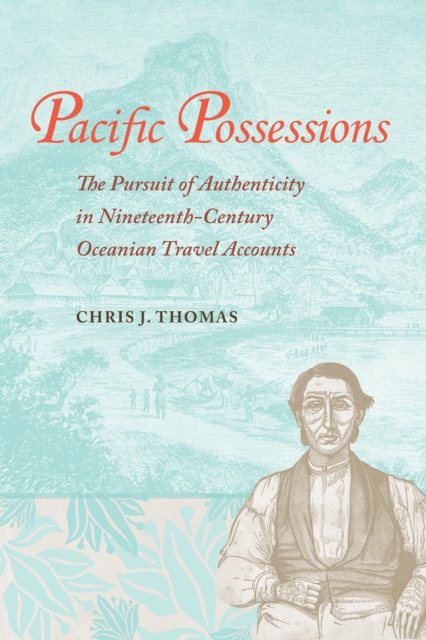
Pacific Possessions
Reframes Polynesia and Melanesia through analysis of
nineteenth-century travel writing In
Pacific Possessions: The Pursuit of Authenticity in
Nineteenth-Century Oceanian Travel Accounts, Chris J. Thomas
expands the literary canon on Polynesia and Melanesia beyond the
giants, such as Herman Melville and Jack London, to include
travel narratives by British and American visitors. These
accounts were widely read and reviewed when they first appeared
but have largely been ignored by scholars. For the first time,
Thomas defines these writings as a significant literary genre.
Recovering these works allows us to reconceive of
nineteenth-century Oceania as a vibrant hub of cultural
interchange.
Pacific Possessions recaptures the polyphony of voices
that enlivened this space through the writing of these travelers,
while also paying attention to their Oceanian interlocutors. Each
chapter centers on a Pacific cultural marker, what Thomas refers
to as each writer’s “possession”: the Tongan
tattoo, the Hawaiian hula, the Fijian cannibal fork, and Robert
Louis Stevenson’s cache of South Seas photographs. Thomas
analyzes how westerners formed narratives around these objects
and what those objects meant within nineteenth-century Oceanian
cultures. He argues that the accounts served to shape a version
of Oceanian authenticity that persists today. The profiled
traveler-writers had complex experiences, at times promoting
exoticized exaggerations of so-called authentic Polynesian and
Melanesian cultures and at other times genuinely engaging in
cultural exchange. However, their views were ultimately
compromised by a western lens. In Thomas’s words,
“the authenticity is at once celebrated and written
over.”
eBook

Extreme pursuits
Recent figures suggest that there will be 1.6 billion arrivals at world airports by the year 2020. Extreme Pursuits looks at the new conditions of global travel and the unease, even paranoia, that underlies them—at the opportunities they offer for alternative identities and their oscillation between remembered and anticipated states. Graham Huggan offers a provocative account of what is happening to travel at a time characterized by extremes of social and political instability in which adrenaline-filled travelers appear correspondingly determined to take risks. It includes discussions of the links between tourism and terrorism, of contemporary modes of disaster tourism, and of the writing that derives from these; but it also confirms the existence of more responsible forms of travel/writing that demonstrate awareness of a chronically endangered world.
eBook

Writes of Passage
Writes of Passage explores the interplay between a system of \"othering\" which travelers bring to a place, and the \"real\" geographical difference they discover upon arrival. Exposing the tensions between the imaginary and real, Duncan and Gregory and a team of leading internationa contributors focus primarily upon travelers from the 18th and 19th Centuries to pin down the imaginary within the context of imperial power. The contributors focus on travel to three main regions: Africa, South Asia, and Europe - wit the European examples being drawn from Britain, France and Greece.
eBook

Artes Apodemicae and Early Modern Travel Culture, 1550-1700
An exploration of the early modern manuals on travelling (Artes apodemicae), which originated in the sixteenth century, when it became communis opinio among intellectuals that an extended tour abroad was an indispensable part of humanist, academic and political education.
eBook

Historische Topographien
Die Sicht Reisender aus Nordwesteuropa auf den östlichen Mittelmeerraum war um 1700 durch die Bibel und antike Quellen, die Kreuzzüge und die osmanische Herrschaft geprägt.Wie fanden diese historischen Schichten Eingang in das Bild der Region, das ihre Zeichnungen und illustrierten Berichte hervorbrachten?.
eBook