
Catalogue Search | MBRL


Are you sure you want to remove the book from the shelf?

{{itemTitle}}
1,392,774
result(s) for
"Religion"
Sort by:


Religion and American Foreign Policy, 1945–1960
The Cold War was in many ways a religious war. Presidents Truman and Eisenhower and other American leaders believed that human rights and freedom were endowed by God, that God had called the United States to defend liberty, and that Soviet communism was evil because of its atheism and enmity to religion. Along with security and economic concerns, these religious convictions helped determine both how the United States defined the enemy and how it fought the conflict. Meanwhile, American Protestant churches failed to seize the moment. Internal differences over theology and politics, and resistance to cooperation with Catholics and Jews, hindered Protestant leaders domestically and internationally. Frustrated by these internecine disputes, Truman and Eisenhower attempted to construct a new civil religion to mobilize domestic support for Cold War measures, determine the strategic boundaries of containment, unite all religious faiths against communism, and to undermine the authority of communist governments abroad.
eBook


The Science of Religion in Britain, 1860–1915
Marjorie Wheeler-Barclay argues that, although the existence and significance of the science of religion has been barely visible to modern scholars of the Victorian period, it was a subject of lively and extensive debate among nineteenth-century readers and audiences. She shows how an earlier generation of scholars in Victorian Britain attempted to arrive at a dispassionate understanding of the psychological and social meanings of religious beliefs and practices-a topic not without contemporary resonance in a time when so many people feel both empowered and threatened by religious passion-and provides the kind of history she feels has been neglected.
Wheeler-Barclay examines the lives and work of six scholars: Friedrich Max Müller, Edward B. Tylor, Andrew Lang, William Robertson Smith, James G. Frazer, and Jane Ellen Harrison. She illuminates their attempts to create a scholarly, non-apologetic study of religion and religions that drew upon several different disciplines, including anthropology, sociology, the classics, and Oriental studies, and relied upon contributions from those outside as well as within the universities. This intellectual enterprise-variously known as comparative religion, the history of religions, or the science of religion-was primarily focused on non-Christian religions. Yet in Wheeler-Barclay's study of the history of this field within the broad contexts of Victorian cultural, intellectual, social, and political history, she traces the links between the emergence of the science of religion to debates about Christianity and to the history of British imperialism, the latter of which made possible the collection of so much of the ethnographic data on which the scholars relied and which legitimized exploration and conquest. Far from promoting an anti-religious or materialistic agenda, the science of religion opened up cultural space for an exploration of religion that was not constricted by the terms of contemporary conflicts over Darwin and the Bible and that made it possible to think in new and more flexible ways about the very definition of religion.
eBook

Atlas of religion in China : social and geographical contexts
The speed and the scale with which traditional religions in China have been revived and new spiritual movements have emerged in recent decades make it difficult for scholars to stay up-to-date on the religious transformations within Chinese society. 0This atlas presents a bird's-eye view of the religious landscape in China today. In more than 150 full-color maps and six different case studies, it maps the officially registered venues of China's major religions - Buddhism, Christianity (Protestant and Catholic), Daoism, and Islam - at the national, provincial, and county levels. The atlas also outlines the contours of Confucianism, folk religion, and the Mao cult. Further, it describes the main organizations, beliefs, and rituals of China's main religions, as well as the social and demographic characteristics of their respective believers. Putting multiple religions side by side in their contexts, this atlas deploys the latest qualitative, quantitative and spatial data acquired from censuses, surveys, and fieldwork to offer a definitive overview of religion in contemporary China.
Book

Christianity, Islam, and Orisa-Religion
The Yoruba of southwestern Nigeria are exceptional for the copresence among them of three religious traditions: Islam, Christianity, and the indigenousorisareligion. In this comparative study, at once historical and anthropological, Peel explores the intertwined character of the three religions and the dense imbrication of religion in all aspects of Yoruba history up to the present. For over 400 years, the Yoruba have straddled two geocultural spheres: one reaching north over the Sahara to the world of Islam, the other linking them to the Euro-American world via the Atlantic. These two external spheres were the source of contrasting cultural influences, notably those emanating from the world religions. However, the Yoruba not only imported Islam and Christianity but also exported their ownorisareligion to the New World. Before the voluntary modern diaspora that has brought many Yoruba to Europe and the Americas, tens of thousands were sold as slaves in the New World, bringing with them the worship of theorisa. Peel offers deep insight into important contemporary themes such as religious conversion, new religious movements, relations between world religions, the conditions of religious violence, the transnational flows of contemporary religion, and the interplay between tradition and the demands of an ever-changing present. In the process, he makes a major theoretical contribution to the anthropology of world religions.
eBook
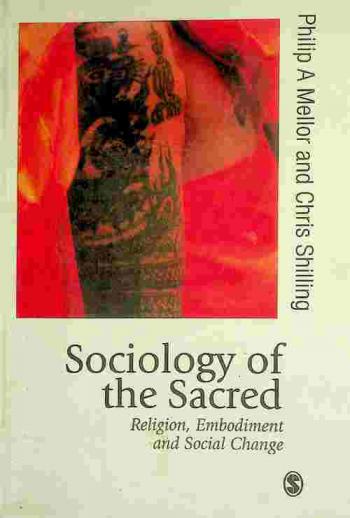
Sociology of the sacred : religion, embodiment and social change
Drawing on classical and contemporary social theory, Sociology of the Sacred presents a bold and original account of how interactions between religious and secular forms of the sacred underpin major conflicts in the world today, and illuminate broader patterns of social and cultural change inherent to global modernity.--Provided by publisher.
Book


The Making of the Pentecostal Melodrama
How religion, gender, and urban sociality are expressed in and mediated via television drama in Kinshasa is the focus of this ethnographic study. Influenced by Nigerian films and intimately related to the emergence of a charismatic Christian scene, these teleserials integrate melodrama, conversion narratives, Christian songs, sermons, testimonies, and deliverance rituals to produce commentaries on what it means to be an inhabitant of Kinshasa.
eBook