
Catalogue Search | MBRL


Are you sure you want to remove the book from the shelf?

{{itemTitle}}
44
result(s) for
"Religion and politics Middle East History 21st century."
Sort by:

The future of the Middle East : faith, force, and finance
This deeply informed book considers the intertwined roles of faith, force, and finance in shaping the modern Middle East. Leading expert Monte Palmer argues that these factors will continue to have a major impact on the Middle East as the United States and other major powers increasingly find themselves embedded in conflicts that defy resolution. Palmer considers the lessons learned from past and current conflicts: the limits of using tyrants as avenues of force; the transformation of faith into force; the root causes of terror; and the perils of a global environment that threatens a new cold war between Russia and the United States, a war of religions between the Abrahamic faiths, and a war of terror that is rapidly becoming global. As he clearly shows, the relative dominance of faith, force, or finance is always shifting, depending on time, place, and local conditions. Drawing on cases from ten critical periods, beginning with World War I through the current chaos and stalemate, the author offers constructive paths forward for building a Middle East of peace and stability.
Book
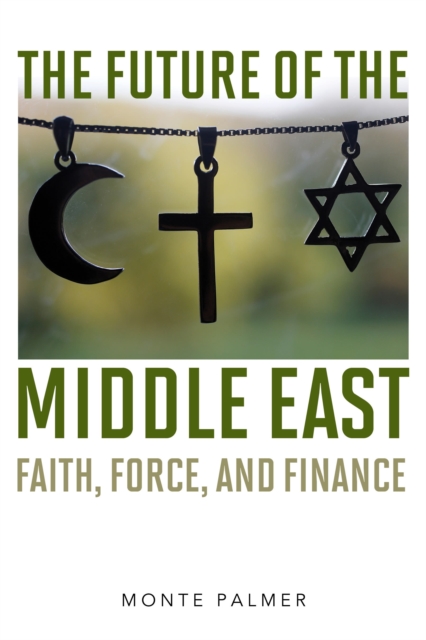
The Future of the Middle East
This deeply informed book considers the intertwined roles of faith, force, and finance in shaping the modern Middle East. Leading expert Monte Palmer argues that these factors will continue to have a major impact on the Middle East as the United States and other major powers increasingly find themselves embedded in conflicts that defy resolution. Palmer considers the lessons learned from past and current conflicts: the limits of using tyrants as avenues of force; the transformation of faith into force; the root causes of terror; and the perils of a global environment that threatens a new cold war between Russia and the United States, a war of religions between the Abrahamic faiths, and a war of terror that is rapidly becoming global. As he clearly shows, the relative dominance of faith, force, or finance is always shifting, depending on time, place, and local conditions. Drawing on cases from ten critical periods, from World War I through the current chaos and stalemate, the author offers constructive paths forward for building a Middle East of peace and stability.
eBook

Making the new Middle East : politics, culture, and human rights
This book examines politics and social dynamics in the Middle East today from diverse disciplinary perspectives, including religion, economics, gender, human rights, literature, media and music.
Book

The Cartoons That Shook the World
On September 30, 2005, the Danish newspaperJyllands-Postenpublished twelve cartoons of the Prophet Muhammad. Five months later, thousands of Muslims inundated the newspaper with outpourings of anger and grief by phone, email, and fax; from Asia to Europe Muslims took to the streets in protest. This book is the first comprehensive investigation of the conflict that aroused impassioned debates around the world on freedom of expression, blasphemy, and the nature of modern Islam.
Jytte Klausen interviewed politicians in the Middle East, Muslim leaders in Europe, the Danish editors and cartoonists, and the Danish imam who started the controversy. Following the winding trail of protests across the world, she deconstructs the arguments and motives that drove the escalation of the increasingly globalized conflict. She concludes that the Muslim reaction to the cartoons was not-as was commonly assumed-a spontaneous emotional reaction arising out of the clash of Western and Islamic civilizations. Rather it was orchestrated, first by those with vested interests in elections in Denmark and Egypt, and later by Islamic extremists seeking to destabilize governments in Pakistan, Lebanon, Libya, and Nigeria. Klausen shows how the cartoon crisis was, therefore, ultimately a political conflict rather than a colossal cultural misunderstanding.
eBook

Order out of Chaos
Order out of Chaos explains why Iraqis turned to the mosque after state collapse. In 2003, the US-led invasion of Iraq destroyed the Bathist state. Despite this the citizens of Basra established predictable routines of daily life and social order as the familiar and customary structures of state-imposed order collapsed. What enabled individuals in Basra to work together to produce order amid anarchy? The answer: the Friday mosque. A week after the regime fell, Shii imams introduced Friday congregational prayers and associated sermons for the first time in most places since the 1950s. These sermons facilitated the spread of common knowledge and coordination, both locally and nationally, and contributed to the emergence of a relatively cohesive imagined community of Iraqi Shia that came to dominate Iraq's political order. Combining rational choice approaches, ethnographic understanding, and GIS analysis, David Siddhartha Patel reveals the interconnectedness of the enduring problem of how societies create social order in a stateless environment, the origins and limits of political authority and leadership, and the social and political salience of collective identity.
eBook
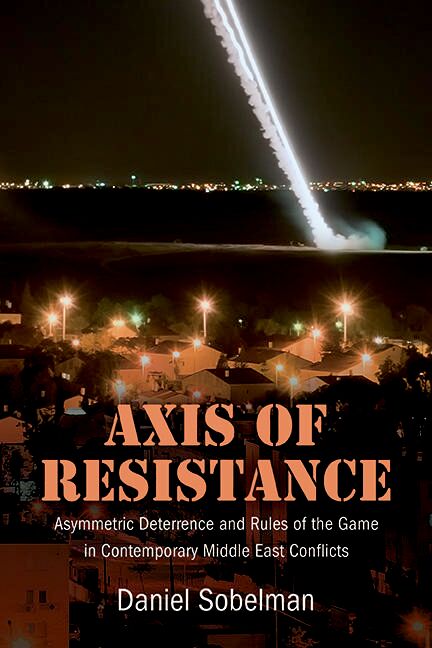
Axis of Resistance
An in-depth analysis of the primary conflicts animating the contemporary struggle over the regional order of the Middle East. From the conflict between the United States and the Iranian-backed militias in Iraq and Syria to the recent Israel-Hamas war in the Gaza Strip, events in today's Middle East reflect the emergence of what has come to be known as an Iran-led \"axis of resistance.\" A geopolitical network of state- and nonstate actors seeking to promote a new regional order, the \"axis\" primarily includes the Lebanese Hezbollah, Hamas in the Gaza Strip, Yemen's Houthi rebels, Syria, and multiple Iran-supported Shiite militias in Iraq. Drawing on qualitative in-depth research in Hebrew and Arabic, and on exclusive interviews with senior Israeli officials, Axis of Resistance offers the first comprehensive analysis of the evolution of the \"axis\" and its application of a distinct strategic approach to asymmetrical conflicts-that of \"resistance.\" Author Daniel Sobelman shows that the various \"resistance\" forces in the region have pursued an analogous asymmetrical deterrent strategy whose origins trace back to the Israel-Hezbollah conflict in southern Lebanon, whereby the weaker actor attempts to subject the stronger state to limiting \"rules of the game.\"
eBook
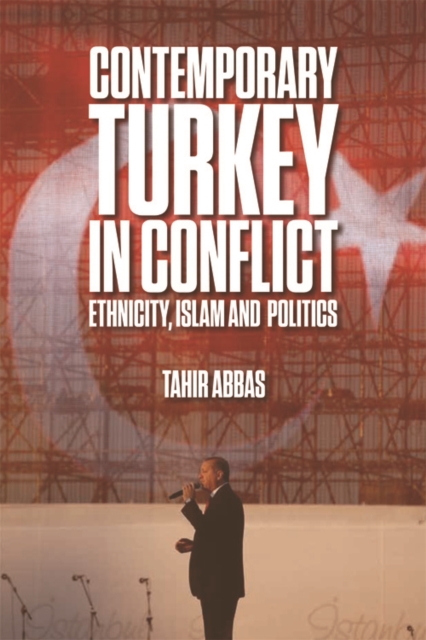
Contemporary Turkey in Conflict
New perspectives on ethnic relations, Islam and neoliberalism have emerged in Turkey since the rise of the Justice and Development Party (AKP) in 2002. Placing the period within its historical and contemporary context, Tahir Abbas argues that what it is to be ethnically, religiously and culturally Turkish has been transformed.
eBook

Hate Speech and Academic Freedom
Completed shortly before Hamas carried out its barbaric October massacre,
Hate Speech and Academic Freedom takes up issues that have consequently gained new urgency in the academy worldwide. It is the first book to ask what impact antisemitism has had on the fundamental principles the academy relies on for its identity—academic freedom, free speech rights, standards for hiring or firing faculty members and administrators, and the ethics of academic conduct and debate. Antisemitic hatred is spreading at a fever pitch. What steps can counter it? What damage to students is done when departments embrace anti-Zionism? Should faculty members face consequences for promoting antisemitism on social media? Should universities make a new push to adopt the IHRA Definition of Antisemitism?
eBook

Contemporary issues in Islam
This book deals with certain \"hot-button\" contemporary issues in Islam, including the Shari'a, jihad, the caliphate, women's status, and interfaith relations. Notably, it places the discussion of these topics within a longer historical framework in order to reveal their multiple interpretations and contested applications over time.
eBook

Patriotic Ayatollahs
Patriotic Ayatollahsexplores the contributions of senior clerics in state and nation-building after the 2003 Iraq war. Caroleen Sayej suggests that the four so-called Grand Ayatollahs, the highest-ranking clerics of Iraqi Shiism, took on a new and unexpected political role after the fall of Saddam Hussein.
Drawing on previously unexamined Arabic-language fatwas, speeches, and communiqués of Iraq's four grand ayatollahs, this book analyzes how their new pronouncements and narratives shaped public debates after 2003. Sayej argues that, contrary to standard narratives about religious actors, the Grand Ayatollahs were among the most progressive voices in the new Iraqi nation. She traces the transformative position of Ayatollah Sistani as the \"guardian of democracy\" after 2003. Sistani was, in particular, instrumental in derailing American plans that would have excluded Iraqis from the state-building process-a remarkable story in which an octogenarian cleric takes on the United States over the meaning of democracy.
Patriotic Ayatollahs' counter-conventional argument about the ayatollahs' vision of a nonsectarian nation is neatly realized. Through her deep knowledge and long-term engagement with Iraqi politics, Sayej advances our understanding of how the post-Saddam Iraqi nation was built.
eBook