
Catalogue Search | MBRL


Are you sure you want to remove the book from the shelf?

{{itemTitle}}
10,219
result(s) for
"Religion on television"
Sort by:


Televised redemption : Black religious media and racial empowerment
How Black Christians, Muslims, and Jews have used media to prove their equality, not only in the eyes of God but in society.
The institutional structures of white supremacy—slavery, Jim Crow laws, convict leasing, and mass incarceration—require a commonsense belief that black people lack the moral and intellectual capacities of white people. It is through this lens of belief that racial exclusions have been justified and reproduced in the United States. Televised Redemption argues that African American religious media has long played a key role in humanizing the race by unabashedly claiming that blacks are endowed by God with the same gifts of goodness and reason as whites—if not more, thereby legitimizing black Americans’ rights to citizenship.
If racism is a form of perception, then religious media has not only altered how others perceive blacks, but has also altered how blacks perceive themselves. Televised Redemption argues that black religious media has provided black Americans with new conceptual and practical tools for how to be in the world, and changed how black people are made intelligible and recognizable as moral citizens. In order to make these claims to black racial equality, this media has encouraged dispositional changes in adherents that were at times empowering and at other times repressive. From Christian televangelism to Muslim periodicals to Hebrew Israelite radio, Televised Redemption explores the complicated but critical redemptive history of African American religious media.
eBook


Televised Redemption
How Black Christians, Muslims, and Jews have used media
to prove their equality, not only in the eyes of God but in
society. The institutional structures of white
supremacy-slavery, Jim Crow laws, convict leasing, and mass
incarceration-require a commonsense belief that black people lack
the moral and intellectual capacities of white people. It is
through this lens of belief that racial exclusions have been
justified and reproduced in the United States. Televised Redemption
argues that African American religious media has long played a key
role in humanizing the race by unabashedly claiming that blacks are
endowed by God with the same gifts of goodness and reason as
whites-if not more, thereby legitimizing black Americans' rights to
citizenship. If racism is a form of perception, then religious
media has not only altered how others perceive blacks, but has also
altered how blacks perceive themselves. Televised Redemption argues
that black religious media has provided black Americans with new
conceptual and practical tools for how to be in the world, and
changed how black people are made intelligible and recognizable as
moral citizens. In order to make these claims to black racial
equality, this media has encouraged dispositional changes in
adherents that were at times empowering and at other times
repressive. From Christian televangelism to Muslim periodicals to
Hebrew Israelite radio, Televised Redemption explores the
complicated but critical redemptive history of African American
religious media.
eBook

Television, religion, and Supernatural
Television, Religion, and Supernatural examines the text of the CW network television series Supernatural, a program based in the horror genre that offers viewers myriad religious-based antagonists through the portrayals of monsters, which its two main characters “hunt” and destroy, as well as storylines based on the Bible. Even as the series’ producers claim a nonreligious perspective, the authors contend that story arcs and outcomes of episodes actually forward a hegemonic portrayal of Christianity that portrays a good-versus-evil motif regarding the superiority of Catholicism. The depiction of its protagonist brothers, Dean and Sam Winchester of Lawrence, Kansas, provides a pro-American perspective regarding a more generalized fight against evil in contemporary times.
eBook

Theology and Westworld
In the first two seasons of the HBO series Westworld, human guests pay exorbitant fees to spend time among cybernetic Hosts—partially sentient AI robots—and live out often violent fantasies. In Theology and Westworld, scholars from a range of disciplines within religious studies examine the profound questions that arise when the narrative of Westworld interacts with the study of religion. From transhumanism and personhood to morality and divinity, this book contributes to, confounds, and challenges ideas that are found in the study of religion and philosophy. Taken together, the chapters further our understanding of what it means to live in a world where the hard questions of human existence are explored through the medium of popular culture.
eBook

Drawn to the Gods
A new world of religious satire illuminated through the layers of religion and humor that make up the The Simpsons, South Park and Family Guy.Drawing on the worldviews put forth by three wildly popular animated shows -The Simpsons,South Park, andFamily Guy- David Feltmate demonstrates how ideas about religion's proper place in American society are communicated through comedy. The book includes discussion of a wide range of American religions, including Protestant and Catholic Christianity, Judaism, Islam, Buddhism, Native American Religions, New Religious Movements, \"Spirituality,\" Hinduism, and Atheism. Along the way, readers are shown that jokes about religion are influential tools for teaching viewers how to interpret and judge religious people and institutions.
Feltmate, develops a picture of how each show understands and communicates what constitutes good religious practice as well as which traditions they seek to exclude on the basis of race and ethnicity, stupidity, or danger. From Homer Simpson's spiritual journey during a chili-pepper induced hallucination toSouth Park'sboxing match between Jesus and Satan to Peter Griffin's worship of the Fonz, each show uses humor to convey a broader commentary about the role of religion in public life. Through this examination, an understanding of what it means to each program to be a good religious American becomes clear.
Drawn to the Godsis a book that both fans and scholars will enjoy as they expose the significance of religious satire in these iconic television programs.
eBook
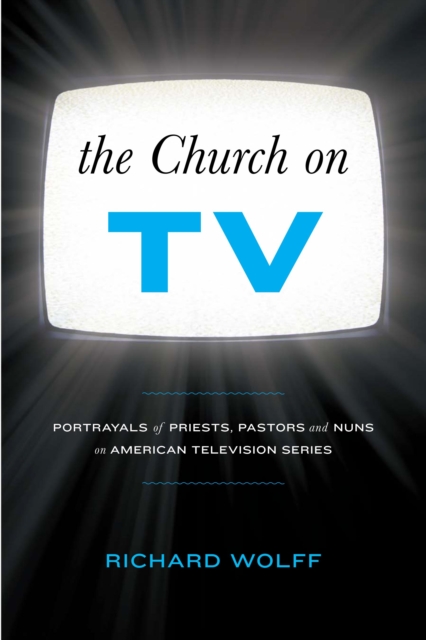
The Church on TV
This work looks at American broadcast network programmes that focused regularly and principally on church leaders. It takes a historical-critical approach, discussing 17 programmes in-depth, and compares this depiction to actual church history.
eBook

Drawn to the Gods
A new world of religious satire illuminated through the
layers of religion and humor that make up the The Simpsons, South
Park and Family Guy. Drawing on the worldviews put forth
by three wildly popular animated shows - The Simpsons, South Park,
and Family Guy- David Feltmate demonstrates how ideas about
religion's proper place in American society are communicated
through comedy. The book includes discussion of a wide range of
American religions, including Protestant and Catholic Christianity,
Judaism, Islam, Buddhism, Native American Religions, New Religious
Movements, \"Spirituality,\" Hinduism, and Atheism. Along the way,
readers are shown that jokes about religion are influential tools
for teaching viewers how to interpret and judge religious people
and institutions. Feltmate, develops a picture of how each show
understands and communicates what constitutes good religious
practice as well as which traditions they seek to exclude on the
basis of race and ethnicity, stupidity, or danger. From Homer
Simpson's spiritual journey during a chili-pepper induced
hallucination to South Park's boxing match between Jesus and Satan
to Peter Griffin's worship of the Fonz, each show uses humor to
convey a broader commentary about the role of religion in public
life. Through this examination, an understanding of what it means
to each program to be a good religious American becomes clear.
Drawn to the Gods is a book that both fans and scholars will enjoy
as they expose the significance of religious satire in these iconic
television programs.
eBook