
Catalogue Search | MBRL


Are you sure you want to remove the book from the shelf?

{{itemTitle}}
1,380,420
result(s) for
"Religions"
Sort by:
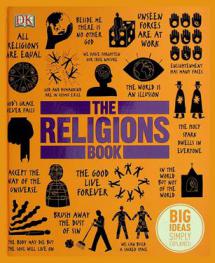
The religions book
An innovative and accessible guide to the world's religions The Religions Book clearly explains the key concepts behind the earliest religious beliefs right up to the world's newest faiths, getting to the heart of what it means to believe. Principles of the five main world religions - Hinduism, Buddhism, Judaism, Christianity, and Islam - as well as ancient and primal belief systems are explored in this informative tome. All the big ideas are simply explained with jargon-free descriptions, step-by-step diagrams, and witty illustrations that encapsulate every aspect of religious thinking. Examine major historical developments and ideas with a universal timeline, providing a global perspective on the origins and major events that have contributed to the growth and spread of religion and spirituality. Along with the teaching highlights of pre-eminent figures such as Mahatma Gandhi, Saint Paul, and Al-Ghazali, you'll also find a handy reference section featuring a glossary of religious terms and a roadmap to all the branches of the major faiths and the points of doctrine or tradition on which they differ. Modern alternative religions and spiritual beliefs from around the world are also explored, putting into context the political and social climates from which they emerged. The Religions Book provides compelling, accessible information perfect for students of religious study or anyone interested in the ideas of ancient and present day faiths and religious philosophies.
Book

Religion and American Foreign Policy, 1945–1960
The Cold War was in many ways a religious war. Presidents Truman and Eisenhower and other American leaders believed that human rights and freedom were endowed by God, that God had called the United States to defend liberty, and that Soviet communism was evil because of its atheism and enmity to religion. Along with security and economic concerns, these religious convictions helped determine both how the United States defined the enemy and how it fought the conflict. Meanwhile, American Protestant churches failed to seize the moment. Internal differences over theology and politics, and resistance to cooperation with Catholics and Jews, hindered Protestant leaders domestically and internationally. Frustrated by these internecine disputes, Truman and Eisenhower attempted to construct a new civil religion to mobilize domestic support for Cold War measures, determine the strategic boundaries of containment, unite all religious faiths against communism, and to undermine the authority of communist governments abroad.
eBook

One world, many religions : the ways we worship
An illustrated introduction to comparative religion, discussing Judaism, Christianity, Islam, Hinduism, Buddhism, Confucianism, and Taoism.
Book

The Science of Religion in Britain, 1860–1915
Marjorie Wheeler-Barclay argues that, although the existence and significance of the science of religion has been barely visible to modern scholars of the Victorian period, it was a subject of lively and extensive debate among nineteenth-century readers and audiences. She shows how an earlier generation of scholars in Victorian Britain attempted to arrive at a dispassionate understanding of the psychological and social meanings of religious beliefs and practices-a topic not without contemporary resonance in a time when so many people feel both empowered and threatened by religious passion-and provides the kind of history she feels has been neglected.
Wheeler-Barclay examines the lives and work of six scholars: Friedrich Max Müller, Edward B. Tylor, Andrew Lang, William Robertson Smith, James G. Frazer, and Jane Ellen Harrison. She illuminates their attempts to create a scholarly, non-apologetic study of religion and religions that drew upon several different disciplines, including anthropology, sociology, the classics, and Oriental studies, and relied upon contributions from those outside as well as within the universities. This intellectual enterprise-variously known as comparative religion, the history of religions, or the science of religion-was primarily focused on non-Christian religions. Yet in Wheeler-Barclay's study of the history of this field within the broad contexts of Victorian cultural, intellectual, social, and political history, she traces the links between the emergence of the science of religion to debates about Christianity and to the history of British imperialism, the latter of which made possible the collection of so much of the ethnographic data on which the scholars relied and which legitimized exploration and conquest. Far from promoting an anti-religious or materialistic agenda, the science of religion opened up cultural space for an exploration of religion that was not constricted by the terms of contemporary conflicts over Darwin and the Bible and that made it possible to think in new and more flexible ways about the very definition of religion.
eBook


Christianity, Islam, and Orisa-Religion
The Yoruba of southwestern Nigeria are exceptional for the copresence among them of three religious traditions: Islam, Christianity, and the indigenousorisareligion. In this comparative study, at once historical and anthropological, Peel explores the intertwined character of the three religions and the dense imbrication of religion in all aspects of Yoruba history up to the present. For over 400 years, the Yoruba have straddled two geocultural spheres: one reaching north over the Sahara to the world of Islam, the other linking them to the Euro-American world via the Atlantic. These two external spheres were the source of contrasting cultural influences, notably those emanating from the world religions. However, the Yoruba not only imported Islam and Christianity but also exported their ownorisareligion to the New World. Before the voluntary modern diaspora that has brought many Yoruba to Europe and the Americas, tens of thousands were sold as slaves in the New World, bringing with them the worship of theorisa. Peel offers deep insight into important contemporary themes such as religious conversion, new religious movements, relations between world religions, the conditions of religious violence, the transnational flows of contemporary religion, and the interplay between tradition and the demands of an ever-changing present. In the process, he makes a major theoretical contribution to the anthropology of world religions.
eBook

Faith
In our world there are many faiths. Celebrate faith around the world in its many expressions: praying, singing, learning, helping, caring and more. Photographs from many different cultures and religions traditions highlight the common threads that bring people together in reverence and joy.
Book

Foreigners and their food
Foreigners and Their Food explores how Jews, Christians, and Muslims conceptualize \"us\" and \"them\" through rules about the preparation of food by adherents of other religions and the act of eating with such outsiders. David M. Freidenreich analyzes the significance of food to religious formation, elucidating the ways ancient and medieval scholars use food restrictions to think about the \"other.\" Freidenreich illuminates the subtly different ways Jews, Christians, and Muslims perceive themselves, and he demonstrates how these distinctive self-conceptions shape ideas about religious foreigners and communal boundaries. This work, the first to analyze change over time across the legal literatures of Judaism, Christianity, and Islam, makes pathbreaking contributions to the history of interreligious intolerance and to the comparative study of religion.
eBook

