
Catalogue Search | MBRL


Are you sure you want to remove the book from the shelf?

{{itemTitle}}
38,906
result(s) for
"Religious Rituals"
Sort by:
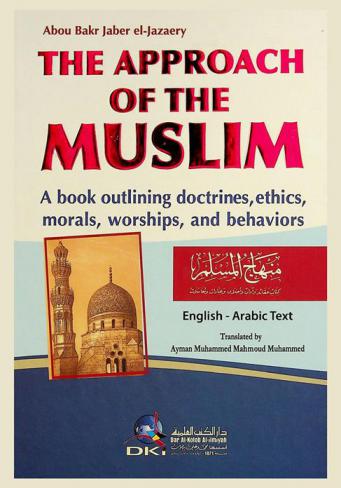

Archaeology, Ritual, Religion
The archaeology of religion is a much neglected area, yet religious sites and artefacts constitute a major area of archaeological evidence. Timothy Insoll presents an introductory statement on the archaeology of religion, examining what archaeology can tell us about religion, the problems of defining and theorizing religion in archaeology, and the methodology, or how to 'do', the archaeology of religion. This volume assesses religion and ritual through a range of examples from around the world and across time, including prehistoric religions, shamanism, African religions, death, landscape and even food. Insoll also discusses the history of research and varying theories in this field before looking to future research directions. This book will be a valuable guide for students and archaeologists, and initiate a major area of debate.
1. Introduction to the Theme 2. History of Research 3. Contemporary Approaches 4. The Case Studies 5. Prospects and Conclusion: Prospects, A Future Approach? Towards a Theory of Archaeology and Religion
Timothy Insoll is Lecturer in Archaeology at the School of Art History and Archaeology at the University of Manchester. His previous publications include The Archaeology of Islam (1999), Archaeology and World Religion (2001) and THe Archaeology of Islam in Sub-Saharan Africal (2003)
eBook
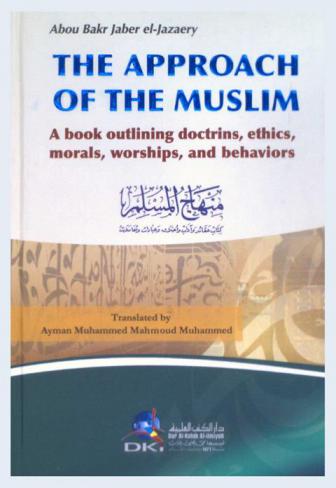

Impact of postmenopausal osteoporosis on the lives of Omani women and the use of cultural and religious practises to relieve pain: A hermeneutic phenomenological study
Osteoporosis is a significant clinical and public health concern worldwide. Despite the impact of this condition on women's lives, most studies have focused on its clinical manifestations, drug efficacy, and medical treatment. Furthermore, most studies have been conducted in the West. This study aimed to uncover the personal experiences of postmenopausal Omani women living with osteoporosis.
In this interpretive phenomenological study, a purposive sample of 15 postmenopausal Omani women with osteoporosis was recruited from primary and secondary care facilities in Muscat, Oman. Semi-structured one-to-one interviews were conducted via Zoom and telephone because of coronavirus disease 2019 restrictions. The interviews were audio-recorded, and the Ajjawi and Higgs framework was used to analyse the data thematically.
The following key themes were constructed from the interviews: the impact of osteoporosis on religious practices, cultural and social life, and financial status, and the benefits derived from religious and cultural practices and rituals, including Muslim prayer, recitation of Quranic verses, and herbal remedies to cope with osteoporosis-related pain and suffering.
Osteoporosis and fragility fractures have a significant impact on the religious, cultural, and financial lives of postmenopausal Omani women with osteoporosis. Muslim prayers, recitation of Quranic verses, and herbal remedies are coping strategies for pain in this population.
Postmenopausal Omani women with osteoporosis participated in this study through interviews and contributed their lived experiences. Orthopaedic doctors helped recruit patients with postmenopausal osteoporosis.
Journal Article

The Ties That Bind Us
Most social scientists endorse some version of the claim that participating in collective rituals promotes social cohesion. The systematic testing and evaluation of this claim, however, has been prevented by a lack of precision regarding the nature of both “ritual” and “social cohesion” as well as a lack of integration between the theories and findings of the social and evolutionary sciences. By directly addressing these challenges, we argue that a systematic investigation and evaluation of the claim that ritual promotes social cohesion is achievable. We present a general and testable theory of the relationship between ritual, cohesion, and cooperation that more precisely connects particular elements of “ritual,” such as causal opacity and emotional arousal, to two particular forms of “social cohesion”: group identification and identity fusion. Further, we ground this theory in an evolutionary account of why particular modes of ritual practice would be adaptive for societies with particular resource-acquisition strategies. In setting out our conceptual framework, we report numerous ongoing investigations that test our hypotheses against data from controlled psychological experiments as well as from the ethnographic, archaeological, and historical records.
Journal Article

Synchrony and Cooperation
Armies, churches, organizations, and communities often engage in activities--for example, marching, singing, and dancing--that lead group members to act in synchrony with each other. Anthropologists and sociologists have speculated that rituals involving synchronous activity may produce positive emotions that weaken the psychological boundaries between the self and the group. This article explores whether synchronous activity may serve as a partial solution to the free-rider problem facing groups that need to motivate their members to contribute toward the collective good. Across three experiments, people acting in synchrony with others cooperated more in subsequent group economic exercises, even in situations requiring personal sacrifice. Our results also showed that positive emotions need not be generated for synchrony to foster cooperation. In total, the results suggest that acting in synchrony with others can increase cooperation by strengthening social attachment among group members.
Journal Article


Rational ritual
Why do Internet, financial service, and beer commercials dominate Super Bowl advertising? How do political ceremonies establish authority? Why does repetition characterize anthems and ritual speech? Why were circular forms favored for public festivals during the French Revolution? This book answers these questions using a single concept: common knowledge.
Game theory shows that in order to coordinate its actions, a group of people must form \"common knowledge.\" Each person wants to participate only if others also participate. Members must have knowledge of each other, knowledge of that knowledge, knowledge of the knowledge of that knowledge, and so on. Michael Chwe applies this insight, with striking erudition, to analyze a range of rituals across history and cultures. He shows that public ceremonies are powerful not simply because they transmit meaning from a central source to each audience member but because they let audience members know what other members know. For instance, people watching the Super Bowl know that many others are seeing precisely what they see and that those people know in turn that many others are also watching. This creates common knowledge, and advertisers selling products that depend on consensus are willing to pay large sums to gain access to it. Remarkably, a great variety of rituals and ceremonies, such as formal inaugurations, work in much the same way.
By using a rational-choice argument to explain diverse cultural practices, Chwe argues for a close reciprocal relationship between the perspectives of rationality and culture. He illustrates how game theory can be applied to an unexpectedly broad spectrum of problems, while showing in an admirably clear way what game theory might hold for scholars in the social sciences and humanities who are not yet acquainted with it.
In a new afterword, Chwe delves into new applications of common knowledge, both in the real world and in experiments, and considers how generating common knowledge has become easier in the digital age.
eBook