
Catalogue Search | MBRL


Are you sure you want to remove the book from the shelf?

{{itemTitle}}
101
result(s) for
"Religious architecture Europe"
Sort by:
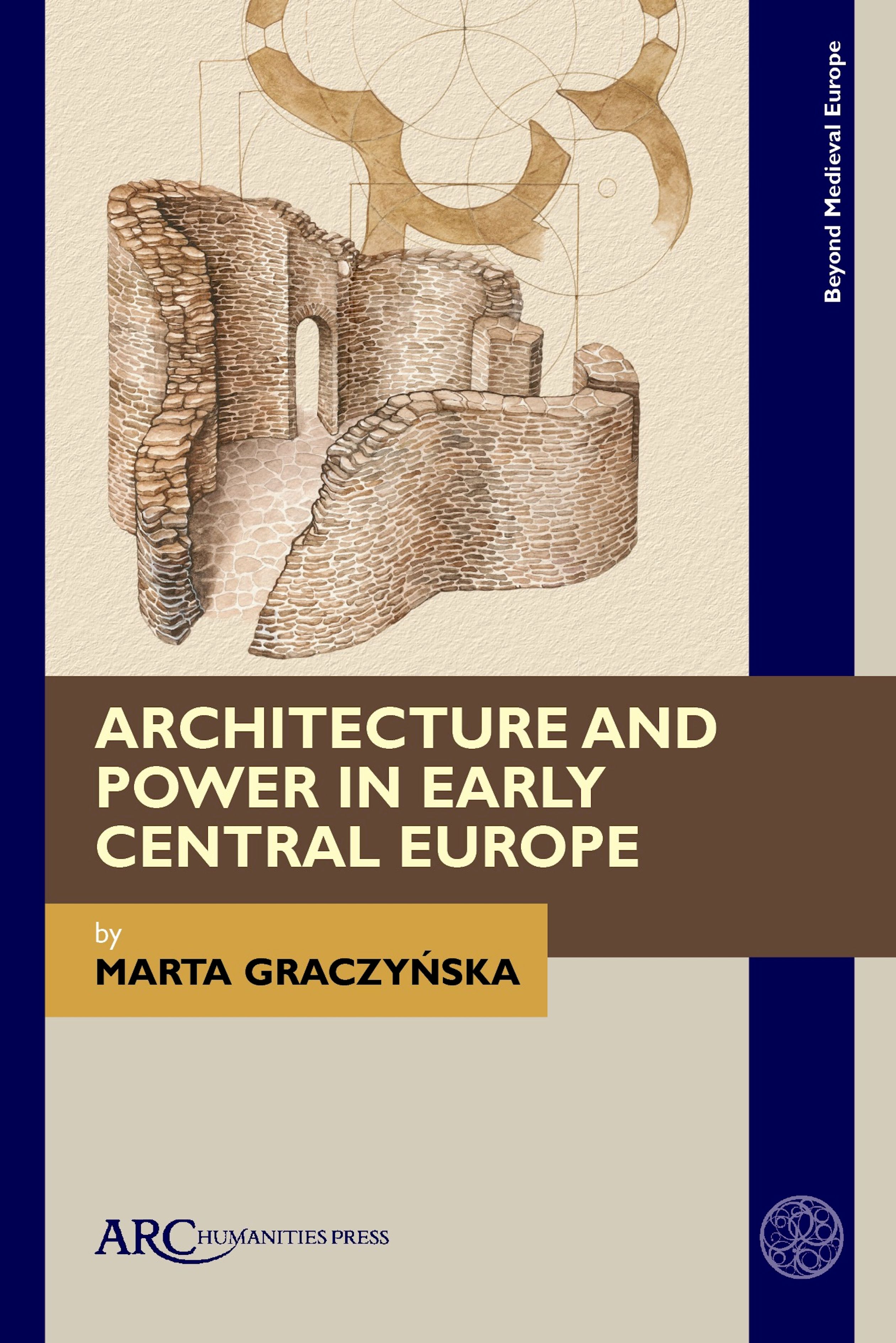
Architecture and Power in Early Central Europe
The book presents the panorama of social, cultural, and religious changes in the states of the Piast, Premyslid, and Arpad dynasties. Major change occurred in the tenth century and again at the turn of the eleventh century. Given the scarcity of written sources, the author employs an analysis of architectural forms which she applies to buildings founded by dukes, kings, and nobles at this period.Architecture serves as a reliable source of knowledge and can be successfully read as a text using comparative analysis, iconology, and semiotics. No piece of art appeared without an historical context: forms, functions, and styles are all documents created by its founders and creators. The conclusions of this research help us to understand the era that shaped the foundations of the Polish, Czech, and the Hungarian states.
eBook
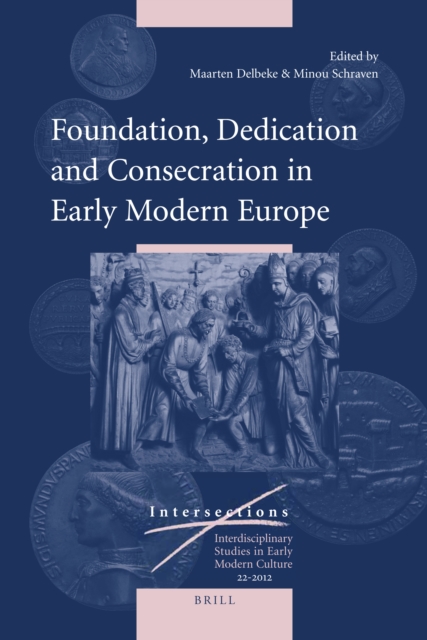
Foundation, Dedication and Consecration in Early Modern Europe
Bringing together contributions from art history, architectural history, historiography and history of law, this volume is the first comprehensive exploration of the manifold meanings of foundation, dedication and consecration rituals and narratives in early modern culture.
eBook

The Architecture of Gender
This article analyses the architecture of women’s sections in eastern European synagogues and argues that two profound changes took place, one in the eighteenth century and the second in the second half of the nineteenth century. The first was moving of the women’s section from an external (but not detached) annex into the main volume of the synagogue; the second was the introduction of women’s galleries into the prayer halls. The first move coincided with the alteration of the woman’s status in Jewish traditional society, while the second move resulted from the arrival of modernity and reflected the changing place of women in eastern European Jewish society.
Journal Article

Castle and Cathedral
This book takes a new approach to interwar Prague by addressing religion as an integral part of the city’s cultural history. Berglund views Prague’s cultural history in the broader context of religious change and secularization in 20th-century Europe. Based on detailed knowledge of sources, the monograph explores the interdisciplinary linkages between politics, architecture and theology in the building of symbolism and a “new mythology\" of the first Czechoslovak republic (1918-1938). Berglund´s text provides an important service for understanding both Czech history as well as current Czech political debate. The author’s method can be characterized as culture history, able to connect several disciplines, emphasizing common topic (religion, politics, symbolics). Modern Czech elites, superficially characterized as “ateistic\", appears in a new light to be deeply religious, a transition from more traditional, (mostly) Catholic religiosity, to a concept of a new, modern, ethical religion. The study incorporates biographical research, focusing on three principal characters: Tomás Garrigue Masaryk, Czechoslovakia’s first president; his daughter Alice Garrigue Masaryková, founding director of the Czechoslovak Red Cross; and Joze Plecnik, the Slovenian architect who directed the renovations of Prague Castle.
eBook
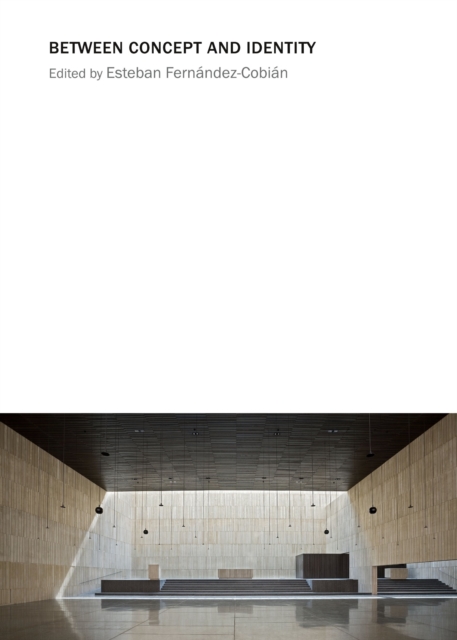
Between Concept and Identity
The identity of places of worship is one of the most difficult problems faced by religious architecture at the start of this new millennium. Contemporary globalising experiences demand, peremptorily, a reflection, both conceptual and situational, on the origin of objects, people and institutions. Nevertheless, the chance of these migration flows annihilating already-existing religious identities is perceived as a problem. This problem is directly linked to the survival of architecture as a s.
eBook
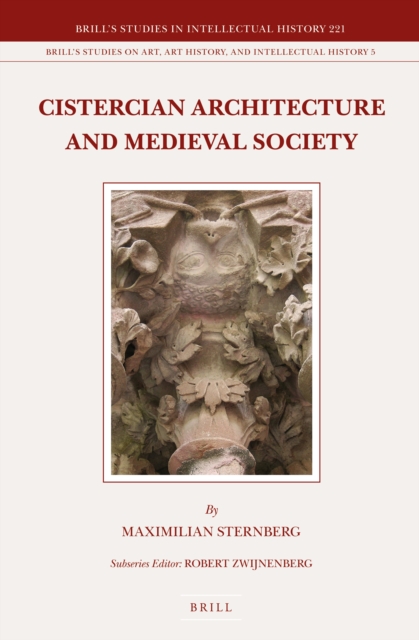
Cistercian Architecture and Medieval Society
In Cistercian Architecture and Medieval Society Max Sternberg offers an account of the social functions of the built environment in medieval monasticism, focusing in particular on the white order of the Languedoc in the 13th century.
eBook

Chronicles in Stone
Chronicles in Stone is a study of the powerful and pervasive myth of the Russian Northwest, its role in forming Soviet and Russian identities, and its impact on local communities. Combining detailed archival research, participant observation and oral history work, it explores the transformation of three northwestern Russian towns from provincial backwaters into the symbolic homelands of the Soviet and Russian nations.
The book's central argument is that the Soviet state exploited the cultural heritage of the Northwest to craft patriotic narratives of the people's genius, heroism and strength that could bind the nation together after 1945. Through sustained engagement with local voices, it reveals the ways these narratives were internalized, revised, and resisted by the communities living in the region.
Donovan provides an alternative lens through which to view the rise of Russian patriotic consciousness in the twentieth and twenty-first centuries, adding a valuable regional dimension to our knowledge of Russian nation building and identity politics.
eBook

The viennese café and fin-de-siècle culture
The Viennese café was a key site of urban modernity around 1900. In the rapidly growing city it functioned simultaneously as home and workplace, affording opportunities for both leisure and intellectual exchange. This volume explores the nature and function of the coffeehouse in the social, cultural, and political world of fin-de-siècle Vienna. Just as the café served as a creative meeting place within the city, so this volume initiates conversations between different disciplines focusing on Vienna at the beginning of the twentieth century. Contributions are drawn from the fields of social and cultural history, literary studies, Jewish studies and art, and architectural and design history. A fresh perspective is also provided by a selection of comparative articles exploring coffeehouse culture elsewhere in Eastern Europe.
eBook

Polish Jewish Culture Beyond the Capital
Polish Jewish Culture beyond the Capital: Centering the
Periphery is a path-breaking exploration of the diversity and
vitality of urban Jewish identity and culture in Polish lands from
the second half of the nineteenth century to the outbreak of the
Second World War (1899-1939). In this multidisciplinary essay
collection, a cohort of international scholars provides an
integrated history of the arts and humanities in Poland by
illuminating the complex roles Jews in urban centers other than
Warsaw played in the creation of Polish and Polish Jewish culture.
Each essay presents readers with the extraordinary production and
consumption of culture by Polish Jews in literature, film, cabaret,
theater, the visual arts, architecture, and music. They show how
this process was defined by a reciprocal cultural exchange that
flourished between cities at the periphery-from Lwów and Wilno to
Kraków and Łódź-and international centers like Warsaw, thereby
illuminating the place of Polish Jews within urban European
cultures. Companion website (https://polishjewishmusic.iu.edu)
eBook