
Catalogue Search | MBRL


Are you sure you want to remove the book from the shelf?

{{itemTitle}}
42
result(s) for
"Religious architecture Middle East History."
Sort by:


Synagogues in the Islamic World
This beautifully illustrated volume looks at the spaces created by and for Jews in areas under the political or religious control of Muslims in regions such as Central Asia, the Middle East, North Africa and Spain.
eBook


Rum Seljuq Architecture, 1170-1220
This lavishly illustrated volume presents the major surviving monuments of the early period of the Rum Seljuqs, the first major Muslim dynasty to rule Anatolia. A much-needed overview of the political history of the dynasty provides the context for the study of the built environment which follows. The book addresses the most significant monuments from across the region: a palace, a minaret and a hospital are studied in detail, along with an overview of the decorative portals attached to a wide array of different building types. The case studies are used to demonstrate the key themes and processes of architectural synthesis and development that were under way at the time, and how they reflect the broader society.
eBook
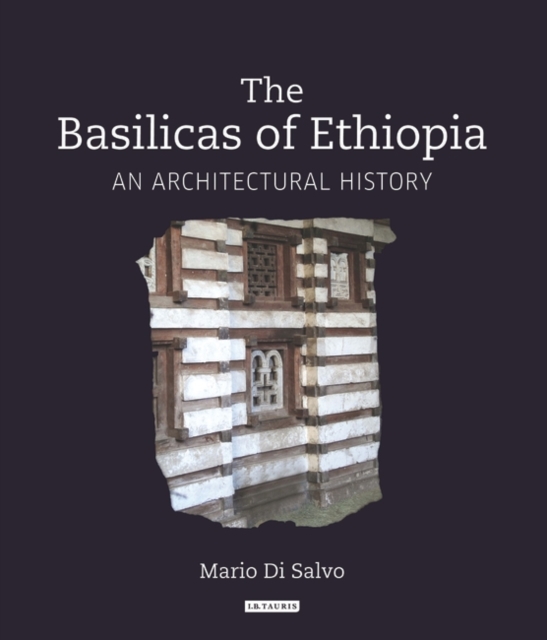
The Basilicas of Ethiopia
The basilica is symbolic of the history of Christianity in Ethiopia. Aizan, the first Christian king of the Aksumite empire was responsible for the creation of the large, five-aisled church of M?ry?m ??yon, sadly destroyed in 1535, and since then many hundreds of basilicas have been built in Ethiopia, many, including the UNESCO World Heritage site of Lalibela, literally 'hewn from the rock'. In this book, architectural historian and architect Mario di Salvo considers the unique architectural features of Ethiopia's basilicas and explains how they developed over time. Featuring almost 200 colour illustrations, this book is an attractive and comprehensive guide to some of Ethiopia's most inspiring religious buildings.
eBook

Religion, History, and Place in the Origin of Settled Life
This volume explores the role of religion and ritual in the origin of settled life in the Middle East, focusing on the repetitive construction of houses or cult buildings in the same place. Prominent archaeologists, anthropologists, and scholars of religion working at several of the region's most important sites-such as Çatalhöyük, Göbekli Tepe, Körtik Tepe, and Aşıklı Höyük-contend that religious factors significantly affected the timing and stability of settled economic structures.Contributors argue that the long-term social relationships characteristic of delayed-return agricultural systems must be based on historical ties to place and to ancestors. They define different forms of history-making, including nondiscursive routinized practices as well as commemorative memorialization. They consider the timing in the Neolithic of an emerging concern with history-making in place in relation to the adoption of farming and settled life in regional sequences. They explore whether such correlations indicate the causal processes in which history-making, ritual practices, agricultural intensification, population increase, and social competition all played a role.Religion, History, and Place in the Origin of Settled Lifetakes a major step forward in understanding the adoption of farming and a settled way of life in the Middle East by foregrounding the roles of history-making and religious ritual. This work is relevant to students and scholars of Near Eastern archaeology, as well as those interested in the origins of agriculture and social complexity or the social role of religion in the past.Contributors: Kurt W. Alt, Mark R. Anspach, Marion Benz, Lee Clare, Anna Belfer-Cohen, Morris Cohen, Oliver Dietrich, Güneş Duru, Yilmaz S. Erdal, Nigel Goring-Morris, Ian Hodder, Rosemary A. Joyce, Nicola Lercari, Wendy Matthews, Jens Notroff, Vecihi Özkaya, Feridun S. Şahin, F. Leron Shults, Devrim Sönmez, Christina Tsoraki, Wesley Wildman
eBook

Temples and Sanctuaries from the Early Iron Age Levant
The vision for this impressive work on temple architecture in
the Levant grew out of the author's work on Roman temple designs on
the Iberian Peninsula and continual references to Semitic
influences on the designs of sanctuaries both on the Peninsula and
in North Africa. It was assumed that Phoenician colonization had
brought with it the full flowering of Levantine architectural
forms. As Mierse began to search for relevant material on the
ancient Levant, however, he discovered that no overall synthesis
had ever been written, and it was virtually impossible to recognize
and isolate Semitic elements in architectural forms. This book
addresses this need.
The analysis presented here is comparative and follows the
methodology most commonly employed by architectural historians
throughout the twentieth century. It is a formalist approach and
permits the isolation of lines of continuity and the detection of
discontinuity. While Mierse relies heavily on this traditional
method, he also introduces some approaches from the postprocessual
school of archaeology in its attempts to discern an appropriate way
for cult to be investigated by archaeology.
The sanctuaries that this book presents were erected between the
end of the Late Bronze Age (conventionally assigned the date of
1200 B.C.E.) and the annexation of the Levantine region into the
Assyrian Empire (when Mesopotamia again became highly influential
in the region). The topic concerns temples that were produced
during the period when the Levant was its own entity and
politically independent of Egypt, Mesopotamia, or Anatolia. During
this period, the designs chosen for inclusion in this book must
reflect local choices rather than resulting from imposed outside
concepts.
The architecture that emerged in the wake of the downfall of the
Late Bronze Age and the subsequent reemergence of social
cohesiveness manifested significant changes in form and function.
The five centuries under review reveal exciting developments in
sacred architecture and show that, although the architects of the
first millennium B.C.E. maintained important lines of continuity
with the developments of the previous two millennia, they were also
capable of creating novel forms to meet new needs.
Included in this fascinating volume are 90 pages of photos,
drawings, floor plans, and maps.
eBook

Natural Materials of the Holy Land and the Visual Translation of Place, 500-1500
i
Natural Materials of the Holy Land and the Visual Translation of Place, 500-1500, focuses on the unique ways that natural materials carry the spirit of place. Since early Christianity, wood, earth, water and stone were taken from loca sancta to signify them elsewhere. Academic discourse has indiscriminately grouped material tokens from holy places and their containers with architectural and topographical emulations, two-dimensional images, and bodily relics. However, unlike textual or visual representations, natural materials do not describe or interpret the Holy Land; they are part of it. Tangible and timeless, they realize the meaning of their place of origin in new locations.
What makes earth, stones or bottled water transported from holy sites sacred? How do they become pars pro toto, signifying the whole from which they were taken? This book will examine natural media used for translating loca sancta, the processes of their sanctification and how, although inherently abstract, they become charged with meaning. It will address their metamorphosis, natural or induced; how they change the environment to which they are transported; their capacity to translate a static and distant site elsewhere; the effect of their relocation on users/viewers; and how their containers and staging are used to communicate their substance.ii
iii
eBook
The Variety of Local Religious Life in the Near East
This interdisciplinary collection of articles brings out the variety of local and regional patterns of worship in the Near East, and in this manner contributes to our quest for understanding the polytheistic cults of the region as a whole.
eBook
The hidden art of Islam
Muslim belief and tradition specifies that there should be no depictions of God or the Prophet Muhammad. In religious contexts, this constraint extends to human figures and other living creatures. Host Rageh Omaar traces the effect of these beliefs over the centuries on the art and artists of the Islamic world.
Streaming Video