
Catalogue Search | MBRL


Are you sure you want to remove the book from the shelf?

{{itemTitle}}
11
result(s) for
"Religious awakening Egypt."
Sort by:
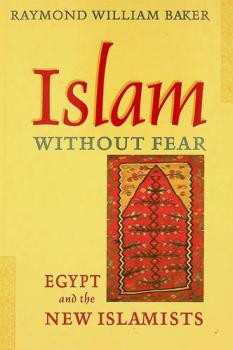
Islam without fear : Egypt and the new Islamists
\"For the last several decades an influential group of Egyptian scholars and public intellectuals has been having a profound effect in the Islamic world. Raymond Baker offers a portrait of these New Islamists - Islamic scholars, lawyers, judges, and journalists who provide the moral and intellectual foundations for a more fully realized Islamic community, open to the world and with full rights of active citizenship for women and non-Muslims.\" \"The New Islamists have a record of constructive engagement in Egyptian public life, balanced by an unequivocal critique of the excesses of Islamist extremists. Baker shows how the New Islamists are translating their thinking into action in education and the arts, economics and social life, and politics and foreign relations despite an authoritarian political environment.\" \"For the first time, Baker allows us to hear in context the most important New Islamist voices, including Muhammad al Ghazzaly, Kamal Abul Magd, Muhammad Selim al Awa, Fahmy Huwaidy, Tareq al Bishry, and Yusuf al Qaradawy - regarded by some as the most influential Islamic scholar in the world today.\"--Jacket.
Book

Performing Piety
In the 1980s, Egypt witnessed a growing revival of religiosity among large sectors of the population, including artists. Many pious stars retired from art, \"repented\" from \"sinful\" activities, and dedicated themselves to worship, preaching, and charity. Their public conversions were influential in spreading piety to the Egyptian upper class during the 1990s, which in turn enabled the development of pious markets for leisure and art, thus facilitating the return of artists as veiled actresses or religiously committed performers.
Revisiting the story she began in\"A Trade like Any Other\": Female Singers and Dancers in Egypt, Karin van Nieuwkerk draws on extensive fieldwork among performers to offer a unique history of the religious revival in Egypt through the lens of the performing arts. She highlights the narratives of celebrities who retired in the 1980s and early 1990s, including their spiritual journeys and their influence on the \"pietization\" of their fans, among whom are the wealthy, relatively secular, strata of Egyptian society. Van Nieuwkerk then turns to the emergence of a polemic public sphere in which secularists and Islamists debated Islam, art, and gender in the 1990s. Finally, she analyzes the Islamist project of \"art with a mission\" and the development of Islamic aesthetics, questioning whether the outcome has been to Islamize popular art or rather to popularize Islam. The result is an intimate thirty-year history of two spheres that have tremendous importance for Egypt-art production and piety.
eBook

Islamic Reform and Arab Nationalism
Bridging African and Arab histories, this book examines the relationship between Islam, nationalism and the evolution of identity politics from late 19 th Century to World War II. It provides a cross-national, cross-regional analysis of religious reform, nationalism, anti-colonialism from Zanzibar to Oman, North Africa and the Middle East.
This book widens the scope of modern Arab history by integrating Omani rule in Zanzibar in the historiography of Arab nationalism and Islamic reform. It examines the intellectual and political ties and networks between Zanzibar, Oman, Algeria, Egypt, Istanbul and the Levant and the ways those links shaped the politics of identity of the Omani elite in Zanzibar. Out of these connections emerges an Omani intelligentsia strongly tied to the Arab cultural nahda and to movements of Islamic reform, pan-Islamism and pan-Arabism. The book examines Zanzibari nationalism, as formulated by the Omani intelligentsia, through the prism of these pan-Islamic connections and in the light of Omani responses to British policies in Zanzibar. The author sheds light on Ibadism - an overlooked sect of Islam - and its modern intellectual history and the role of the Omani elite in bridging Ibadism with pan-Islamism and pan-Arabism.
Although much has been written about nationalism in the Arab world, this is the first book to discuss nationalism in Zanzibar in the wider context of religious reform and nationalism in the Arab world, and the first to offer a new framework of analysis to the study of pan-Islamic and pan-Arab movements and nationalism.
Amal N. Ghazal is Assistant Professor of History at Dalhousie University, Canada.
1. Arabs in Zanzibar: Revisiting History 2. The Ibadi nahda in Oman and Zanzibar: from tajdid to anti-Colonialism 3. Zanzibar and Mzab: Historical Legacies and Colonial Encounters 4. Zanzibar in the realm of the Mashriq 5. Nai’ir al Bahlani: “A man in a nation and a nation in a man” 6. In the Realm of Salafi Islam: The Ibadi Diaspora, the Arabic Press and the Making of Zanzibari Nationalism 7. Guarding the watan : Education and Identity in Interwar Zanzibar
eBook

Remaking muslim politics
There is a struggle for the hearts and minds of Muslims unfolding across the Islamic world. The conflict pits Muslims who support pluralism and democracy against others who insist such institutions are antithetical to Islam. With some 1.3 billion people worldwide professing Islam, the outcome of this contest is sure to be one of the defining political events of the twenty-first century.
Bringing together twelve engaging essays by leading specialists focusing on individual countries, this pioneering book examines the social origins of civil-democratic Islam, its long-term prospects, its implications for the West, and its lessons for our understanding of religion and politics in modern times.
Although depicted by its opponents as the product of political ideas \"made in the West\" civil-democratic Islam represents an indigenous politics that seeks to build a distinctive Islamic modernity. In countries like Turkey, Iran, Malaysia, and Indonesia, it has become a major political force. Elsewhere its influence is apparent in efforts to devise Islamic grounds for women's rights, religious tolerance, and democratic citizenship. Everywhere it has generated fierce resistance from religious conservatives. Examining this high-stakes clash,Remaking Muslim Politicsbreaks new ground in the comparative study of Islam and democracy. The contributors are Bahman Baktiari, Thomas Barfield, John R. Bowen, Dale F. Eickelman, Robert W. Hefner, Peter Mandaville, Augustus Richard Norton, Gwenn Okruhlik, Michael G. Peletz, Diane Singerman, Jenny B. White, and Muhammad Qasim Zaman.
eBook

Religious radicalism after the Arab uprisings
Gathering field work from almost twenty countries along with in-depth analysis and case studies, Religious Radicalism after the Arab Uprisings explores how radical groups, governments, and publics have responded to the Arab uprisings of 2011 and how conflicts that many thought were coming to an end are likely to continue indefinitely.
eBook

Voice of an Exile
A respected Islamic scholar details how he was betrayed by colleagues, declared an apostate, and banished from his home country. In 1995 Ayman al-Zawahiri, a prominent terrorist figure recently associated with Al Queda and al-Jihad, issued a bounty against Dr. Nasr Abu Zaid, a respected Islamic scholar at Cairo University. What was Zaid's offense? Arguing that Islam's holy texts should be interpreted in the historical and linguistic context of their time, and that new interpretations should account for social change. His controversial claim that the Qur'an be interpreted metaphorically rather than literally further enraged fundamentalists. Labeled an apostate by the Cairo court of appeals, his life was threatened and he was forced to flee to the Netherlands with his wife. A professor of Arabic and Islamic studies at Leiden University in his adopted country, this progressive Islamic scholar insists that change is still possible and that new understandings of Islam can be accepted and advanced. Forgoing claims that Islam is a violent religion, Zaid shows us that, above all, justice and obedience lies at the heart of the Qur'an. At the outset of this book, we find Zaid growing up in Quhafa, a village in northern Egypt. Islam gives meaning and definition to his life. As he matures, we see him sorting through Egypt's various political developments and upheavals. Zaid carefully weaves such developments into the events of his own life—his father's death, raising his younger siblings, attending Cairo University, his study abroad, his marriages, the events leading to his exile, and his visit to Egypt after a seven-year absence. Through it all, we see him advancing in his academic career and applying new skills to his study and interpretation of the Qur'an. He wrestles with subjects such as polygamy, wife beating, inheritance, and the practice of usury in Islamic cultures. He asserts and illustrates that Islam must be separate from the State in order to protect the religion from political manipulation. Zaid's personal story and academic pursuits, reflecting the social reality of the broader culture, offer new perspectives on Islam and provide hope to Muslims who feel their religion has been misrepresented and misunderstood. Testimonials Nasr combines in his writing audacious intellectual criticism, deep understanding of Islam, devotion to Egyptian people and commitment to the Western-European contributions to the emancipation of human condition. -Mohammed Arkoun^LEmeritus Professor of the History of Islamic Thought^LSorbonne (Paris III) ^IVoice of an Exile,^R more engrossing than a novel, is the gripping autobiography of a life with Islam. It is a tale of academic and religious intrigue, filled with romance, exile, honor and revenge, and heroism and cowardice, all played out on the public stage... Nasr Abu-Zaid is not the only Muslim intellectual in exile from his home country, but he has produced the most articulate and accessible book about what it means to be an engages Muslim thinker today. Fresh and insightful, this is a book for general readers and college courses, as well as for everyone concerned with Islam and the role of religion in public life today. -Dale F. Eickelman^LDartmouth College This rare glimpse behind the scenes of the Islamic academic world is rich with anecdotes and insights that signal both the grave difficulties and the creative possibilities for Islam in the years ahead. The book could easily become a supplementary text in courses on Islam or global religious concerns. Scholars, students, and the public will enjoy and benefit from these frank discussions of a life lived on the creative edge of Islam. -Cliff Edwards^LDirector and Professor of Religious Studies^LVirginia Commonwealth University Nasr Abu Zaid is a heroic figure, a scholar who has risked everything to restore the traditions of intellectual inquiry and tolerance that for so long characterized Islamic culture. ^IVoice of an Exile^R describes the ongoing conflict to determine the future shape of one of the world's great religions, a struggle with vast consequences for politics as well as religion and scholarship. The book is simply awe-inspiring. -Philip Jenkins,^LDistinguished Professor of History and Religious Studies,^LPennsylvania State University A clarion call to any society that would limit free expression of ideas. His book is no mere autobiography, but the inspiring voice of a fiercely independent spirit, a voice we need to hear and learn from. -Jonathan E. Brockopp,^LAssociate Professor of Religious Studies and History^LPennsylvania State University Nasr Hamed Abou Zaid uses his personal life history as a lens through which to examine Islam and its civilization, the history of modern Egypt, Arab society and culture, contemporary politics, and the predicament in which Islam and Muslims find themselves in the 21st century... Written with grace, humor, and compassion, ^IVoice of an Exile^R deserves a wide readership among students and scholars. -David S. Powers,^LArabic and Islamic Studies^LCornell University
eBook

Muhammad Abduh
Muhammad Abduh (1849-1905) is widely regarded as the founder of Islamic modernism. Egyptian jurist, religious scholar and political activist, he sought to synthesise Western and Islamic cultural values. Arguing that Islam is essentially rational and fluid, Abduh maintained that it had been stifled by the rigid structures implemented in the generations since Muhammad and his immediate followers. In this absorbing biography, Mark Sedgwick examines whether Abduh revived true Islam or instigated its corruption.
eBook
Islamic Reformism and Christianity
Drawing on newly-discovered archival materials, the study offers a comprehensive and critical reading of the polemics of Sheikh Rashīd Riḍā and his associates on Christianity in al-Manār, and their fascinating encounters with Arab Christians and Christian missionary movements.
eBook

Shaping the Current Islamic Reformation
The essays that comprise this study eschew stereotypical representations of a politicized Islam in the Mediterranean Region. The contributors consider the reality that lies behind current issues in the area and the role that an embedded Islam has played or may play in the region.
1.The Shaping of Current Islamic Reformation 2. The Politics of the \"umma\": States and community in Islamic movements 3. Sunni and Shi'i Networking in the Middle East 4. New Centres and Peripheries in European Islam 5. From Jurists' Law to Statute Law or What Happens when the Shari'a is Codified 6. Political Aspects of Modern Shi'i Legal Discussions: Humayni and Khu'i on \"ijtihad\" and \"qada\" 7. Islamic Law as a Core for Political Law: The withering of an Islamist illusion 8. Arab Government Responses to Islamic Finance: The Cases of Egypt and Saudi Arabia 9. Islam Interactive: Mediterranean Islamic expression on the World Wide Web 10. Islamic Activism and Social Movement Theory: A new direction for research
eBook