
Catalogue Search | MBRL


Are you sure you want to remove the book from the shelf?

{{itemTitle}}
43,880
result(s) for
"Religious buildings"
Sort by:

Worship sound spaces : architecture, acoustics and anthropology
\"Worship Sound Spaces unites specialists from architecture, acoustic engineering and the social sciences to encourage closer analysis of the sound environments within places of worship. Gathering a wide range of case studies set in Europe, Asia, North America, the Middle East, and Africa, the book presents investigations into Muslim, Christian and Hindu spaces. These diverse cultural contexts demonstrate the composite nature of designing and experiencing places of worship. Beginning with a historical overview of the three primary indicators in acoustic design of religious buildings, reverberation, intelligibility and clarity, the second part of this edited collection offers a series of field studies devoted to perception, before moving onto recent examples of restoration of the sound ambiances of former religious buildings. Written for academics and students interested in architecture, cultural heritage, acoustics, sensory studies and sound\"-- Provided by publisher.
Book
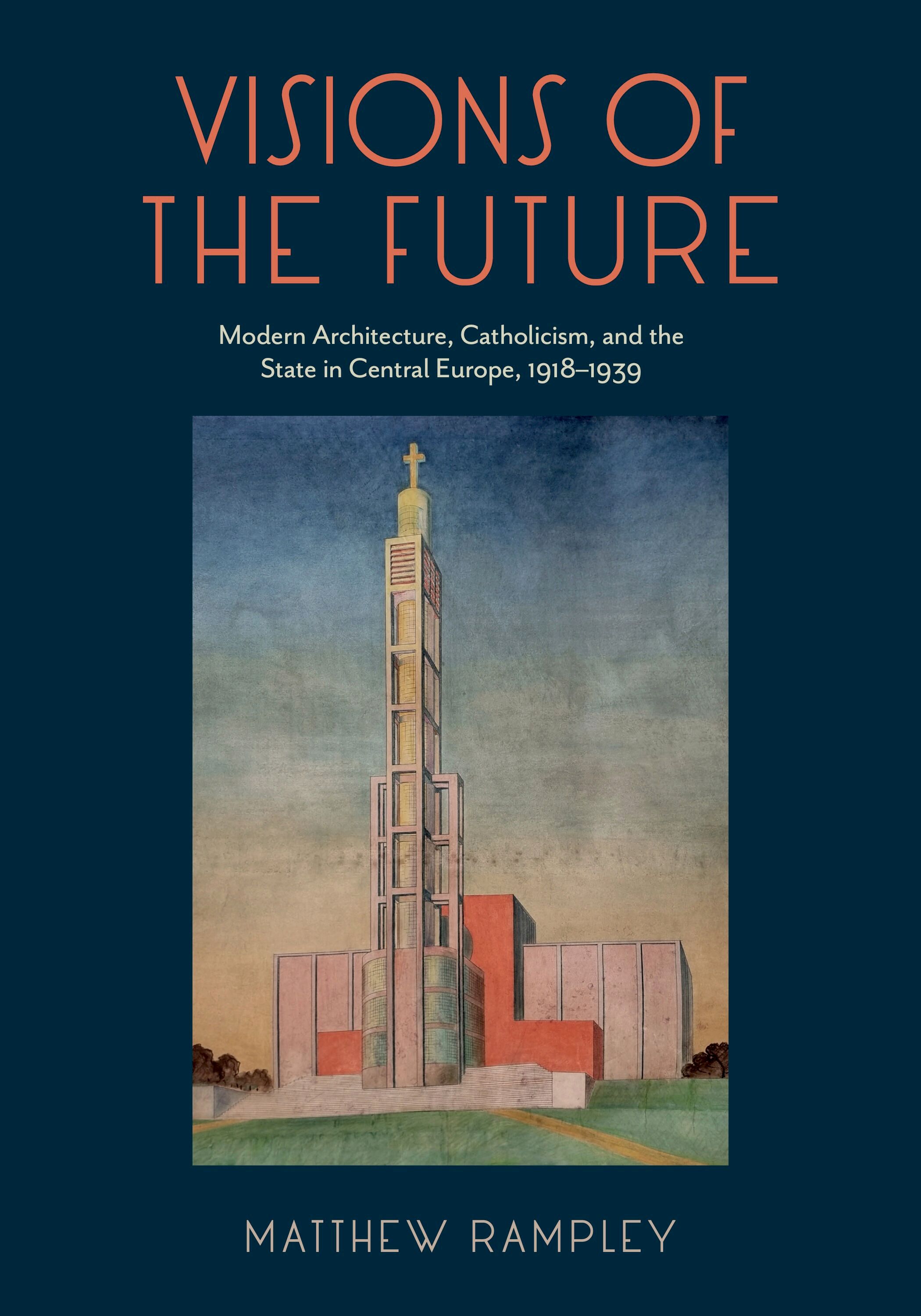
Visions of the Future
Some of the most striking examples of modernist architecture are churches, yet they have seldom been subject to extended critical analysis. In this book, Matthew Rampley provides just such an analysis, focusing on the Catholic Church in interwar Austria, Czechoslovakia, and Hungary. A powerful institution in the Habsburg Empire, the Catholic Church continued to be a central social, political, and cultural agent after 1918, working in alliance with political parties and national governments to promote visions of a new national culture. As a result, church building took on an important ideological and political function. Rampley’s study is set against the backdrop of two interrelated issues: the role of architecture in the Catholic Church’s response to an increasingly secular modernity, and church architecture as part of the Church’s attempts to shape social and political life in the states that emerged after the collapse of Austria-Hungary. Rampley also examines the aesthetic, cultural, and political contexts that informed architectural projects, including the conflict between Catholicism and social democracy, the embrace of fascism, Catholic theories of technology, and discourses of regionalism and ruralism. In bringing to light an untold chapter in the history of modern architecture, this book also engages in methodological reflection on the implications of the study of modern church architecture for the historiography of modernism. This book will appeal to students and scholars of architectural history, religious and political history, and interwar Central European history.
eBook

Aesthetic and Educational Aspects of Contact with Contemporary Religious Architecture
This article addresses the issue of the importance of contemporary architecture—especially Christian architecture—for the aesthetic and spiritual development of an individual. It also highlights the educational aspect that may arise in the framework of the contact of a human with the works of religious architecture. Among many things, the article points out the values of truth and beauty in the space of the sacrum. The major importance in the process of human development involves personal, individual and group experiences of meetings in various areas of religious architecture that operate with the language of signs and symbols, modern artistic forms, single-space harmony, and atmosphere—an invisible order of things. In recent years, a number of studies have been carried out that attempted to define what makes the place of sacrum sufficiently meaningful, mysterious, and still necessary in order to establish a spiritual relationship with the community of believers and with God, which is relevant in one’s transition to adulthood.
Journal Article

Atone
The relationship between religion and conflict has generated considerable academic and political debate. Although the majority of religions and spiritual traditions are replete with wisdom that propagates a broader unity among human beings, these same examples have been used to legitimize hatred and fear. While some studies claim that religion facilitates peacebuilding, reconciliation, and healing, others argue that religion exacerbates hostility, instigates vengeance-seeking behaviors, and heightens conflict. But religion does not act by itself, human beings are responsible for acts of peace or conflict, of division or reconciliation, in the name of religion. This book addresses these rather complex issues from the perspective of reconciliation, or atonement, to advance both the frontiers of knowledge and the global search for alternative paths to peace. The contributions in the volume focus in three areas: (1) Reconciling Religious Conflicts, (2) Reconciling Conflict through Religion, and (3) Religious Reconciliations. In each of these sections scholars, practitioners, and religious leaders address specific examples that highlight the complex intersections of religious practices with global conflict and reconciliation efforts. This informative and provocative book is relevant for students and faculty in peace and conflict studies, religious studies, humanities, social sciences, and provides insights useful to practitioners and professionals working in peacebuilding and international development seeking to promote effective resolution and reconciliation efforts.
eBook

Flashpoint Hagia Sophia
\"Istanbul's Hagia Sophia ('Holy Wisdom'), or Ayasofya, is one of the world's most visited buildings. Yet, few visitors have any idea of its long and complex story, or why it has always been a place where history, religion and politics collide. In July 2020, Turkish President Erdoğan set off an explosive controversy by announcing that Hagia Sophia would now be modified into a mosque. This decision provoked fierce criticism from UNESCO because Hagia Sophia was enjoying World Heritage Site benefits. The United States, the European Union, Russia and Greece all chimed in. However, Erdoğan's action was wildly popular in Turkey, with its 99% Muslim population. Why is Hagia Sophia so important to modern Turkey? Why this provocative decision, and why now? How could all the international critics be ignored? Why does the world care so much about this old building? Why should it continue to care? This book explains President Erdoğan's controversial decision in terms of Turkey's national, independent and Islamic politics, and as a response to the mosque massacre in Christchurch in March 2019 when his life was threatened by the gunman. Any consideration of Hagia Sophia's present and future also requires appreciation of the almost 1,500-year old story of this architectural marvel, from its inception as a church in 537 to its configuration as a mosque in 2020 and beyond. Because all world heritage sites depend on national management, Hagia Sophia will remain Turkey's responsibility, but the international community is watching to ensure Turkey honours Hagia Sophia's entire heritage, from the 6th century to the 21st century\"-- Provided by publisher.
BOOK
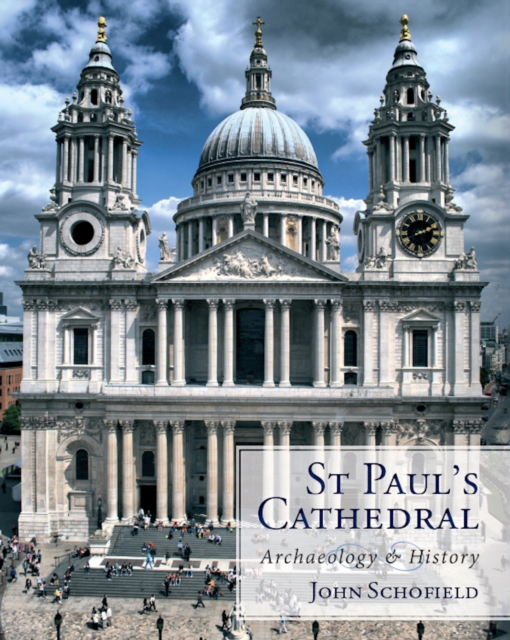
St Paul's Cathedral
This is the first volume concerned solely with the archaeology of a major late 17th century building in London, and the major changes it has undergone. St Paul’s Cathedral in the City of London was built in 1675–1711 to the designs of Sir Christopher Wren and has been described as an iconic building many times. In this major new account, John Schofield examines the cathedral from an archaeological perspective, reviewing its history from the early 18th to the early 21st century, as illustrated by recent archaeological recording, documentary research and engineering assessment. A detailed account of the construction of the cathedral is provided based on a comparison of the fabric with voluminous building accounts which have survived and evidence from recent archaeological investigation. The construction of the Wren building and its embellishments are followed by the main works of later surveyors such as Robert Mylne and Francis Penrose. The 20th century brought further changes and conservation projects, including restoration after the building was hit by two bombs in World War II, and all its windows blown out. The 1990s and first years of the present century have witnessed considerable refurbishment and cleaning involving archaeological and engineering works. Archaeological specialist reports and an engineering review of the stability and character of the building are provided.
eBook


Adaptive Reuse of Russian-Influenced Religious Architecture in Harbin: Architectural Identity and Heritage Tourism
Adaptive reuse is a widely employed strategy for heritage conservation and management, especially within the context of heritage tourism. However, its application to religious architecture presents unique challenges that have not been thoroughly explored. In Harbin, a city in northeastern China known for its Russian-influenced heritage, many abandoned religious-affiliated buildings have been repurposed for other functions. Such transformations raise concerns about how the architectural features and the functionalities of these buildings have been preserved and reused. This study investigates the adaptive reuse strategies applied to Russian-influenced religious buildings in Harbin, focusing on how these strategies impact architectural preservation and sustainable heritage tourism development. It begins by documenting the distinctive architectural styles of Russian-influenced religious buildings in Harbin, followed by a detailed analysis of the selected case studies. The study evaluates the current conditions and uses of these buildings, identifying both the opportunities and constraints of adaptive reuse. The findings reveal a balance between preserving external architectural features and adapting interior spaces to accommodate various functions, particularly in sacred-to-secular transformations. This study highlights the complexities of reconciling historical authenticity with economic viability by comparing sacred-to-sacred adaptations—which retain community relevance—with sacred-to-secular conversions—which prioritise cultural utility. It further examines how historical events and the Western and Chinese conservation dichotomy shape current adaptive reuse practices and preservation priorities in Harbin, offering broader insights into balancing cultural symbolism and functionality in heritage tourism. The findings provide valuable recommendations for policymakers to optimise adaptive reuse practices in religious heritage buildings, ensuring the preservation of architectural identities while supporting sustainable heritage tourism.
Journal Article