
Catalogue Search | MBRL


Are you sure you want to remove the book from the shelf?

{{itemTitle}}
26,838
result(s) for
"Religious discrimination."
Sort by:

Challenging discriminatory practices of religious socialization among adolescents : critical media literacy and pedagogies in practice
This book examines how religion operates as an institution of governance and discipline in society. The authors unravel the ways in which adolescents are socialized into adhering to the dictates of their religious identities, which often translates into practices of micro-aggression enacted in and through their interaction with the 'religious other' in schools and classrooms. Through ethnographic immersion in villages in the Gujarat, the authors identify media as a powerful source through which the dominant ideology of religious discrimination is perpetuated among adolescents. Subsequently, a critical media education framework was developed in order to equip these young people with the critical skills needed to challenge power relations, with the goal being to identify resources for resistance within themselves and their immediate media environments. Using pedagogic techniques such as spatial and cultural mapping, content creation and applied theatre practices to create a reflective yet practical guide, the findings of this book can be applied to a wide range of socio-cultural contexts.
Book

RELIGIOUS DISCRIMINATION IN CHRISTIAN-MAJORITY DEMOCRACIES FROM 1990 TO 2014
This study examines patterns in societal and government-based religious discrimination (SRD and GRD) against 307 religious minorities in 67 Christian-majority democracies using the Religion and State-Minorities round 3 (RASM3) dataset. Despite expectations that all forms of religious discrimination, especially GRD, should be lower in Western liberal democracies, it is, in fact, lower in developing countries. I argue that three factors explain this discrepancy. Economically developed countries have more resources available for discrimination. Western democracies have higher levels of support for religion than Christian-majority developing countries and countries which more strongly support religion are more likely to discriminate against religious minorities. Finally levels of SRD are higher in the West and SRD is posited to be a cause of GRD. Empirical tests support these propositions.
Journal Article


Psychological Study of Perceived Religious Discrimination and Its Consequences for a Muslim Population
This study focuses on the consequences of perceived religious discrimination on a Muslim population. Specifically, the purpose of this research was to assess the impact of perceived religious discrimination in the news media on a number of individual variables (self-esteem and perceived stress). It was also aimed at studying identification as a coping mechanism. A total of 88 Muslim participants took part in this study. The mediation analyses carried out confirm that group identification plays a mediating role in the indirect relationship between perceived religious discrimination in the news media and perceived stress. This discussion highlights the benefits of social support against the deleterious effects of discrimination.
Journal Article

Gender, governance and Islam
Following a period of rapid political change, both globally and in relation to the Middle East and South Asia, this collection sets new terms of reference for an analysis of the intersections between global, state, non-state and popular actors and their contradictory effects on the politics of gender.
Book

Perceived religious discrimination as predictor of work engagement, with specific reference to the Rastafari religion
Although perceived religious discrimination has been studied in the past, much remains unknown about the topic. The focus of this study was the Rastafari religion, because this religious group has up to now been excluded from research studies. A cross-sectional descriptive study was conducted with a sample of 80 employees belonging to the Rastafari religion, chosen from organisations in two provinces in South Africa. The findings emanating from the quantitative research study indicated that, on average, the respondents perceived to be discriminated against. Furthermore, a positive relationship was established between perceived religious discrimination and work engagement. These findings advanced the understanding of perceived religious discrimination, and the impact that it may have on work engagement, particularly with reference to the Rastafari religion.Intradisciplinary and/or interdisciplinary implications: The article contributes to the interdisciplinary discourse regarding perceived religious discrimination, with specific reference to the Rastafari religion which is a minority religious group in South Africa. Perceived religious discrimination is discussed and investigated in the context of the workplace, and the aim was to establish whether perceived religious discrimination influences work-related attitudes, such as work engagement. Because previous studies have associated perceived discrimination with less job involvement and career satisfaction, fewer career prospects, greater work conflict, lower feelings of power, decreased job prestige, and less organisational citizenship behaviour (Thomas 2008:80), it was expected that perceived religious discrimination would have a negative influence on work engagement. The findings show that religion possibly provides individuals with the necessary personal resources to persevere when faced with religious discrimination, and sustain performance as well as attain success within the context of the workplace.Keywords: perceived religious discrimination; work engagement; Rastafari; discrimination; religious discrimination
Journal Article

Healing racial trauma : the road to resilience
\"People of color have endured traumatic histories and almost daily assaults on their dignity. Professional counselor Sheila Wise Rowe exposes the symptoms of racial trauma to lead readers to a place of freedom from the past and new life for the future. With Rowe as a reliable guide who has both been on the journey and shown others the way forward, you will find a safe pathway to resilience\"-- Provided by publisher.
Book
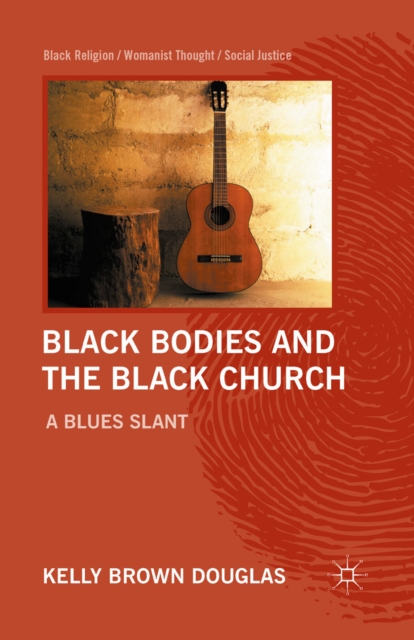
Black Bodies and the Black Church
Blues is absolutely vital to black theological reflection and to the black church's existence. In Black Bodies and the Black Church , author Kelly Douglas Brown develops a blues crossroad theology, which allows the black church to remain true to itself and relevant in black lives.
eBook

Discrimination against Atheists
Weiler-Harwell examines continuing, legal, discrimination against atheists, as made clear in two cases: Boy Scouts of America v. Dale (2000) and Elk Grove Unified School District v. Newdow (2004). These rulings created a new, discriminatory level of distinction for believers versus non-believers that is ahistorical in light of previous Supreme Court precedent. Both cases created new standards for analyzing equality under the law for non-conformists such as atheists, shaping a new hierarchy of protected and unprotected forms of religious belief. The new judicial standards elevate monotheistic religious belief over the neutrality standard that had been heralded in prior Supreme Court decisions and create a kind of American Civil Religion.
eBook