
Catalogue Search | MBRL


Are you sure you want to remove the book from the shelf?

{{itemTitle}}
6,195
result(s) for
"Religious doctrines"
Sort by:


The Bride of Christ Goes to Hell
The early Christian writer Tertullian first applied the epithet \"bride of Christ\" to the uppity virgins of Carthage as a means of enforcing female obedience. Henceforth, the virgin as Christ's spouse was expected to manifest matronly modesty and due submission, hobbling virginity's ancient capacity to destabilize gender roles. In the early Middle Ages, the focus on virginity and the attendant anxiety over its possible loss reinforced the emphasis on claustration in female religious communities, while also profoundly disparaging the nonvirginal members of a given community.With the rising importance of intentionality in determining a person's spiritual profile in the high Middle Ages, the title of bride could be applied and appropriated to laywomen who were nonvirgins as well. Such instances of democratization coincided with the rise of bridal mysticism and a progressive somatization of female spirituality. These factors helped cultivate an increasingly literal and eroticized discourse: women began to undergo mystical enactments of their union with Christ, including ecstatic consummations and vivid phantom pregnancies. Female mystics also became increasingly intimate with their confessors and other clerical confidants, who were sometimes represented as stand-ins for the celestial bridegroom. The dramatic merging of the spiritual and physical in female expressions of religiosity made church authorities fearful, an anxiety that would coalesce around the figure of the witch and her carnal induction into the Sabbath.
eBook


Thorns in the Flesh
The literature of late ancient Christianity is rich both in saints who lead lives of almost Edenic health and in saints who court and endure horrifying diseases. In such narratives, health and illness might signify the sanctity of the ascetic, or invite consideration of a broader theology of illness. In Thorns in the Flesh, Andrew Crislip draws on a wide range of texts from the fourth through sixth centuries that reflect persistent and contentious attempts to make sense of the illness of the ostensibly holy. These sources include Lives of Antony, Paul, Pachomius, and others; theological treatises by Basil of Caesarea and Evagrius of Pontus; and collections of correspondence from the period such as the Letters of Barsanuphius and John.Through close readings of these texts, Crislip shows how late ancient Christians complicated and critiqued hagiographical commonplaces and radically reinterpreted illness as a valuable mode for spiritual and ascetic practice. Illness need not point to sin or failure, he demonstrates, but might serve in itself as a potent form of spiritual practice that surpasses even the most strenuous of ascetic labors and opens up the sufferer to a more direct knowledge of the self and the divine. Crislip provides a fresh and nuanced look at the contentious and dynamic theology of illness that emerged in and around the ascetic and monastic cultures of the later Roman world.
eBook

The Sex Lives of Saints
Has a repressive morality been the primary contribution of Christianity to the history of sexuality? The ascetic concerns that pervade ancient Christian texts would seem to support such a common assumption. Focusing on hagiographical literature, Virginia Burrus pursues a fresh path of interpretation, arguing that the early accounts of the lives of saints are not antierotic but rather convey a sublimely transgressive \"countereroticism\" that resists the marital, procreative ethic of sexuality found in other strands of Christian tradition. Without reducing the erotics of ancient hagiography to a single formula,The Sex Lives of Saintsframes the broad historical, theological, and theoretical issues at stake in such a revisionist interpretation of ascetic eroticism, with particular reference to the work of Michel Foucault and Georges Bataille, David Halperin and Geoffrey Harpham, Leo Bersani and Jean Baudrillard. Burrus subsequently proceeds through close, performative readings of the earliest Lives of Saints, mostly dating to the late fourth and early fifth centuries-Jerome's Lives of Paul, Malchus, Hilarion, and Paula; Gregory of Nyssa's Life of Macrina; Augustine's portrait of Monica; Sulpicius Severus's Life of Martin; and the slightly later Lives of so-called harlot saints. Queer, s/m, and postcolonial theories are among the contemporary discourses that prove intriguingly resonant with an ancient art of \"saintly\" loving that remains, in Burrus's reading, promisingly mobile, diverse, and open-ended.
eBook

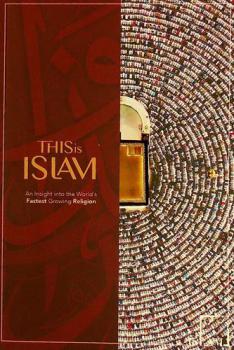
Hospitality and Islam : welcoming in God's name
\"Considering its prominent role in many faith traditions, surprisingly little has been written about hospitality within the context of religion, particularly Islam. In her new book, Mona Siddiqui, a well-known media commentator, makes the first major contribution to the understanding of hospitality both within Islam and beyond. She explores and compares teachings within the various Muslim traditions over the centuries, while also drawing on materials as diverse as Islamic belles lettres, Christian reflections on almsgiving and charity, and Islamic and Western feminist writings on gender issues. Applying a more theological approach to the idea of mercy as a fundamental basis for human relationships, this book will appeal to a wide audience, particularly readers interested in Islam, ethics, and religious studies.\"--Publisher's Web site.
Book

Aliens and Sojourners
Early Christians spoke about themselves as resident aliens, strangers, and sojourners, asserting that otherness is a fundamental part of being Christian. But why did they do so and to what ends? How did Christians' claims to foreign status situate them with respect to each other and to the larger Roman world as the new movement grew and struggled to make sense of its own boundaries?Aliens and Sojournersargues that the claim to alien status is not a transparent one. Instead, Benjamin Dunning contends, it shaped a rich, pervasive, variegated discourse of identity in early Christianity. Resident aliens and foreigners had long occupied a conflicted space of both repulsion and desire in ancient thinking. Dunning demonstrates how Christians and others in antiquity capitalized on this tension, refiguring the resident alien as being of a compelling doubleness, simultaneously marginal and potent. Early Christians, he argues, used this refiguration to render Christian identity legible, distinct, and even desirable among the vast range of social and religious identities and practices that proliferated in the ancient Mediterranean. Through close readings of ancient Christian texts such as Hebrews, 1 Peter, theShepherd of Hermas, and theEpistle to Diognetus, Dunning examines the markedly different ways that Christians used the language of their own marginality, articulating a range of options for what it means to be Christian in relation to the Roman social order. His conclusions have implications not only for the study of late antiquity but also for understanding the rhetorics of religious alienation more broadly, both in the ancient world and today.
eBook

Specters of Paul
The first Christians operated with a hierarchical model of sexual difference common to the ancient Mediterranean, with women considered to be lesser versions of men. Yet sexual difference was not completely stable as a conceptual category across the spectrum of formative Christian thinking. Rather, early Christians found ways to exercise theological creativity and to think differently from one another as they probed the enigma of sexually differentiated bodies. InSpecters of Paul, Benjamin H. Dunning explores this variety in second- and third-century Christian thought with particular attention to the ways the legacy of the apostle Paul fueled, shaped, and also constrained approaches to the issue. Paul articulates his vision of what it means to be human primarily by situating human beings between two poles: creation (Adam) and resurrection (Christ). But within this framework, where does one place the figure of Eve-and the difference that her female body represents? Dunning demonstrates that this dilemma impacted a range of Christian thinkers in the centuries immediately following the apostle, including Clement of Alexandria, Irenaeus of Lyons, Tertullian of Carthage, and authors from the Nag Hammadi corpus. While each of these thinkers attempts to give the difference of the feminine a coherent place within a Pauline typological framework, Dunning shows that they all fail to deliver fully on the coherence that they promise. Instead, sexual difference haunts the Pauline discourse of identity and sameness as the difference that can be neither fully assimilated nor fully ejected-a conclusion with important implications not only for early Christian history but also for feminist and queer philosophy and theology.
eBook