
Catalogue Search | MBRL


Are you sure you want to remove the book from the shelf?

{{itemTitle}}
11,243
result(s) for
"Religious experiences"
Sort by:

Proof of heaven : a neurosurgeon's journey into the afterlife
As he lay in a coma, neurosurgeon Eben Alexander explains that he \"journeyed beyond this world and encountered an angelic being who guided him into the deepest realms of super-physical existence [where] he met and spoke with the Divine source of the universe itself\"--P. [4] of cover.
Book

Religious Experiences in the Context of Bipolar Disorder: Serious Pathology and/or Genuine Spirituality? A Narrative Review against the Background of the Literature about Bipolar Disorder and Religion
Literature about bipolar disorder and religion is scarce and primarily encompasses studies with a quantitative design. Results of such studies do not lead to unambiguous conclusions about the relation between bipolar disorder and religion that could be applied in clinical practice. The main focus of this article will be on the domain of religious experiences/religious delusions and hallucinations as explored in two recent PhD studies regarding mixed methods and qualitative research, conducted in the Netherlands and in Canada. In the narrative review of the two studies, the occurrence of different types of religious experiences and various explanatory models of patients to interpret them are presented. The interpretation of religious experiences, often related to mania, proves to be an intense quest, and often a struggle for many patients, whereby fluctuations in mood, course of the illness, religious or philosophical background, and the reactions of relatives and mental health professionals all play a role. Patients combine various explanatory models, both medical and religious/cultural, to interpret their experiences and these may fluctuate over the years. The two studies are placed in the context of literature about bipolar disorder and various aspects of religion to date. Finally, the challenges for future research and the implications for clinical practice will be outlined.
Journal Article

The Anthropocene Age Reveals the Insanity at the Heart of Western Christian Religious Experience
This article claims that the Anthropocene Age reveals the tragic insanity that lies at the core of religious experiences informed by Hebrew and Christian scriptures. In brief, I claim that Western Christianity and its apparatuses produce beliefs, which are an integral part of persons’ religious experiences, that give rise to an ontological rift between human beings and other species. This rift and its attendant beliefs are evident in how religious individuals and communities have (1) overlooked or disavowed the singularities and sufferings of other species, (2) used attendant instrumental epistemologies to justify the exploitation of Othered species (and Othered human beings) and the Earth, and (3) sought to force nature to adapt to human needs and desires. The article addresses the psychological dynamics and consequences of the ontological rift, which further exposes the madness that attends religious experiences that rely on apparatuses of the ontological rift. The article ends with a brief discussion of an antidote, namely, inoperativity.
Journal Article

The Jaguar Within
Shamanism-the practice of entering a trance state to experience
visions of a reality beyond the ordinary and to gain esoteric
knowledge-has been an important part of life for indigenous
societies throughout the Americas from prehistoric times until the
present. Much has been written about shamanism in both scholarly
and popular literature, but few authors have linked it to another
significant visual realm-art. In this pioneering study, Rebecca R.
Stone considers how deep familiarity with, and profound respect
for, the extra-ordinary visionary experiences of shamanism
profoundly affected the artistic output of indigenous cultures in
Central and South America before the European invasions of the
sixteenth century.
Using ethnographic accounts of shamanic trance experiences,
Stone defines a core set of trance vision characteristics,
including enhanced senses, ego dissolution, bodily distortions,
flying, spinning and undulating sensations, synaesthesia, and
physical transformation from the human self into animal and other
states of being. Stone then traces these visionary characteristics
in ancient artworks from Costa Rica and Peru. She makes a
convincing case that these works, especially those of the Moche,
depict shamans in a trance state or else convey the perceptual
experience of visions by creating deliberately chaotic and
distorted conglomerations of partial, inverted, and incoherent
images.
eBook
The Self as Source and Destination for Intuitive Interpretations of Religious or Spiritual Experiences
Religious or spiritual experiences (RSE) are often difficult to fully express even if one might be able to describe particular aspects of them. Yet the influences that such carry in a person’s mode of being can be vast, and they are clearly a fundamental part of the human condition (whether accepted, denied, or dismissed, their occurrence appears universal). How then might these RSE—and the corresponding grounding implications—be better explained? This paper seeks to elucidate the problematic via an applied investigation of a self-theoretical framework which is composed of three interlaced “sets”: (1) Self-defining traits, (2) Self-directing traits, and (3) Self-evaluating traits. We will suggest that these elements (with consciousness and bodily presence) form a core self that is a separable facet from those of personal identity and whole person; and this finding will in turn require a brief look at consciousness and a two-tiered mental model. Taking the self-view into a phenomenological hermeneutical examination will illuminate the position at which RSE might reside within an individual’s cognition, and thence to exploring the pre-thought (the functionally pre-aware) foundations involved. Finally, some considerations will be given for how an understanding of the foregoing structure (if it be found valid) might contribute towards the purposive shifting of that self-basis from out of and towards which RSE are situated in a lifeworld.
Journal Article

Psychological Analysis of Religious Experience
The aim of this article is to present the issues of religious experience, and the associated experience of God’s presence and God’s absence, and then its operationalization, as well as to construct the Intensity of Religious Experience Scale, IRES (Skala Intensywności Doświadczenia Religijnego, SIDR). The value of psychometric tool, the reliability and validity, were assessed. The study was conducted in three steps. Study 1 concerned the generalization of statements related to conception of Catholic religious experience; i.e., the subjective feeling whether one experiences God’s presence and God’s absence, and how such beliefs affect certain aspects of a person’s life. Study 2 was carried out on the sample of 217 people and was designed to perform Exploratory Factor Analysis and to assess three-week test–retest reliability of the IRES. Study 3 was based on the sample of 368 people and was aimed to perform Confirmatory Factor Analysis and concurrent validation of the IRES. The analysis of the religious experience showed that this kind of human experience has its own structure. The explication of the subject has confirmed the existence of two positive factors of religious experience; i.e., a subjective sense of experience of God’s presence and God’s absence that can influence on life of people living in the Catholic religion environment.
Journal Article
Breathe! The Experience of the Body in Passive Contemplation
Phenomenological research has focused on embodiment. This paper examines how the body is experienced in passive contemplation, understood as a finite province of meaning in Alfred Schutz’s sense. The six features characteristic of any province of meaning (epoché, form of spontaneity, tension of consciousness, sense of self, temporality, and sociality) function distinctively in each province of meaning and alter one’s experience of one’s body. In the foundational province of pragmatic everyday life, one transforms deliberately and bodily the surrounding world, but this experience undergoes modifications in the religious/spiritual contemplative province. To clarify passive contemplation, the paper develops, as a contrast, active contemplation, the active, restless pursuit of chains of appresentational symbols and images. In passive contemplation, one separates from everyday life, orients toward unity rather than dialogue with God, refrains from following appresentative chains, and relaxes one’s tension of the consciousness/body (e.g., through breathing), single-mindedly attending to God’s presence. One can trace passive contemplation genetically to a primordial entwinement with one’s mother’s body, in which subjective/objective boundaries are blurred (as in Merleau-Ponty’s “flesh”). In passive contemplation, one assumes an often-wordless social role (child, lover) toward God and abides tranquilly in the present rather than moving distractedly toward any future.
Journal Article

Experiential careers: the routinization and de-routinization of religious life
This article develops the concept of experiential careers, drawing theoretical attention to the routinization and de-routinization of specific experiences as they unfold over social career trajectories. Based on interviews and ethnographic fieldwork in two religious communities, we compare the social-temporal patterning of religious experience among newly religious Orthodox Jews and converted Muslims in two cities in the United States. In both cases, we find that as newly religious people work to transform their previous bodily habits and take on newly prescribed religious acts, the beginning of their religious careers becomes marked by what practitioners describe as potent religious experiences in situations of religious practice. However, over time, these once novel practices become routinized and religious experiences in these situations diminish, thus provoking actors and institutions in both fields to work to re-enchant religious life. Through this ethnographic comparison, we demonstrate the utility of focusing on experiential careers as a sociological unit of analysis. Doing so allows sociologists to use a non-reductive phenomenological approach to chart the shifting manifestations of experiences people deeply care about, along with the patterned enchantments, disenchantments, and possible re-enchantments these social careers entail. As such, this approach contributes to the analysis of social careers and experiences of \"becoming\" across both religious and non-religious domains.
Journal Article
Individual Emotions Describing Continuity and Engagement in Religion: Charismatic Communality in the Light of Interaction Ritual Theory
The emotionality of modern times is evident in the ways in which people are religious. Among the Christian denominations, the Charismatic/Pentecostal movement, in all its diversity, is the most successful in spreading globally. It has been argued that charismatic communities are successful venues of interaction and are powerful in offering emotional experiences. However, in order for such religious experiences to lead to a continuity of religious interaction, a long-term tone of emotional energy and the presence of a stable social bond between participants is needed. The aim of this article is to analyze emotional energy as an outcome of successful interaction rituals in charismatic communities. Emotional energy is a concept that Randal Collins has formed, building on Durkheim, to analyze emotions in interaction by viewing them as “the main motivating force in social life”. This was studied by interviewing individuals on their emotions about their charismatic communities and daily life. When utilizing a self-report focus on subjective feelings, individuals may report information using different wordings relevant to any component of emotion. Special importance is placed on the cognitive processing of emotional episodes, which allows individuals to detect the relevance of each emotion, understand its causes and consequences, and communicate the emotional knowledge to others, including the researcher. The results show that, most of all, the emotions that cause some sort of pleasure, e.g., happiness and surprise, are the leading lights in narrating engagement in charismatic communities and faith. Faith also has a fear-regulating effect. Happiness as a mood is built both on experiences of God’s help and even more on one’s responsible way of life and the feeling of abandoning moral hesitation in favor of doing what is ethically right in life, which also regulates negative emotions. Collins’ theory focuses on emotional energy that is positive, but emotional experiences can also be negative, which do not contribute to the solidarity of a group.
Journal Article
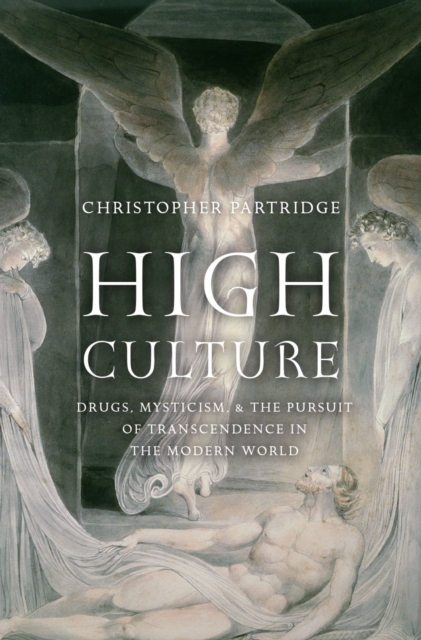
High Culture
For a number of complex reasons, humans are fascinated by drugs and altered states. Even if only momentarily, psychoactive substances lift people out of the ennui and pain of their everyday lives and, in some cases, introduce them to new visions of reality. It is no surprise, therefore, that the use of recreational drugs is rising. While, sadly, this also means that levels of addiction are increasing, many have used drugs as technologies to induce moments of meaning-making transcendence. Beginning at the close of the eighteenth century, this book traces the quest for transcendence and meaning in the West through the modern period. As well as the Romantic fascination with opium, it includes the discovery of anesthetics, the psychiatric and religious interest in hashish, the bewitching power of mescaline and hallucinogenic fungi, and the more recent use of LSD. The ideas and influence of a number of key protagonists are discussed, including Thomas De Quincey, Samuel Taylor Coleridge, Humphry Davy, Jacques-Joseph Moreau de Tours, Fitz Hugh Ludlow, Paschal Beverly Randolph, Louis-Alphonse Cahagnet, Théophile Gautier, Charles Baudelaire, Benjamin Paul Blood, William James, Aleister Crowley, Aldous Huxley, Timothy Leary, Carlos Castaneda, and Terence McKenna. Central to the discussion is the analysis of the ways in which drugs have been used to induce mystical states, to transport users to nonordinary realities, and to access gnosis.
eBook